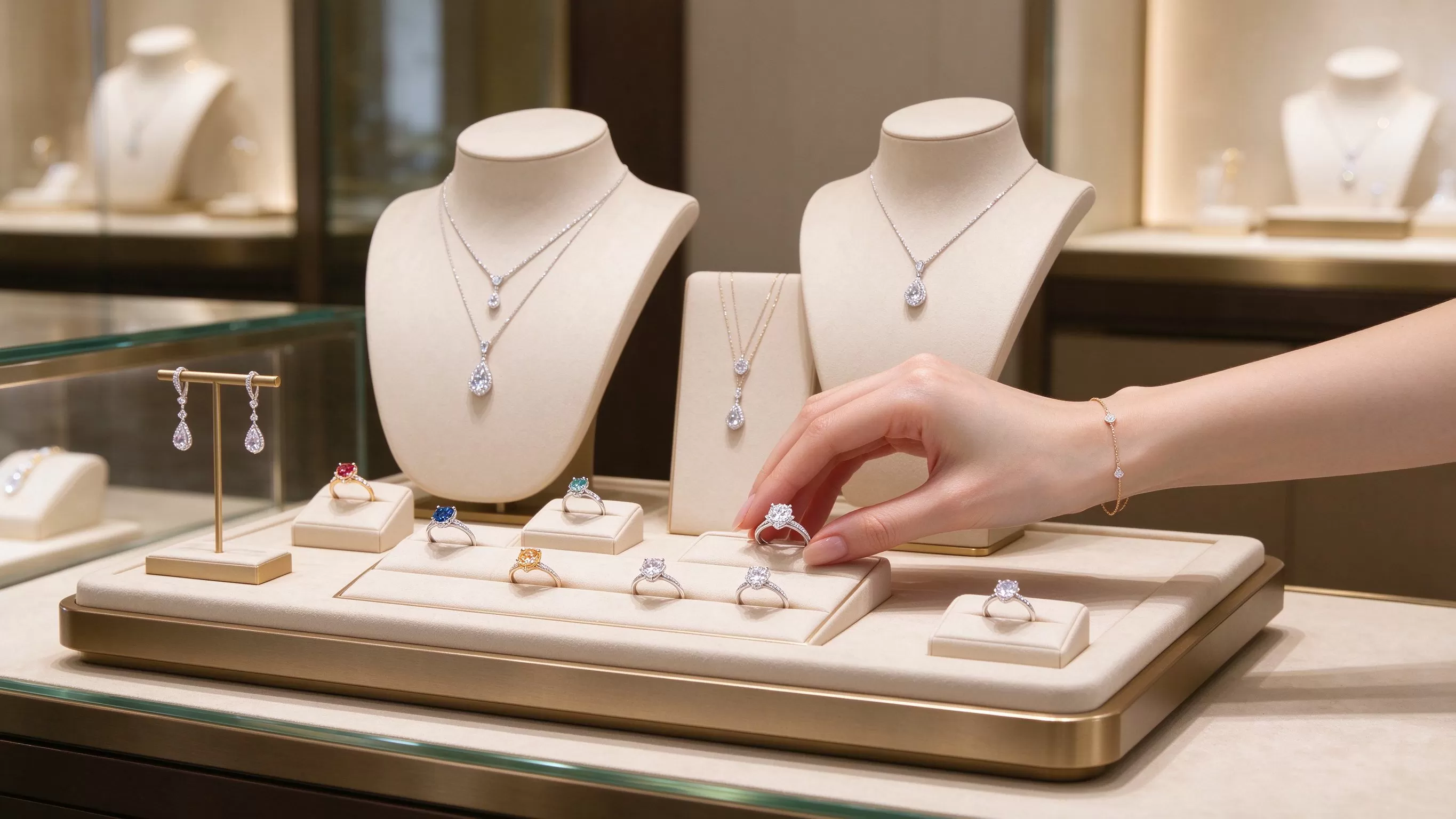
Cluster rings are one of the smartest value plays in fine jewelry: a constellation of smaller stones set close together reads as one large, glamorous center at a fraction of the price of a single big gem. But clusters range from delicate vintage petals to bold modern halos, and the quality gap is wide. This buying guide walks through what actually matters.
What Is a Cluster Ring?
A cluster ring groups multiple small diamonds or gemstones in a single setting so they appear as one larger visual unit. The effect is maximum sparkle and size for the budget, which is why clusters are popular for engagement rings, cocktail rings and right-hand statement pieces.

Common Cluster Layouts
Floral and petal clusters
Stones arranged around a center like petals give a soft, romantic, vintage feel — the style behind many antique-inspired pieces.
Target and starburst clusters
Symmetric rings of stones radiating from a center create a bold, graphic look that photographs well and works in modern settings.
Hidden and elevated clusters
Modern clusters tuck stones under a center stone so the sparkle appears to float — a way to add drama without enlarging the center.
What to Judge Before You Buy
- Stone security: every stone should be tightly set; loose micro-pavé stones fall out over time.
- Evenness: stones should line up flush; lopsided clusters catch light poorly.
- Backing: open back settings let more light in but are easier to bend; closed backs protect delicate gems.
- Metal: clusters suit 18K gold for luxury or sterling silver for affordable fashion.
Value: Why Clusters Punch Above Their Weight
Small stones cost far less per carat than a single large one, and the eye reads the total sparkle rather than counting carats. A well-made cluster can look twice its price. The risk is workmanship: a cheap cluster with loose stones and mismatched cuts looks thin up close. Compare stones side by side and inspect settings under magnification.
Care and Maintenance
More stones mean more places for dirt to collect, so clean clusters regularly — a soft brush, warm water and mild soap reaches the gaps. Avoid knocking clusters against hard surfaces; the small stones and thin prongs take the impact. For sizing, confirm the ring can be resized after clustering, as some dense settings limit adjustment. Pair with our stacking ring trends to build a cluster look you can layer.
The Bottom Line
A cluster ring delivers visual size and sparkle on a modest budget, provided the settings are secure and the stones well matched. Inspect workmanship, choose a layout that suits the wearer, and you get a statement piece that punches well above its price.