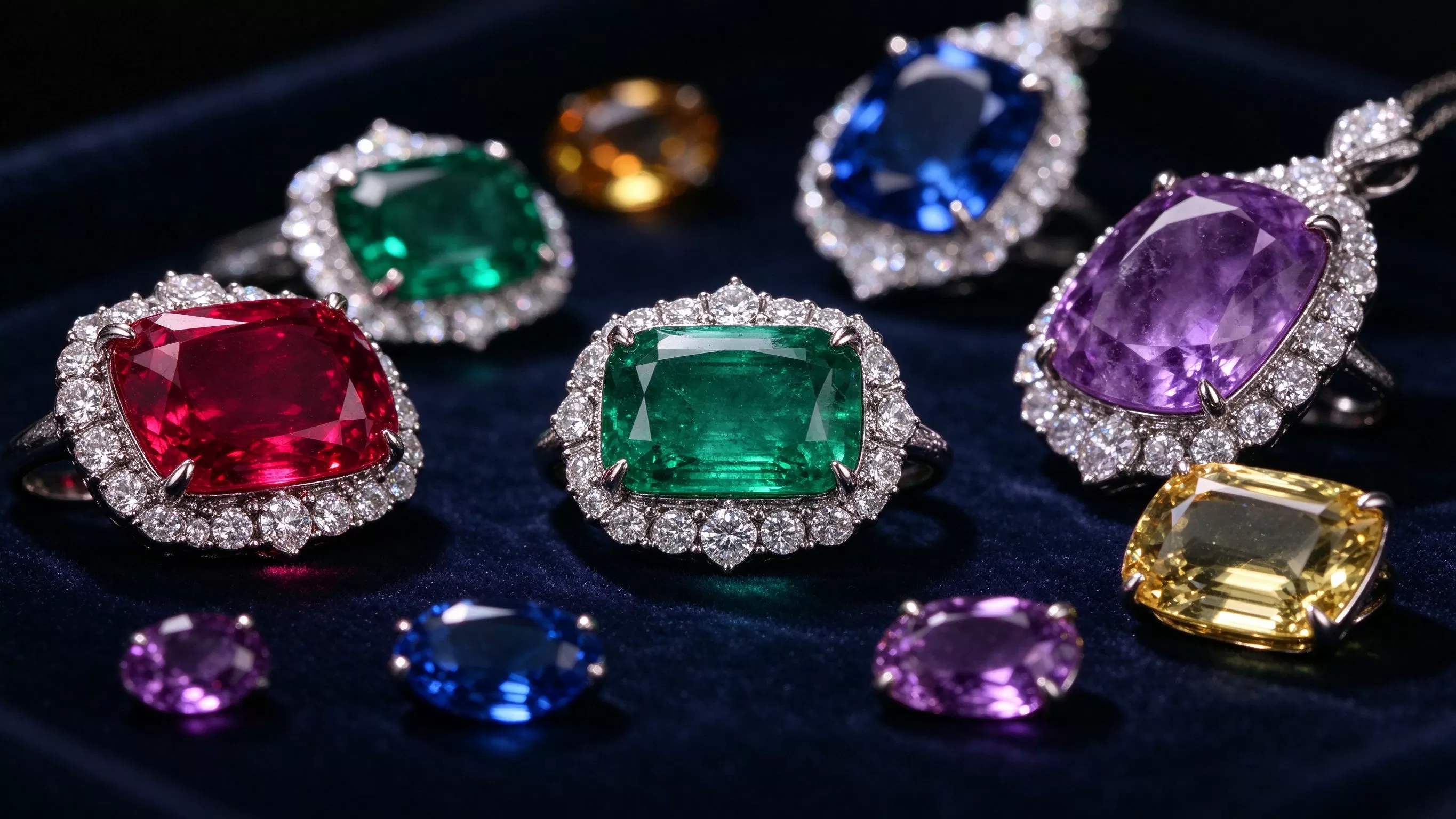
Few optical effects in jewelry stop a customer mid-browse like a stone that changes color. One moment it is cool green, the next it reads plum, red or burgundy. That phenomenon, called color change, is the single most fascinating trait a colored gemstone can have. This guide explains how it works, what real alexandrite costs, and which affordable lookalikes deliver the same drama for a wholesale product line.
What Causes Color Change in Gemstones?
Color change happens when a mineral absorbs light unevenly across the visible spectrum. In alexandrite, chromium ions strongly absorb yellow light, so in full daylight the eye perceives green; under warm incandescent light, where red wavelengths dominate, the same stone reads red or purplish. The shift is the result of physics, not a coating or treatment.
This is different from opal's play-of-color, which is a scattering effect, and different from the iridescence of moonstone. True color-change stones shift their base hue, not just sparkle.
Real Alexandrite: Rare and Pricey
Natural alexandrite is the chrysoberyl variety, mined historically in Russia's Ural Mountains and today mostly in Sri Lanka, Tanzania and Brazil. Fine material with a sharp green-to-red change is genuinely rare and can rival fine ruby per carat. Most commercial "alexandrite" sold at accessible prices today is either lab-grown or a different stone entirely.

The Affordable Color-Change Lookalikes
Retailers who want the color-change story without the collector price rely on a handful of consistent substitutes:
Color-change sapphire
Some sapphires from Sri Lanka and Madagascar shift from blue-gray to purplish-pink. The change is subtler than alexandrite but the stone is hard (9 on Mohs), making it excellent for rings.
Color-change garnet
Found primarily in Tanzania, color-change garnet moves greenish-brown to reddish-purple. It is affordable and a strong choice for statement pieces, though softer at 6.5–7.5.
Synthetic alexandrite and lab-created stones
Flux-grown and pulled lab alexandrite reproduces the green-to-red shift reliably at a fraction of the natural price. For many brands this is the honest, scalable option — as long as it is disclosed as lab-created.
How to Compare Them When Sourcing
Ask suppliers for photos of each stone under two light sources: cool daylight and warm indoor light. A stone that only changes on camera, in certain hands, is overhyped. A genuine shift is obvious within seconds. For more on judging colored stones, see our gemstone guides and the 4Cs framework, which applies discipline to any colored-stone purchase.
Merchandising Color-Change Stones
Color-change gems are story-driven products. They sell best with a two-light display and copy that explains the phenomenon rather than just the color. Position them as "daylight to candlelight" pieces — the effect is memorable, photographable, and gives a mid-tier gem a premium narrative. Because the effect is optical, no two stones shift identically, which is also a reason to inspect parcels before bulk orders.
Care Considerations
Natural alexandrite and sapphire are durable enough for rings. Garnet and softer lookalikes benefit from protective settings. Clean all color-change stones with warm soapy water; avoid steam and harsh chemicals that can cloud the surface and mute the very shift you are selling.
The Bottom Line
Color-change jewelry is one of the most differentiated categories in colored gems. Real alexandrite is beautiful but expensive; color-change sapphire and garnet, plus disclosed lab-created stones, deliver the effect at accessible prices. Buy the two-light test, merchandise the story, and you have a product few competitors can match.
How to Test the Color Change Before You Buy
The whole appeal of a color-change stone is the shift, yet many photos only show the stone in one light. Smart buyers make the two-light test non-negotiable. Ask the supplier for the same stone photographed in cool daylight and in warm indoor light, and, if possible, view it in person under a daylight bulb and a warm lamp. A genuine color change is obvious within seconds; a stone that looks identical in both is either a poor example or has been oversold in description. Be especially wary of listings that show only one angle, since pleochroic stones can look very different from one viewing direction to another.
What to ask the supplier
- "Can you photograph this under daylight and under warm lamp?"
- "Is this natural or lab-created, and will it be disclosed as such?"
- "How strong is the shift — subtle or dramatic?"
- "What is the exact weight and the cut orientation?"
Merchandising and Display Ideas
Color-change stones sell on story and demonstration. In a physical showroom, a small two-light display lets customers see the shift themselves, and that moment of surprise closes sales. Online, the two-light comparison image is the single most effective photograph you can use, because it proves the claim rather than just describing it. Position the pieces as "daylight to candlelight" jewelry — the effect is memorable and gives a mid-tier stone a premium narrative.
Because no two color-change stones shift identically, avoid promising a specific result; instead sell the phenomenon. For rings, choose settings that protect the softer garnet lookalikes, and consider blue-violet alternatives if you want a durable everyday version. Done well, color-change jewelry becomes a signature product that sets a catalog apart from generic colored-stone lines.