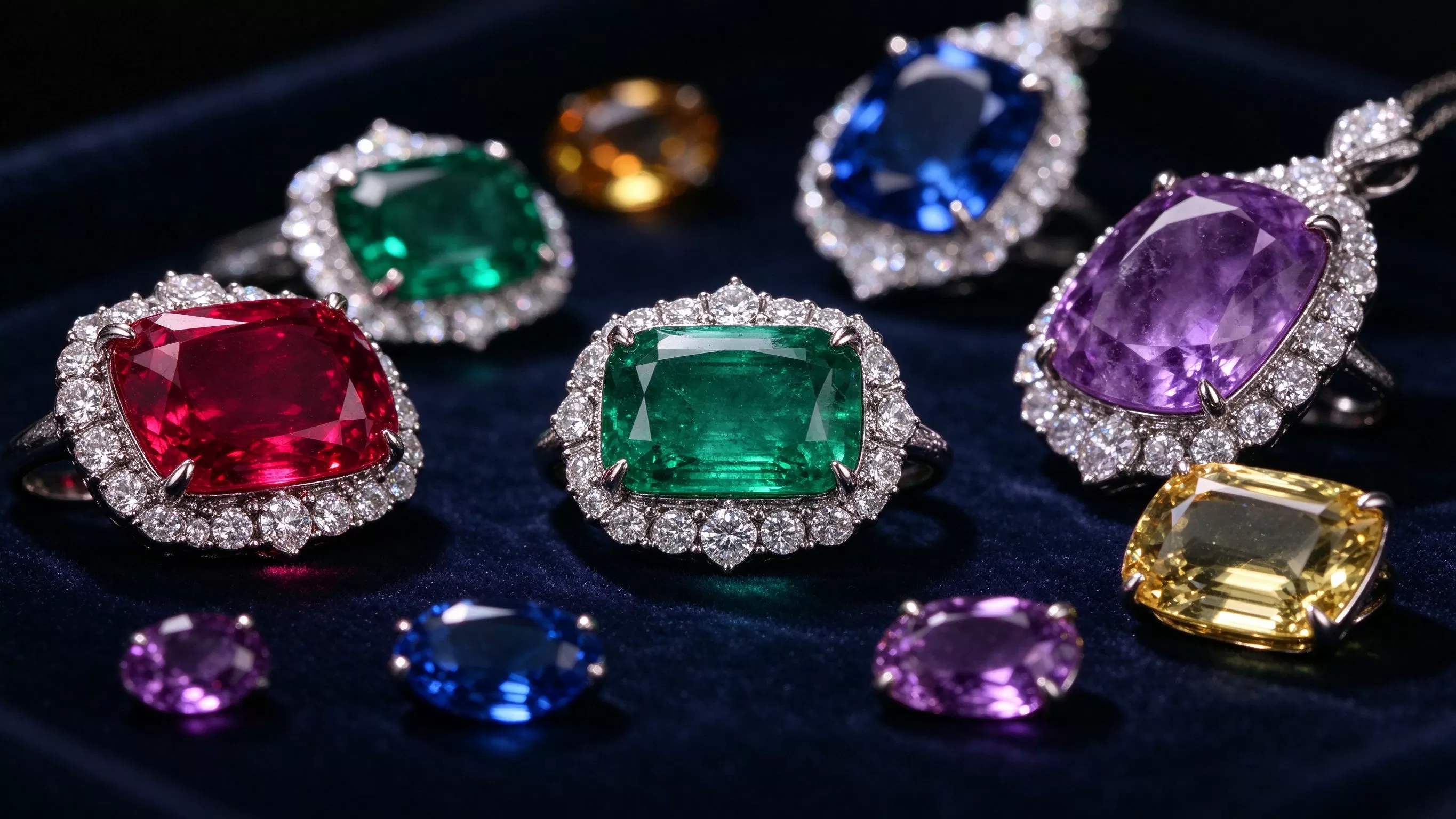
When shoppers talk about a gem's "cut," they usually mean its shape — round, oval, pear, cushion. But in gemology, cut means something far more precise: the angles, proportions and facet arrangement that govern how light behaves inside the stone. A well-cut gem glows; a poorly cut one looks dull no matter how rare the rough. Understanding faceting is the fastest way for buyers to stop overpaying for mediocre stones.
The Three Optical Effects That Define a Cut
Every faceted gem is a light-manipulation device. Three outcomes decide whether it looks alive:
- Brilliance: white light reflecting back from the top of the stone. If light leaks out the back, the gem looks glassy and dead.
- Fire (dispersion): the splitting of white light into spectral flashes, most visible in diamond, moissanite and zircon.
- Scintillation: the pattern of light and dark flashes as the stone or wearer moves.
The cutter tunes all three through the crown angle, pavilion angle and table size. This is why cut is the most influential of the 4Cs, and why it is the factor buyers most often ignore.
Why Proportions Matter More Than Shape
A round brilliant cut follows a mathematically refined formula optimized for maximum return of light. Fancy shapes — ovals, pears, emerald cuts — do not have the same standardized ideal, which is why two ovals of the same carat can look completely different. An oval cut too deep will show a dark "bow-tie"; one cut too shallow looks like a window.
For colored stones, cutters deliberately choose deeper proportions to retain color, which trades a little brilliance for richer hue. That trade-off is correct for deep gems like ruby and sapphire but a mistake for pale stones like aquamarine.
Which Cuts Flatter Which Stones
Step cuts for color and clarity
Emerald and baguette step cuts show off transparency and color in stones like emerald, sapphire and aquamarine. Their open tables reveal inclusions, so they reward clean material.
Brilliant cuts for sparkle
Round, oval, cushion and pear brilliant cuts maximize sparkle and help mask slight inclusions — ideal for diamond, moissanite and included colored stones.
Cabochons for special effects
Not every gem is faceted. Star ruby, star sapphire, opal, turquoise and jade are cut as smooth domes (cabochons) to display asterism, play-of-color or surface luster that faceting would destroy. Our stone profiles explain which gems are sold as cabs.
How Cut Drives Value
For diamond, a "Very Good" or "Excellent" cut can command 20–30% more than a "Fair" cut of the same color and clarity. For colored gems, the relationship is informal but just as real: buyers who learn to spot windowing and bow-tie stop paying premium prices for dull stones. When comparing offers, always request face-up photos and turn the stone to watch how it performs.
What Buyers Should Specify
When ordering calibrated stones, state your cut expectations explicitly: "no window, no heavy bow-tie, even light return." Good factories will sort parcels accordingly. If you are ordering engagement stones, combine cut discipline with the popular engagement shapes to balance beauty and budget.
The Takeaway
Color gets attention, but cut creates value. A moderately colored, well-cut gem will usually outperform a richer, poorly cut one in real jewelry. Whether you stock diamond, moissanite or colored stones, judging faceting is the skill that separates informed buyers from those who simply pay by the carat.
How Cut Affects Price Per Carat
When two stones of the same weight and color sit side by side, the better-cut one almost always looks more valuable, yet it often costs surprisingly little extra. That is because cutters sacrifice weight to achieve better proportions — a stone cut for brilliance loses more rough than one cut to retain carat weight. As a buyer, paying slightly more for a well-cut stone is usually the highest-return upgrade you can make, because the eye rewards light return far more than it rewards an extra tenth of a carat that looks dull.
This is especially true for diamonds and moissanite, where standardized cut grades let you compare objectively. For colored stones, there is no printed cut grade, so the responsibility falls on you: inspect face-up, watch for windowing and bow-tie, and compare proportions. A small premium for superior faceting is almost always justified.
Signs of a poorly cut stone
- "Windowing": you can see through the table to the background.
- A dark bow-tie across oval or pear shapes.
- A lifeless, glassy look that does not move as the stone turns.
- A stone that looks heavy on the bottom (cut too deep) yet dull on top.
Working With a Cutter: What to Specify
If you are ordering custom cuts, tell the cutter your priorities. For pale gems, request shallower proportions to maximize light return; for deeply colored gems, allow deeper proportions to hold saturation. State the intended jewelry type — a ring stone needs a durable pavilion, while a pendant can be cut thinner to save weight. Good communication with the cutting source reduces wasted rough and produces stones that actually suit your designs. When in doubt, ask to see previews of the proportions before the final cut is made.