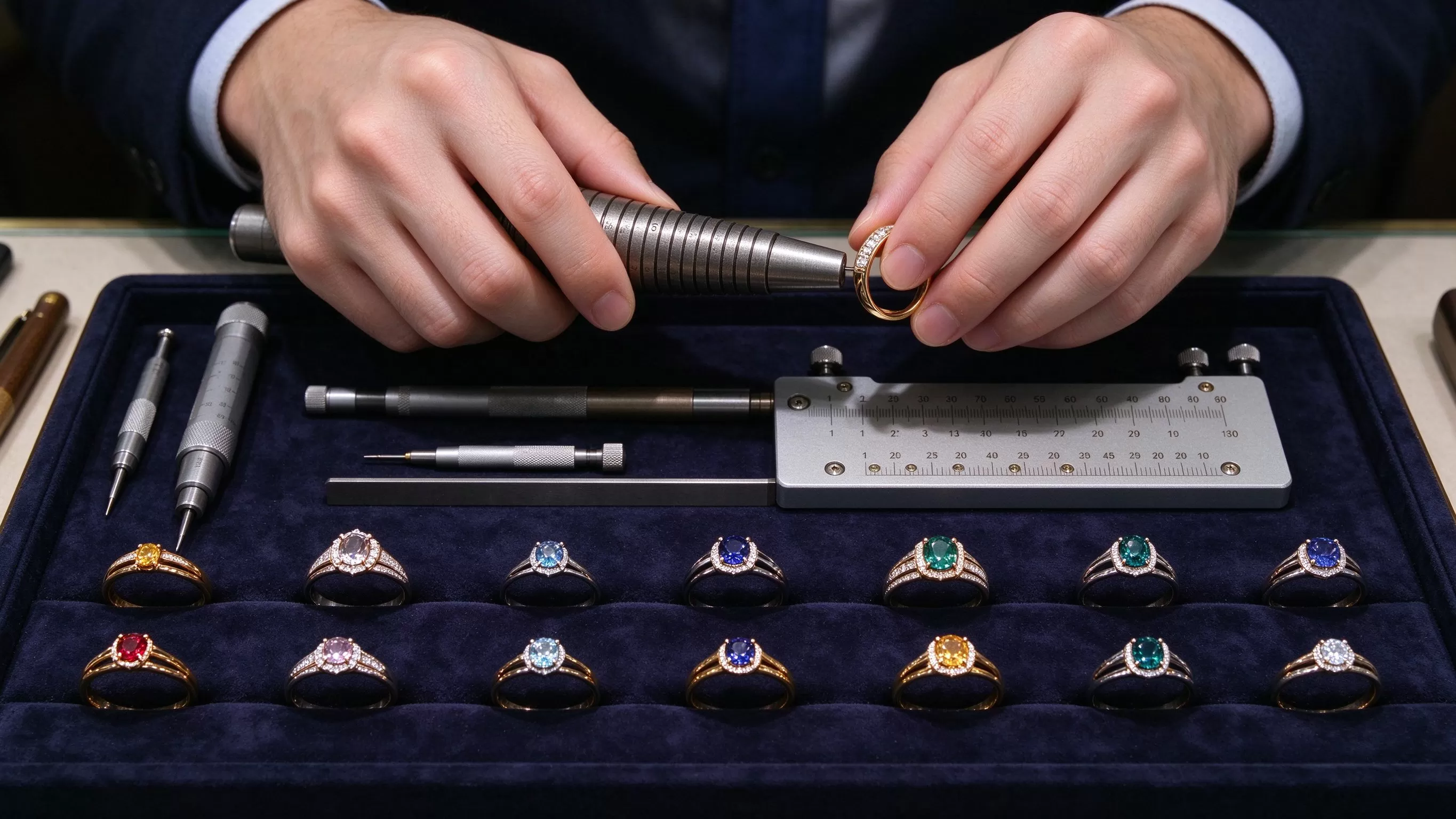
Ear cuffs are the secret to an expensive-looking ear curation without new piercings: they clip onto the outer ridge of the ear and add instant dimension. The catch: an ear cuff that is too loose slides off by lunchtime, and one that is too tight pinches. This sizing guide gets the fit right.
How an Ear Cuff Sits
Unlike an earring post, an ear cuff clamps around the curved cartilage ridge (helix) of the ear. It has no hole to anchor it — its grip comes entirely from the opening width matching the thickness of that ridge. That is why "one size" rarely works well: every ear ridge is a slightly different thickness.
How to Measure Your Ridge
- Feel the outer helix ridge where you want the cuff to sit.
- Pinch it gently and estimate its thickness — most ridges are 2–4 mm thick.
- Check the cuff's opening: it should be slightly narrower than your ridge so it grips when closed.
- Test placement: slide the cuff on from the top of the ridge and ease it down to the chosen spot.
Fitting and Adjusting It Correctly
- Never open the cuff wide — thin metal fatigues and breaks.
- To tighten, gently squeeze the two arms with your fingernails, not pliers.
- The cuff should feel firm but not painful; it should not slide when you shake your head.
- Start at the top of the ear ridge where it is thinnest and slide down.
If you also wear piercings, coordinate with our earring gauge and hoop guide for a balanced ear stack.
Common Fit Mistakes
The biggest mistake is buying based on looks alone. A cuff that looks delicate may be too loose for a thicker ridge. The second mistake is over-adjusting: repeatedly opening and closing a thin silver cuff weakens the metal until it snaps. Adjust once, gently, and leave it.
Metal and Comfort Notes
Because cuffs press on cartilage for hours, choose skin-friendly metal: sterling silver, gold fill or solid gold are best for sensitive ears. Cheap plated brass cuffs can irritate. For all-day wear, a comfortable grip matters more than a tight one.
The Bottom Line
Ear cuffs stay on because their opening matches your ridge thickness. Measure that ridge, squeeze gently to fit, and never force the metal. Sized correctly, an ear cuff delivers the curated ear look with zero piercings.