Midi and Knuckle Ring Sizing Made Simple
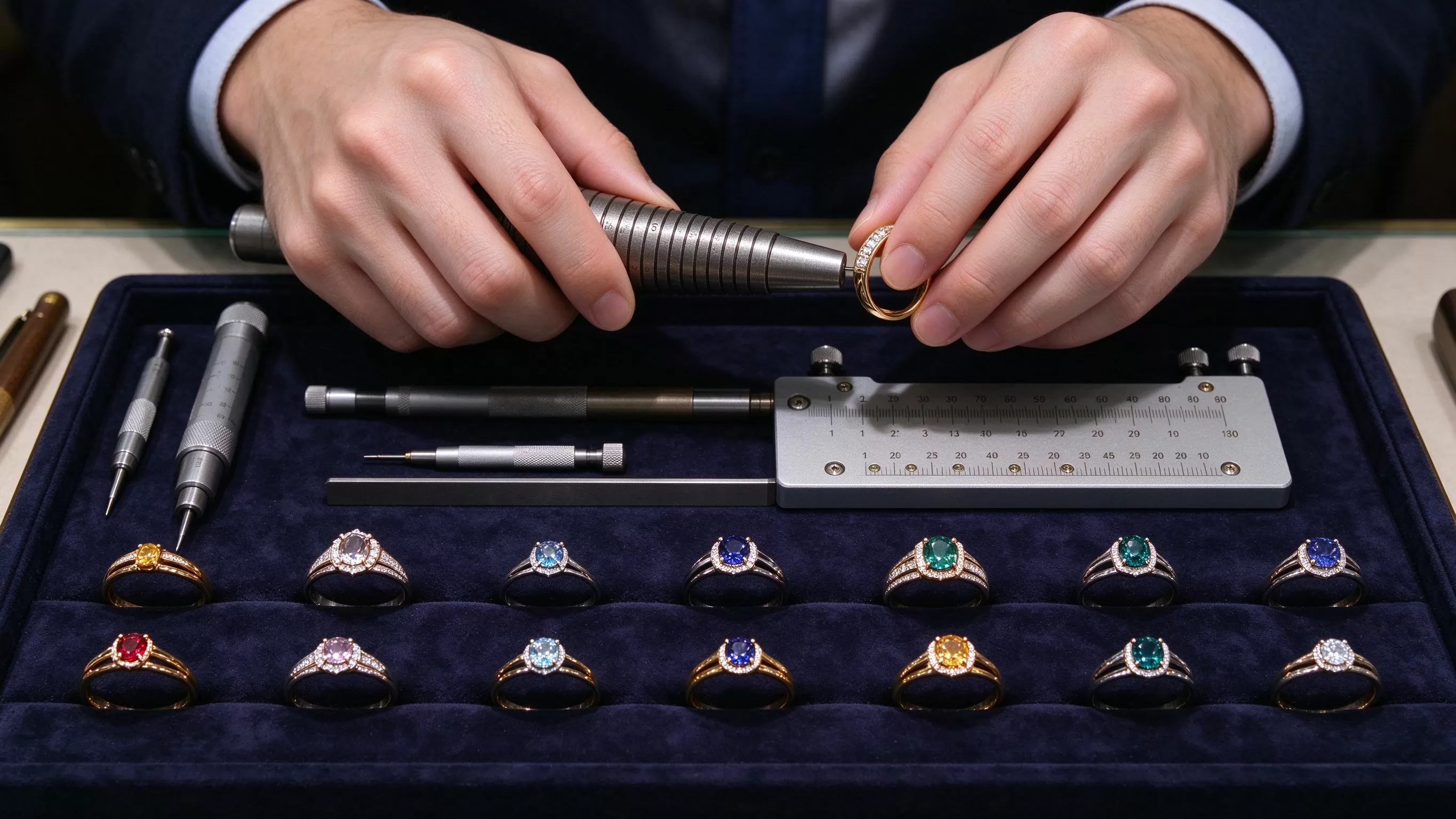
A midi ring (also called a knuckle or midi-knuckle ring) is worn halfway up the finger rather than at the base. They look delicate and trendy, but they slip off constantly if sized wrong. Because the finger narrows toward the knuckle, your usual ring size does not apply. This sizing guide explains how to get the fit right.
Why Midi Rings Need a Different Size
Your finger is widest at the knuckle and narrower between the knuckle and the base. A ring placed above the knuckle must pass over the knuckle but then sit on the slimmer segment above it. That means the ring has to be small enough to stay put on that segment — usually 1–3 sizes smaller than your base ring. If you size it to your usual number, it flies off.

How to Measure for a Midi Ring
- Decide where you want the ring to sit (above or below the knuckle).
- Wrap a thin strip of paper or a flexible tape around that exact segment of the finger.
- Mark where it overlaps and measure the length in millimeters.
- Compare that circumference to a ring size chart for that specific finger.
- Measure at the end of the day when fingers are warm, per our temperature and sizing tips.
Getting the Fit Right
- The ring should pass comfortably over the knuckle then sit snug on the target segment.
- It should not spin freely or pinch when you make a fist.
- If it is between sizes, size down — a midi that can move will slide off.
- Remember wide bands fit tighter, so adjust accordingly (see band width and fit).
Styling Midi Rings
Midi rings are designed for stacking and a light, artistic look. Keep bands thin so multiple rings do not crowd the finger. They pair beautifully with a slim stacking ring at the base, but size each segment independently. If you are building a ring wardrobe, mix midi rings with a statement base ring for balance.
The Bottom Line
Midi and knuckle rings are sized by the segment they sit on, not by your base ring size. Measure that exact spot, expect to go 1–3 sizes smaller, and choose a snug fit. Do it right and your delicate midi rings will stay where they belong.
Midi Ring Styling and Proportion
Midi rings look best when their size and thickness are planned. Because they sit above the knuckle on the slimmer part of the finger, they should be thinner than your base rings — a chunky band at midi size looks heavy and slides. The most flattering midi rings are slim bands, delicate signets or small stone studs placed one or two per hand. Leave the bold statement rings at the base of the finger and keep the midi pieces light. Read our layering principles — the same idea of graduated size and spacing applies to rings.
Midi styling rules
- Keep midi bands thin; save chunky styles for the base of the finger.
- Place one or two midi rings per hand, not on every finger.
- Match metal to your base ring for a pulled-together look.
- Size snug — a loose midi will slide off over the knuckle.
Common Sizing Mistakes
The most common midi mistake is ordering your normal ring size, which is far too big for the upper segment. The second mistake is measuring a cold finger, which runs smaller than a warm one. Measure at the end of the day when your hands are warm, and measure the exact segment where the ring will sit — not the knuckle and not the base. If you are between sizes, size down, because a midi that can move will eventually slip off. With the right snug fit and delicate proportions, midi rings add a playful, artistic layer to any hand.
Why Midi Rings Fit Differently Across the Hand
Every finger segment on your hand has a different size, and midi rings exploit that. The index and middle fingers are wider, so their upper segments need a slightly larger midi than the pinky. The knuckle itself is usually the widest point, and the area just above it is where the ring sits. Because fingers narrow toward the knuckle, a midi ring that feels snug on the segment can still slip over the knuckle if sized loosely. Measure each finger segment individually rather than assuming one midi size fits all your fingers.
Sizing by finger
- Index and middle finger upper segments: slightly larger midi size.
- Pinky upper segment: smaller, slimmer rings.
- Measure each segment separately, not the base of the finger.
- Size snug — the narrow segment has little to hold the ring.
Midi Rings as a Fashion Statement
Midi rings are inherently playful and artistic. They look best when kept delicate and worn in small numbers — one or two per hand, on different fingers, with thin bands. They pair beautifully with a slim base ring or a few simple studs. Because they sit high on the finger, they draw attention to the hand and gesture, which is why fashion stylists love them. They are also affordable to experiment with, since small thin rings cost little. Start with one or two delicate pieces, measure the right segments, and build the look gradually rather than overloading every finger at once.
Frequently Asked Questions About Midi Rings
People new to midi rings usually ask the same things. What size do I buy? Usually 1 to 3 sizes smaller than your base ring, measured on the exact upper segment. Do they fall off? Only if sized loosely — measure the right spot and size snug. Can I wear them on any finger? Yes, but the index, middle and pinky work best. How many should I wear? One or two per hand, kept thin, looks best. Measure when your hands are warm, size snug, and keep the bands delicate. Done right, midi rings add a playful, artistic layer that is comfortable and stays put all day.
The Bottom Line on Midi Rings
Midi and knuckle rings are sized by the segment they sit on, not by your base ring size. Measure that exact spot, expect to go smaller, and choose a snug fit. Keep the bands thin and the numbers few, and pair them with a slim base ring. Measure when your hands are warm, size down if between sizes, and you have a playful, artistic layer that stays put all day.
Related Articles
- Comfort Fit vs Standard Fit Rings: Which Should You Choose
- Ring Size Guide: How to Measure Ring Size at Home Accurately
Independent background on moissanite — how its hardness and refractive index compare with diamond — is documented in the Wikipedia article on moissanite.
Frequently Asked Questions
What ring sizes can you supply in bulk?
US 5 to 12 including half sizes. Send a size curve with the order and we cast to it.
Can I order a mixed size run?
Yes. Mixed runs are standard; specify quantity per size and we pack and label by size.
What is the MOQ for custom ring designs?
50 pieces per design on existing molds; 100 to 300 pieces when a new mold or CAD model is needed.
How should I price rings for retail margin?
Most partners use a 3 to 4x markup on FOB cost for sterling and 2.5 to 3x for moissanite solos.
Frequently Asked Questions
What size midi ring should I buy?
Why do my midi rings keep falling off?
Can I wear midi rings on any finger?
Looking for Wholesale Jewelry?
Wuzhou HengliLai Jewelry Co., Ltd. - Professional gemstone and jewelry manufacturer in Wuzhou, China. OEM/ODM services, factory-direct pricing, low MOQ.
Contact on WhatsApp service@holycome.comWholesale Order Terms
As a factory-direct jewelry manufacturer, we quote every order against stone type, metal, setting and finish. Loose stones are priced per carat, finished rings, earrings and bracelets per piece, and custom metal work per gram. Send your stone, metal, size and quantity for a wholesale price list in USD, quoted with FOB, EXW or DDP shipping terms.
MOQ & Pricing
Minimum order quantity (MOQ) starts from 5 pcs per style. Mixed-SKU orders are accepted, and volume discounts apply from 50 pcs; pricing is tiered by quantity and quoted per piece, per carat or per gram.
Lead Time
Ready-stock pieces ship in 2-5 business days. Custom sampling takes 5-10 days; bulk production lead time runs 10-25 days, depending on design, stone size and order quantity, confirmed in your written quote.
Payment Terms
We accept T/T telegraphic bank transfer, PayPal, Alibaba Trade Assurance and Western Union. OEM and private-label orders require a 30% deposit, with the 70% balance paid before shipment.
Shipping
DHL, FedEx and UPS for samples and small orders; air or sea freight for bulk. Worldwide delivery under FOB, EXW or DDP terms, with QC photos shared before dispatch.
