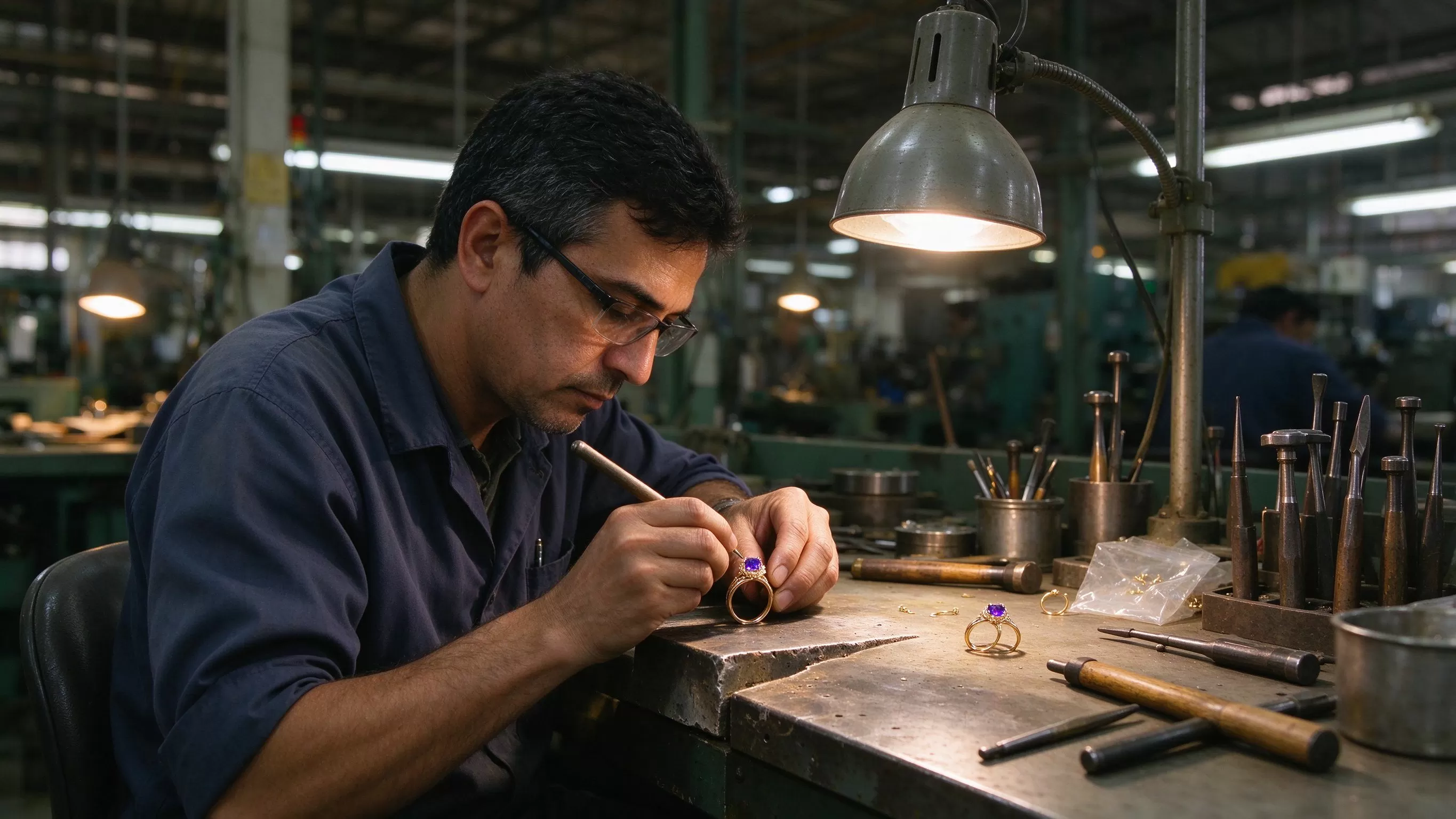
When a piece of jewelry shows glossy, glass-like color that will not chip or fade like paint, it is almost certainly enamel. Enamel is powdered glass fused to metal at high temperature, and it is one of the oldest decorative techniques in jewelry. This guide explains how modern enamel jewelry is made and the two methods factories use most.
What Enamel Actually Is
Enamel is finely ground glass mixed with water, painted onto a clean metal surface, and fired in a kiln at 750–850°C until the glass melts and flows into a smooth, vitreous coating. It is hard, glossy, color-stable and far more durable than paint. It is used on everything from vintage-style brooches to modern colored bands. Unlike PVD coating, enamel is a true glass layer, not a thin deposited film.

Cloisonne: Color Separated by Wires
In cloisonné, thin metal strips (cloisons) are bent and soldered onto the base to form compartments. Different enamel colors are filled into each cell and fired. The result is crisp, outlined color — the classic look of decorative, intricate enamel jewelry. It is labor-intensive because each wire cell is set by hand.
Champleve: Color Carved Into Metal
In champlévé, recesses are carved or etched into the metal itself, then filled with enamel and fired. There are no visible wires — the metal surface itself forms the border. It tends to look bolder and more solid than delicate cloisonné.
At a glance
- Cloisonné: wires separate colors; fine, intricate, classic.
- Champlévé: recesses in metal; bold, solid, modern.
- Both: fired multiple times, glass-hard, color-stable.
What Manufacturers Must Control
Enamel firing is unforgiving: the metal and glass must expand at similar rates, or the enamel cracks (called "crazing") when it cools. Base metal choice matters, thickness matters, and firing temperature must be precise. Multiple firings build up depth of color. Factories that rush the firing produce enamel that chips or crazes within months. When auditing an enamel supplier, ask about firing counts and whether they test adhesion.
Buying and Caring for Enamel Jewelry
Enamel is glass: it is color-fast and easy to wipe clean, but it can chip if struck hard. Avoid dropping enamel pieces and store them separately. Clean with a soft damp cloth, never with abrasives or ultrasonics, which can shock the glass. For the rest of your metal finishes, our finishing guide covers the non-enamel steps.
The Bottom Line
Enamel is durable, vivid color made by fusing glass to metal. Cloisonné uses wires for intricate detail; champlévé uses carved metal for bold blocks. Buy from factories that control firing carefully, and handle enamel like the glass it is.
Buying and Specifying Enamel Colors
Enamel color is not an off-the-shelf Pantone match; it develops through firing. If you need a specific brand color, give the factory a physical reference rather than a screen image, because firing shifts tones. Expect a few sample rounds before the color is right, and budget for that in your timeline. Specify whether you want a glossy, glassy finish or a softer matte enamel, and confirm whether the piece will be cloisonné (wired) or champlévé (recessed), since the two look and price differently. Clear communication on color and method prevents costly reworks.
Enamel spec checklist
- Provide a physical color reference, not just a screen image.
- Decide cloisonné vs champlévé for the right look and price.
- Allow sample rounds for color matching.
- Ask about firing counts and adhesion testing.
Enamel in Modern Product Lines
Enamel is having a fashion moment because it delivers bold, durable color that plating cannot match. It works brilliantly on signets, hoop earrings and small pendants where a pop of color makes the piece memorable. Because enamel is glass, it is color-fast and easy to wipe clean — but it can chip if struck, so design settings that protect the enamel edges. For a broader view of surface finishes, our PVD coating guide compares enamel with the thin-deposit alternatives, helping you choose the right finish for each product.