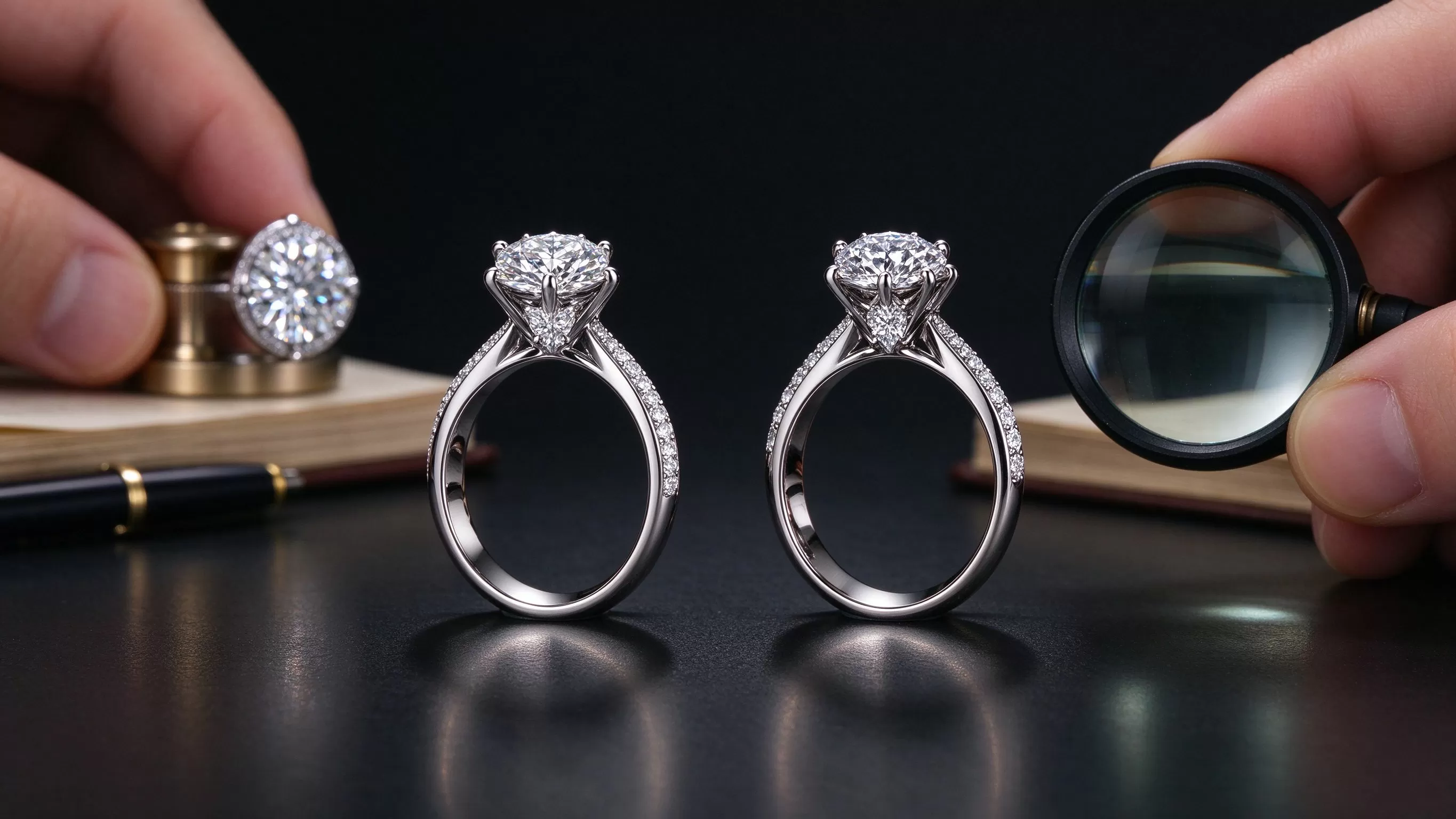
Two necklaces side by side can look the same — one costs $12, the other $1,200. The difference is not branding; it is material and construction. Understanding fashion jewelry vs fine jewelry prevents buyers from overpaying, and helps retailers position products honestly. This comparison lays out the real differences.
Definition: The Material Test
Fine jewelry is made of precious metals — solid gold, platinum, sterling silver — set with genuine gemstones or diamonds. Fashion (costume) jewelry is made of base metals like brass or alloy, often plated, set with simulants like CZ or glass. The base material is the dividing line, not the design.
How They Compare
Metal and plating
Fashion jewelry relies on thin plating that wears off in months, exposing the base metal underneath. Fine jewelry uses solid precious metal that can be worn for decades and re-polished. Gold-filled and vermeil sit between the two categories and last longer than plated fashion pieces.
Stones
Fashion jewelry uses glued glass, acrylic or CZ. Fine jewelry uses faceted genuine or lab stones set securely. Glued stones fall out; set stones can be tightened.
Price and lifespan
- Fashion: low price, months of wear, expected to tarnish and be replaced.
- Fine: higher price, years to generations of wear, can be repaired and resized.
How to Tell Them Apart in a Store
Look for stamps: fine jewelry is stamped 925, 750, 585, PT950 — learn these in our hallmark stamps guide. Fashion jewelry often has no metal stamp or a generic label. Feel the weight: fine precious metal usually feels denser. Check the clasp and settings: rough edges and glued stones signal fashion.
Which Should You Buy?
Buy fashion jewelry for trends, occasional wear and looks you will tire of in a season. Buy fine jewelry for everyday pieces, gifts, engagement and anything you want to last. Many customers benefit from a mix: fashion for current trends, fine for the staples. If you are building a business, our wholesale sourcing guides explain how each category is procured.
Caring for Each
Fashion jewelry needs to be kept dry and away from perfume to slow plating wear. Fine jewelry tolerates normal wear and can be cleaned professionally. For fine pieces, follow our care and cleaning guides to keep metals bright.
The Bottom Line
Fashion jewelry is disposable style; fine jewelry is lasting investment. The two look alike on a hanger but differ in metal, stones, price and lifespan. Buy according to how long you want the piece to last.
How to Inspect Jewelry in a Store
Telling fashion from fine jewelry in person is a learnable skill. Start with the stamps: fine jewelry carries 925, 750, 585 or PT950 marks, while fashion pieces usually have no metal stamp at all. Next, feel the weight — solid precious metal usually feels denser and more deliberate than thin plated base metal. Inspect the settings: glued stones and rough, unfinished backs signal fashion, while securely set stones with finished interiors signal fine jewelry. Finally, check for discoloration on the contact points; green skin or black tarnish on the inside of a ring reveals a low-grade base metal.
Store inspection checklist
- Look for the metal purity stamp inside the band or clasp.
- Compare weight against a known fine piece.
- Check that stones are set, not glued.
- Look for plating wear or green contact marks.
Building a Mix of Fashion and Fine
Most people are best served by a wardrobe that mixes both. Use fashion jewelry for current trends — the bold shape that will look dated next year — and spend on fine jewelry for the staples you wear constantly: everyday earrings, a go-to necklace, a wedding band. This approach lets you follow trends cheaply while protecting the pieces that matter. When sourcing either category, our wholesale guides explain how each is procured, and our care guides keep both kinds looking their best for as long as they are meant to last.