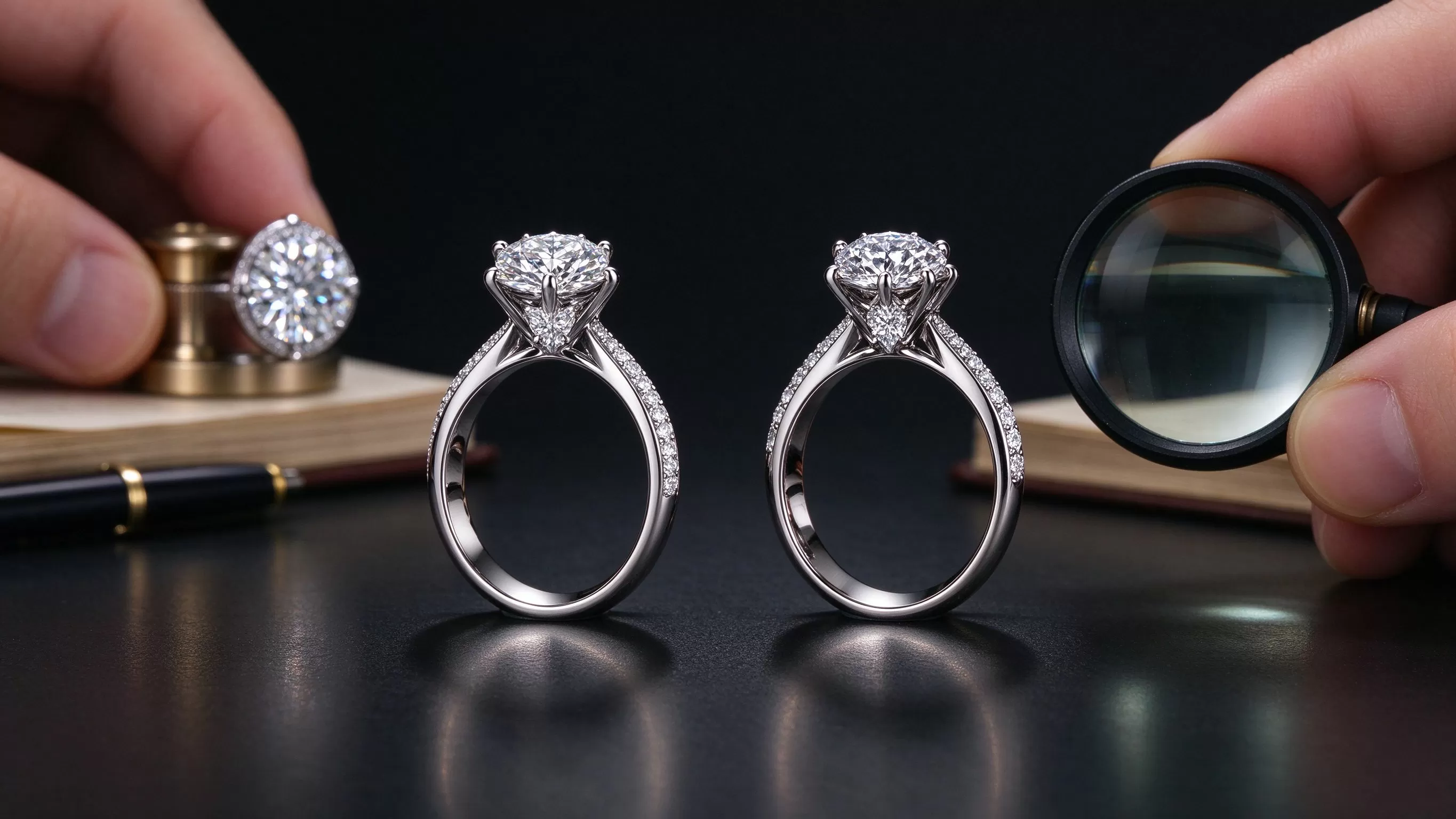
A colorless, affordable stone that resembles diamond — two candidates come up constantly: cubic zirconia (CZ) and white sapphire. Both are clear, both are cheap next to diamond, and both are often mistaken for each other at a glance. But under close inspection they are different materials with different lives. This comparison helps you choose the right one.
What Each Actually Is
Cubic zirconia is a man-made, polished crystal (zirconium dioxide) produced in factories specifically as a diamond simulant. White sapphire is the colorless variety of corundum — the same mineral as ruby and blue sapphire — which can be natural or lab-grown. One is a designed simulant; the other is a genuine precious mineral that happens to be colorless.
Appearance and Sparkle
CZ is optically "too perfect": it is very bright and sparkles heavily, but its dispersion (fire) can look heavy and plasticky next to real diamond. White sapphire is more restrained — a softer, whiter, more subdued sparkle that some find elegant, others find dull. Read our deeper look at moissanite vs CZ for how simulants compare on fire.
Head-to-head
- Hardness: CZ ~8 / white sapphire 9
- Sparkle: CZ bright and fiery / sapphire softer, whiter
- Price: CZ very low / white sapphire low but higher
- Longevity: CZ clouds and scratches in months / sapphire lasts years
- Nature: CZ man-made simulant / sapphire genuine mineral
Durability and Longevity
This is where they diverge most. CZ scratches easily and clouds over with body oils and wear, often looking tired within months. White sapphire, at 9 on Mohs, is nearly as hard as diamond and will keep its clarity for years. For an engagement-style ring, white sapphire is a sensible durable choice; CZ is a fashion stone meant to be replaced.
Price and Use Case
Choose CZ for costume and fashion jewelry, travel pieces you would not mind losing, and short-term wear. Choose white sapphire for a durable, genuine white stone at a modest price — an alternative to diamond that still lasts. Compare with moissanite vs white sapphire if you want the brightest alternative.
The Bottom Line
CZ is cheap, bright and disposable; white sapphire is real, durable and understated. Buy CZ for fashion, buy white sapphire for a stone you can wear daily without replacing.
Cost Per Wear: A Practical Way to Choose
One of the clearest ways to decide between cubic zirconia and white sapphire is to calculate cost per wear. CZ costs almost nothing upfront but clouds and scratches within months, so you replace it several times a year. White sapphire costs more upfront but lasts for years. Over three years, a durable white sapphire pair often works out cheaper than repeatedly replacing CZ fashion pieces — and it looks better the whole time. Use this lens for any jewelry purchase, especially earrings that are worn daily.
When to buy which
- Buy CZ: one-off events, travel pieces you would not mind losing, seasonal trends.
- Buy white sapphire: everyday studs, gifts, engagement-style stones you will wear for years.
- Avoid: paying white-sapphire prices for a CZ that is misrepresented.
Caring for Each Stone
CZ needs almost no care because it is disposable, but you can extend its short life by keeping it away from perfume and storing it separately. White sapphire, at 9 on Mohs, is nearly as hard as diamond and tolerates normal wear; clean it with warm soapy water and a soft brush. Compare it against moissanite vs white sapphire if you want even more brilliance, or against white sapphire vs diamond for a budget engagement stone. Either way, choose on how long you want the piece to last — not just how it looks in the first week.