Garnet Gemstone Guide: January's Rainbow Beyond the Red Birthstone
Most people think garnet is a single dark red stone worn as January's birthstone. That is like calling wine a single drink. Garnet is actually a whole family of related minerals that range from deep blood red through tangerine orange, forest green, honey yellow, and even a vivid purple. The red garnet in a cheap pair of studs and the rare green demantoid garnet that sells for collector prices are cousins in the same family, and knowing that difference is the key to buying garnet well. This guide walks through the garnet group, the varieties worth knowing, where they come from, and how to tell a common stone from a surprising one.
The word garnet comes from the Latin for pomegranate, because the small red crystals reminded early observers of pomegranate seeds. That ancient association has made garnet a talismanic stone for thousands of years, set in Egyptian jewelry, Roman signets, and the deep red bohemian beads of the nineteenth century. Today garnet is one of the most underrated gems in the trade: affordable, durable, and available in colors most shoppers never see. If you have only ever known garnet as a dark red birthstone, the green and orange varieties below will likely surprise you.
What Garnet Is: A Family, Not a Stone
Garnet is a group of silicate minerals that share a crystal structure but differ in chemistry. The six main garnet species that matter in jewelry are pyrope, almandine, spessartine, grossular, andradite, and uvarovite. They intergrow freely, which is why many garnets are actually mixtures with names like rhodolite (a pyrope-almandine mix) and hessonite (an orange grossular). That family structure explains why garnet appears in so many colors: each species and mix leans a different way.
What unites the family is hardness and durability. Most garnets rank 6.5 to 7.5 on the Mohs scale, which makes them solid everyday stones for rings, and they lack the cleavage problems that make some gems brittle. Garnet is also commonly clean and brilliant, with a glassy luster that makes even affordable stones look lively. The family is so widespread geologically that garnet is found on every continent, which is part of why the common red material is so affordable.
The Red Garnets: Pyrope, Almandine, and Rhodolite
The red garnets everyone knows are mostly pyrope and almandine. Pyrope is the bright, slightly purplish red, historically sourced from Bohemia and still common in affordable jewelry. Almandine is the deeper, brownish-red garnet, often called "carbuncle" in old texts, and it is the variety most often cut into cabochons and set in vintage silver. These red garnets are inexpensive, durable, and make excellent everyday stones, though they lack the fire of the rarer varieties.
Rhodolite is the garnet that bridges red and pink. A mixture of pyrope and almandine, it is a light purplish raspberry color that sits between garnet and amethyst in tone. Rhodolite is brighter and more modern-looking than the dark reds, and it is the garnet most often chosen for contemporary rings. It is still affordable, which is why it is such a good entry point for buyers who want colored garnet without a collector's budget. For a sense of how garnets sit among other reds, our ruby and sapphire guide sets the luxury end of the spectrum.
The Orange and Yellow Garnets: Spessartine and Hessonite
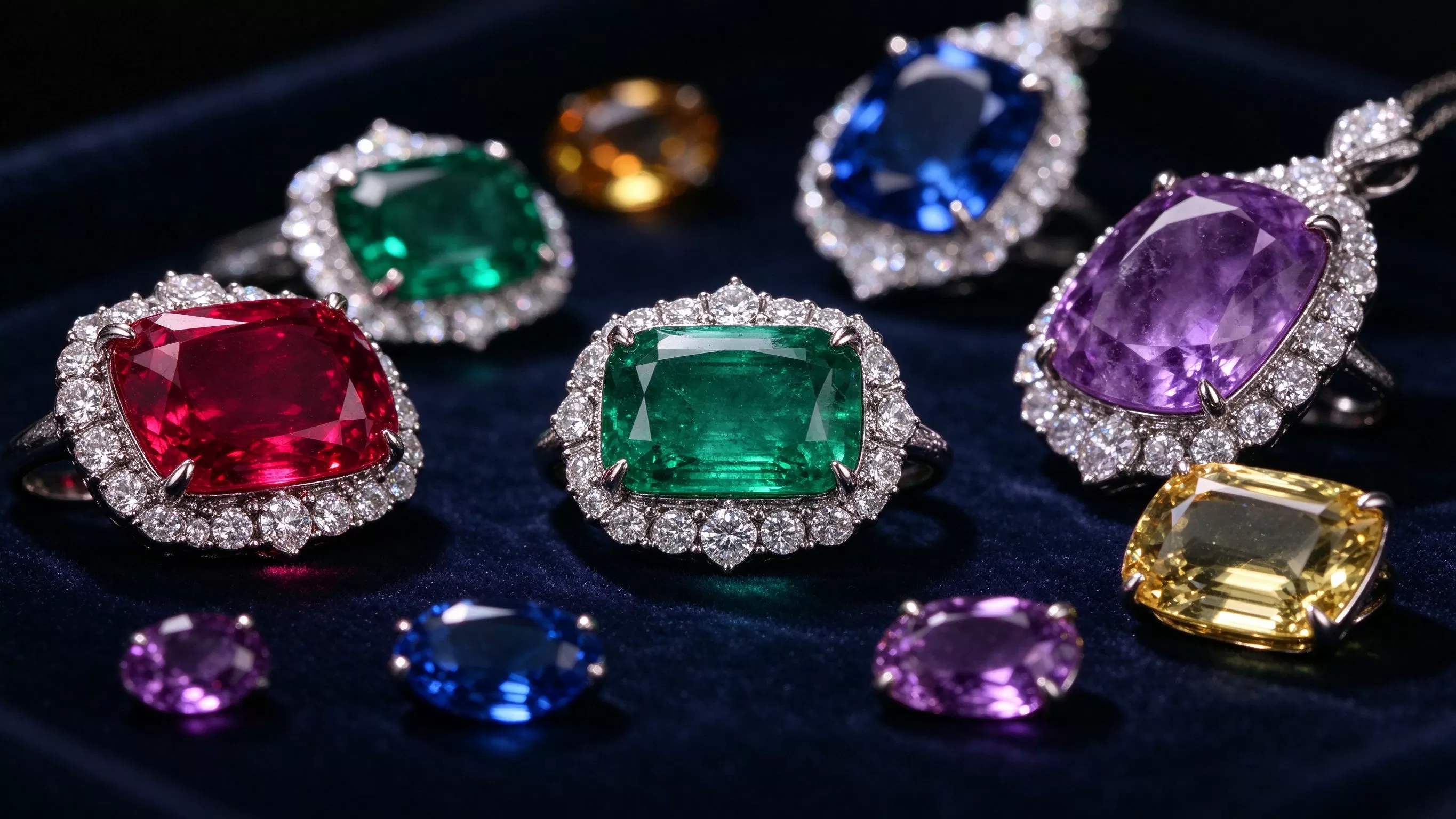
Spessartine garnet is the tangerine-orange variety, colored by manganese, and it is one of the most cheerful gems in jewelry. Fine spessartine has a vivid, almost neon orange that glows in daylight, and it is a favorite for designers who want a warm, unusual stone. Nigerian and Namibian spessartine has raised the variety's profile over the last two decades, and top orange stones now command real prices. Mixed spessartine-pyrope material, called mandarin garnet, is the saturated orange that photographers love.
Hessonite is the orange-to-brown grossular garnet, sometimes called "cinnamon stone." It is softer in color than spessartine, with a honeyed, slightly brownish orange, and it has a distinctive internal look that dealers describe as "roiled" or heat-wave texture. Hessonite is affordable and often set in vintage and bohemian designs. Both orange varieties pair beautifully with rose gold and yellow gold, and they are a warmer alternative to citrine for anyone who wants an orange stone that looks like fine jewelry.
The Green Garnets: Tsavorite and Demantoid
The green garnets are where the family becomes genuinely exciting. Tsavorite is a vivid, emerald-green grossular garnet found mainly in Kenya and Tanzania, and it is one of the most sought-after green gems in the world. It is harder than emerald, cleaner, and richer in color, and because the deposits are small, fine tsavorite commands prices that rival emerald. If you want a green that is tough and saturated, tsavorite is one of the smartest buys in colored stones, and our comparison of emerald versus tsavorite covers the tradeoffs.
Demantoid is the other great green garnet, an andradite variety famous for its extraordinary fire. Its name means "diamond-like," and it disperses light into rainbow flashes more strongly than diamond itself. Classic demantoid from the Ural Mountains contains characteristic "horsetail" inclusions that collectors prize, and fine Russian demantoid is among the most expensive colored gems per carat. Green garnets are the proof that garnet is far more than a cheap red birthstone; the best green material competes with anything in the case.
Color-Change and Rare Garnets
Garnet even has a color-change variety that shifts between greenish in daylight and purplish-red under warm light, a phenomenon most people associate with alexandrite. Color-change garnet is far more affordable than alexandrite and offers a similar optical trick, which is why it is a favorite among collectors who want the effect without the budget. It is not as dramatic as fine alexandrite, but it is a genuine conversation stone.
Other rare garnets include the colorless grossular, the near-black melanite, and uvarovite, a brilliant green variety that almost never forms clean large crystals and is collected as tiny druzy clusters rather than faceted stones. For the average buyer, these rare varieties are curiosities, but they illustrate how much is hiding under the single word "garnet." When a dealer says they have "a garnet," always ask which species and what color, because the answer changes the price by an order of magnitude.
Treatments: A Remarkably Honest Gem Family
One of garnet's strengths is how little it is treated. Unlike ruby, sapphire, and emerald, garnet is rarely heated, fracture-filled, or dyed in the mainstream trade. What you see is essentially what the mineral produced. That honesty makes garnet one of the easiest colored gems to buy: you do not need to untangle a complicated treatment history, and the stone in the case is chemically the same as the stone in the ground. The occasional exception is very low-grade material that has been dyed, mostly in inexpensive beads, which a reputable seller will disclose.
Because treatments are minimal, the garnet market is transparent in a way many colored-stone markets are not. The price follows color, clarity, species, and origin, with no hidden premium for heat enhancement. That makes garnet an excellent first colored-gem purchase: you can learn to judge color and cut without also learning to decode treatment reports. For the broader treatment landscape, our guide to gemstone treatments and certificates gives the full picture.
Durability, Care, and Setting
Garnet's 6.5 to 7.5 hardness makes it a practical everyday gem, suitable for rings, bracelets, and watch bezels that see real wear. It resists scratching from normal contact and polishes to a bright glassy finish. The one caution is that the softer end of the family, especially demantoid, is a little more delicate than the red pyrope, so a fine demantoid benefits from a protective setting. Clean all garnets with warm soapy water and a soft cloth, and skip ultrasonic and steam for included stones.
Because garnet is hard, store it separately from softer gems so it does not scratch them, and do not let two garnets rub together in a shared pouch. Check prongs annually, since the stone's weight in a ring can loosen a setting over years. For the long-term routine that protects every gem you own, our guide to cleaning jewelry by stone type is the reference.
How Pricing Breaks Down Across the Family
Garnet pricing is a story of two markets. Common red pyrope and almandine are among the most affordable gems you can buy, sold by the carat for prices that make them ideal for everyday beads and small studs. Rhodolite and spessartine step up modestly, still accessible but livelier in color. At the top, fine tsavorite and demantoid are collector's stones that sell for thousands of dollars per carat, because the good material is scarce and the color is superb.
The practical takeaway is that garnet offers an unusually wide value ladder. You can buy a beautiful rhodolite ring for a modest price, then move up to tsavorite when you are ready to spend, all within the same gem family. That range makes garnet a favorite among collectors who start with the affordable reds and work their way toward the greens. It also means the word "garnet" on a price tag tells you almost nothing until you know the species and color.
Garnet in History and Lore
Garnet is one of the oldest gems humanity has worn, and its history is longer and more varied than its cheap modern reputation suggests. Ancient Egyptians buried garnet with their dead as a protective talisman, and Roman soldiers wore garnet signet rings into battle, believing the red stone safeguarded them. During the Middle Ages, garnet was thought to protect against poison and nightmares, and medieval clergy set it in rings and pendants. The stone's constant association with protection and blood made it both a medicine and an amulet across many cultures.
In the nineteenth century, Bohemian red garnet became a defining jewelry style, with clusters of small faceted pyrope stones set in elaborate gold work. These bohemian garnet pieces are still collected today, and vintage garnet jewelry of that era is prized for its dense, sparkling red clusters. The Art Nouveau and Arts and Crafts movements also used garnet heavily, because the affordable red stone let designers create bold, colorful work without a diamond budget. Garnet's history is therefore not that of a humble birthstone but of a gem woven through three thousand years of personal adornment.
Buying Garnet: How to Shop the Species
The first rule of buying garnet is to refuse the word "garnet" as a complete description. When you see a stone offered simply as "garnet," ask for the species and the color: is it almandine, rhodolite, spessartine, tsavorite, or demantoid? That one answer separates a twenty-dollar stud from a thousand-dollar collector's ring. Reputable dealers will name the species freely, and their reluctance to do so is itself a warning. If a seller will not tell you whether an orange stone is spessartine or an imitation, walk away.
The second rule is to buy the color, not the carat. Because red garnet is abundant, a huge dark red stone rarely looks as good as a smaller, brighter rhodolite. In the green and orange varieties, favor saturated color over size, as with any colored gem. View the stone in natural daylight, because garnet color shifts under warm bulbs, and check for eye-clean clarity, which most garnets should offer. For anything at tsavorite or demantoid prices, insist on a laboratory report naming the species, because those are the stones most likely to be confused with lookalikes.
Pairing Garnets With Metals and Wardrobes
Each garnet color has a natural metal partner. Deep red almandine and pyrope pair beautifully with yellow gold, which warms the stone, and with sterling silver in vintage-style settings. Raspberry rhodolite looks especially good in rose gold, which echoes the pink undertone. Orange spessartine glows in yellow gold, while green tsavorite and demantoid read as crisp and modern in white gold or platinum, the way emerald does. Because garnet is affordable, you can try the same stone in different metals until the pairing feels right.
In a wardrobe, garnet is surprisingly versatile. The deep reds are a classic autumn and winter stone, pairing with burgundy, navy, and black. The orange spessartine brings warmth to neutral and earth-toned outfits. The green tsavorite is the most elegant of the family, working as a quieter alternative to emerald in business and evening wear. A garnet pendant or ring can become the single color note in an otherwise neutral outfit, and the stone's durability means it survives daily office wear without the anxiety that accompanies softer gems.
A Practical Garnet Buying Checklist
- Always ask for the species: almandine, rhodolite, spessartine, tsavorite, or demantoid.
- Favor saturated color over size; a bright small stone beats a dark large one.
- View the stone in natural daylight, as garnet color shifts under warm bulbs.
- Expect garnet to be eye-clean and untreated; cloudiness or hidden treatment is a red flag.
- Pair reds with yellow gold, rhodolite with rose gold, greens with white gold or platinum.
- Insist on a certificate for tsavorite or demantoid purchases, as those are the imitated varieties.
Garnet Compared With Other Red and Green Stones
Shoppers comparing garnet usually weigh it against a more famous stone in the same color. In red, almandine and rhodolite sit well below ruby in price and prestige, and they are a fraction of the hardness of corundum, but they deliver a wearable red for everyday rings that would be impossible in ruby at the same budget. The tradeoff is that garnet red is darker and less luminous than fine ruby, and it lacks ruby's investment cachet. For an everyday red you can wear without worry, garnet wins on value; for a once-in-a-lifetime red, ruby remains the reference.
In green, tsavorite is the garnet that competes seriously with emerald. It is tougher, cleaner, and more densely green than many emeralds, and it costs less than a comparable emerald once you account for emerald's treatments and brittleness. Demantoid, with its diamond-like fire, occupies a niche all its own and is rarely confused with anything else. Across the family, the pattern is consistent: garnet offers honest color and solid durability at a price that lets you actually wear the stone, while the famous names offer prestige and investment potential. Most buyers, once they understand the range, find a garnet they love more than the gem they originally set out to buy.
Frequently Asked Questions
Is garnet an expensive gem? Common red garnet is very affordable, but green tsavorite and demantoid are expensive collector's gems. The price depends entirely on the species and color; "garnet" alone is too broad to imply a price.
Is garnet a good stone for a ring? Yes. At 6.5 to 7.5 on the Mohs scale it is durable for daily wear. The softer green varieties benefit from a protective setting, but red and rhodolite garnets are tough everyday stones.
What color garnet is most valuable? Fine green tsavorite and demantoid are the most valuable, followed by vivid orange spessartine and color-change garnet. Dark red pyrope and almandine are the least expensive.
Is garnet treated? Rarely. Most garnet is completely natural and untreated, which makes it one of the most honest colored gems to buy. Low-grade dyed material exists in cheap beads but is disclosed by reputable sellers.
The Garnet You Have Not Met Yet
If your only experience of garnet is a dark red birthstone ring, the family has a surprise waiting. The orange spessartine, the raspberry rhodolite, the emerald-green tsavorite, and the fire-filled demantoid are all garnet, and they span a wider range of color and price than most buyers realize. Start where your budget and taste align, buy the most vivid color you can afford, and trust that you do not need to decode a complicated treatment history to buy well. Garnet is the honest gem.
Our factory works with the full garnet family, from affordable rhodolite to collector tsavorite, and we can source the species and color you want for custom jewelry. For a quote on a garnet ring, pendant, or earrings, write to us at service@holycome.com. Explore the rest of our Gemstone Knowledge library to compare garnet with other colored stones.
The beauty of garnet is that it meets you wherever you start. If your budget is modest, a rhodolite or spessartine ring gives you real color and real durability without a second thought. If you are ready to collect, tsavorite and demantoid reward years of looking and comparing. Either way, you are buying a stone with a three-thousand-year history, minimal treatment, and a family of colors most people never even see. Once you know the species, garnet stops being "the red birthstone" and starts being whatever color you happen to love most.
For anyone building a birthstone collection, garnet is the natural January cornerstone, and the family's range means you can collect several garnets over the years without repeating a look. Start with one stone that suits your everyday life, learn its species and its source, and let curiosity lead you to the next. Garnet is generous in a way few gem families are: it offers the beginner an honest, durable, affordable stone, and the expert a green and orange world worth decades of study. Whichever path you take, the stone itself will wear as beautifully as the history behind it.
The simplest way to start is to stop thinking of garnet as one color. Next time you see the word, ask for the species and then look at the stone's behavior in daylight. A garnet that flashes orange-green under the lamp is not the same material as the dark bead in your grandmother's brooch, and treating the family as a single commodity is the buying mistake that hides its best values. Once you make that distinction, the whole family opens up, and a gem most people overlook becomes one of the most interesting on your wrist.