Metal Guide: Materials Explained: What Each Metal and Finish Actually Does
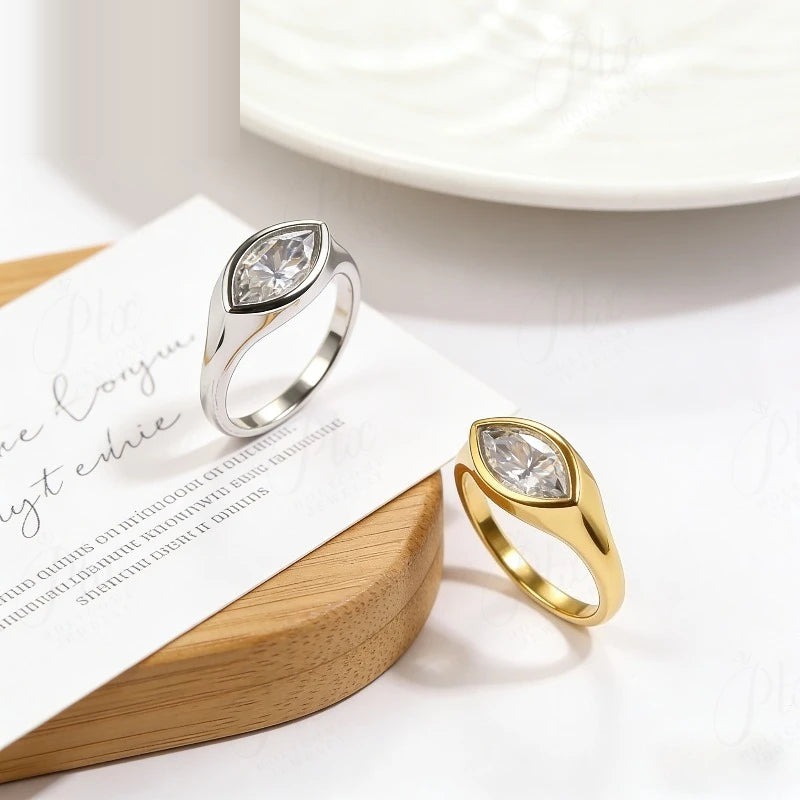
Material language on Metal Guide is full of words that mean less than they sound: 'gold plated', 'premium silver', 'long-lasting finish'. Here is what each actually means in a specification.
Base metals
Brass and copper alloys are the base for most plated fashion jewelry. Sterling silver is 92.5 percent silver. Gold is stated as a karat, which is a purity fraction, not a color.
On Metal Guide, the base metal decides the weight, the price floor and the nickel risk. Ask for it by name, not by category.
Ask for the mill certificate and the stone invoice. Two documents turn a material claim into something an auditor can check.
Plating and its vocabulary
Gold plated means a gold layer of some thickness; it says nothing about how thick. Gold filled means a bonded layer with a defined fraction of gold by weight, which is a stronger claim.
Ask for microns on plated and for the fraction on filled. Without a number, the word is marketing.
| Term | Means | Ask for |
|---|---|---|
| Gold plated | A gold layer, thickness unstated | Microns |
| Gold filled | Bonded layer, fraction by weight | Gold fraction |
| Sterling | 92.5% silver | Stamp and weight |
| Brass base | Copper-zinc alloy | Nickel test |
| Satin finish | Directional brush | Finish sample |
Read the table as a checklist rather than a recommendation. The right row depends on the price band, the wear pattern and the channel you sell into.
Write the remedy matrix before the first defect: remake, credit, allowance or rework, each tied to a defect class.
Finishes: polished, satin, brushed, antique
Each finish changes the wear pattern. Polished shows scratches first; satin and brushed hide them longer; antique oxidises the recess and needs a stable plate underneath.
On Metal Guide, match the finish to the wear pattern of the category, not to the photo.
What to write in the spec
Base metal, purity or karat, gram weight, plating type and microns, finish, and the nickel standard. Six lines that make every material claim checkable.
A material claim that cannot be checked is the one that gets challenged.
A supplier who will name the mill, the stone source and the plating shop is a supplier you can audit. A supplier who will not is a price with no chain behind it.
What to check before the order
Run the five checks below in order. The first two protect the money, the last three protect the launch date.
- Name the base metal in the spec.
- Ask for microns on every plating claim.
- Ask for the gold fraction on filled.
- Match finish to the wear pattern.
- State the nickel standard.
If a supplier cannot answer three of the five, treat the quote as a starting point rather than a plan. Ask again in writing and keep the answer with the PO.
Frequently Asked Questions
What is the difference between gold plated and gold filled on Metal Guide?
Plated is a layer of unstated thickness; filled is a bonded layer with a defined gold fraction by weight. Filled is the stronger claim.
Is sterling silver always better than brass?
Not for every price point, but it is a stronger material claim. Brass with a good plate can be honest if it is described as brass.
What does 18K mean?
Seventy-five percent gold by weight. The color depends on the alloy, not on the karat alone.
Which finish hides scratches best?
Satin and brushed hide fine scratches; polished shows them first.
How do I verify a material claim?
XRF on the first lot plus the mill certificate. A stamp is a claim, not a test.
How do I compare two quotes for this item?
Split both into metal, stone, labor, finishing and overhead, then compare line by line. A single total hides the specification difference.
Send the Metal Guide material list. We return a plain-language specification with the six lines and the test each line needs. See the full range at Metal Guide and HOLYCOME.
Buyers who get consistent lots are not luckier. They wrote the spec down and checked the first carton against it.
Looking for Wholesale Jewelry?
Wuzhou HengliLai Jewelry Co., Ltd. - Professional gemstone and jewelry manufacturer in Wuzhou, China. OEM/ODM services, factory-direct pricing, low MOQ.
Contact on WhatsApp service@holycome.comWholesale Order Terms
As a factory-direct jewelry manufacturer, we quote every order against stone type, metal, setting and finish. Loose stones are priced per carat, finished rings, earrings and bracelets per piece, and custom metal work per gram. Send your stone, metal, size and quantity for a wholesale price list in USD, quoted with FOB, EXW or DDP shipping terms.
MOQ & Pricing
Minimum order quantity (MOQ) starts from 5 pcs per style. Mixed-SKU orders are accepted, and volume discounts apply from 50 pcs; pricing is tiered by quantity and quoted per piece, per carat or per gram.
Lead Time
Ready-stock pieces ship in 2-5 business days. Custom sampling takes 5-10 days; bulk production lead time runs 10-25 days, depending on design, stone size and order quantity, confirmed in your written quote.
Payment Terms
We accept T/T telegraphic bank transfer, PayPal, Alibaba Trade Assurance and Western Union. OEM and private-label orders require a 30% deposit, with the 70% balance paid before shipment.
Shipping
DHL, FedEx and UPS for samples and small orders; air or sea freight for bulk. Worldwide delivery under FOB, EXW or DDP terms, with QC photos shared before dispatch.
