Platinum vs Palladium: Which White Precious Metal Is Right?
Walk into a jewelry store asking for a "white metal wedding ring" and you will usually be shown white gold first, then platinum, and only occasionally palladium. That ordering reflects marketing budgets more than the actual merit of the metals. Palladium is the quieter cousin of platinum: same mineral family, naturally white, hypoallergenic, and far less expensive, yet most buyers have never been offered it. If you are trying to decide between the two premium white metals, this comparison walks through what you actually get for the money.
Platinum's reputation is built on a century of association with engagement rings and a visibly heavy, substantial feel. Palladium, on the other hand, is lighter, stiffer, and more modern in character, favored by designers who want a white band that does not weigh down the hand. Both are rarer than gold, both carry no nickel, and both stay white without plating. The choice between them comes down to weight, budget, hardness, and the kind of surface finish you want over decades. For the broader picture, our platinum purity, durability and cost guide and our palladium jewelry guide go deeper on each metal individually.
What the Two Metals Share
Platinum and palladium are both members of the platinum group of metals, six elements that occur together in nature and share properties like corrosion resistance, density, and rarity. Both are naturally white, meaning they do not depend on a rhodium flash coat for their color. That is the single biggest difference between them and white gold, which starts life as yellow alloy and is plated to look white. Over years, white gold's plating wears off and must be reapplied; platinum and palladium simply stay themselves.
Both are also hypoallergenic. Fine jewelry platinum is alloyed usually with copper or cobalt, and palladium with small amounts of ruthenium or gallium, neither of which contains nickel. That makes both metals the default choice for anyone whose skin turns green or breaks out against lower-karat gold or sterling silver. If allergies are your main concern, you can shop either metal with confidence; our hypoallergenic jewelry sourcing guide explains which alloys to avoid.
Finally, both are recyclable and hold intrinsic value as precious metals. A platinum or palladium ring is not a disposable fashion item; when it is eventually retired, the metal can be melted and reused, which is why both metals hold their scrap value better than plated alternatives.
Weight: The Most Noticeable Difference
Pick up a platinum band and then a palladium band of the same width, and the first thing you notice is the weight. Platinum is one of the densest metals used in jewelry, roughly 60 percent heavier than the same volume of 14k gold. A platinum wedding band feels substantial, almost luxurious, in the hand, and that heft is part of why people associate it with commitment. Palladium, by contrast, is less than half the density of platinum, so a matching band feels light and effortless.
That heft is either a feature or a bug. Buyers who love the solid, weighted feel of a ring that "stays put" often prefer platinum. Buyers who dislike the sensation of a heavy band on their finger, or who wear rings daily and want the piece to disappear, often prefer palladium. Palladium is especially popular for men who find wide platinum bands too heavy after a full day at a desk.
Because platinum is denser, the same ring uses more metal by volume, which is a major reason it costs more. You are partly paying for material weight, not just rarity. For a heavy, traditional band, platinum is unmatched; for an all-day everyday ring that you barely notice, palladium is the more comfortable choice.
Price and Value
Platinum sits at the top of the precious metal price table. A platinum wedding band commonly costs two to three times what a comparable 14k white gold band costs, and it is more expensive than palladium by a significant margin. The price reflects density, scarcity, and the extra work required to cast and polish it, since platinum melts at a much higher temperature and demands specialist equipment.
Palladium is a genuine value in the white precious metal market. It costs well under platinum while remaining a rare, naturally white, hypoallergenic metal. A palladium band often costs roughly what a high-karat white gold band costs, without the ongoing plating maintenance. For a buyer who wants platinum's white purity and hypoallergenic properties but not platinum's price or weight, palladium is the obvious compromise.
One caveat: palladium prices fluctuate with industrial demand, since palladium is heavily used in automotive catalytic converters. That means the spot price can move more than gold's, and retail prices track those swings. Platinum, while also industrial, is more concentrated in jewelry demand, which can smooth its price. For a wholesale buyer, that volatility matters; for a retail buyer choosing between the two today, palladium is usually the more affordable white metal.
Hardness, Workability, and Wear
Platinum used in jewelry is typically 95 percent pure (marked Pt950). At that purity it is relatively soft and malleable, which is why it develops a satiny patina over years and why prongs can be pushed back down securely if they loosen. Platinum does not "wear away" in the way plated metal does; it piles up rather than disappears, which is part of why it is prized for heirloom rings. It does scratch, but those scratches soften into a rich matte finish rather than exposing a different color underneath.
Palladium is harder and stiffer than platinum, which makes it more scratch-resistant on a day-to-day basis and less prone to bending under pressure. That stiffness is good for a slim band that needs to keep its shape, but it also makes palladium harder to work with: casting requires higher temperatures, and resizing a palladium ring is a job for an experienced jeweler rather than a quick bench repair. If you plan to resize the band later or set delicate stones, factor in that specialist cost.
In terms of surface finish, platinum ages into a soft, warm patina that many owners prefer to a high polish; you can re-polish it to a mirror shine whenever you like. Palladium stays brighter and more reflective longer, because its hardness resists micro-scratching. If you like the "forever polished" look without maintenance, palladium ages better; if you like a developing, lived-in patina, platinum ages more characterfully.
Settings and Stone Compatibility
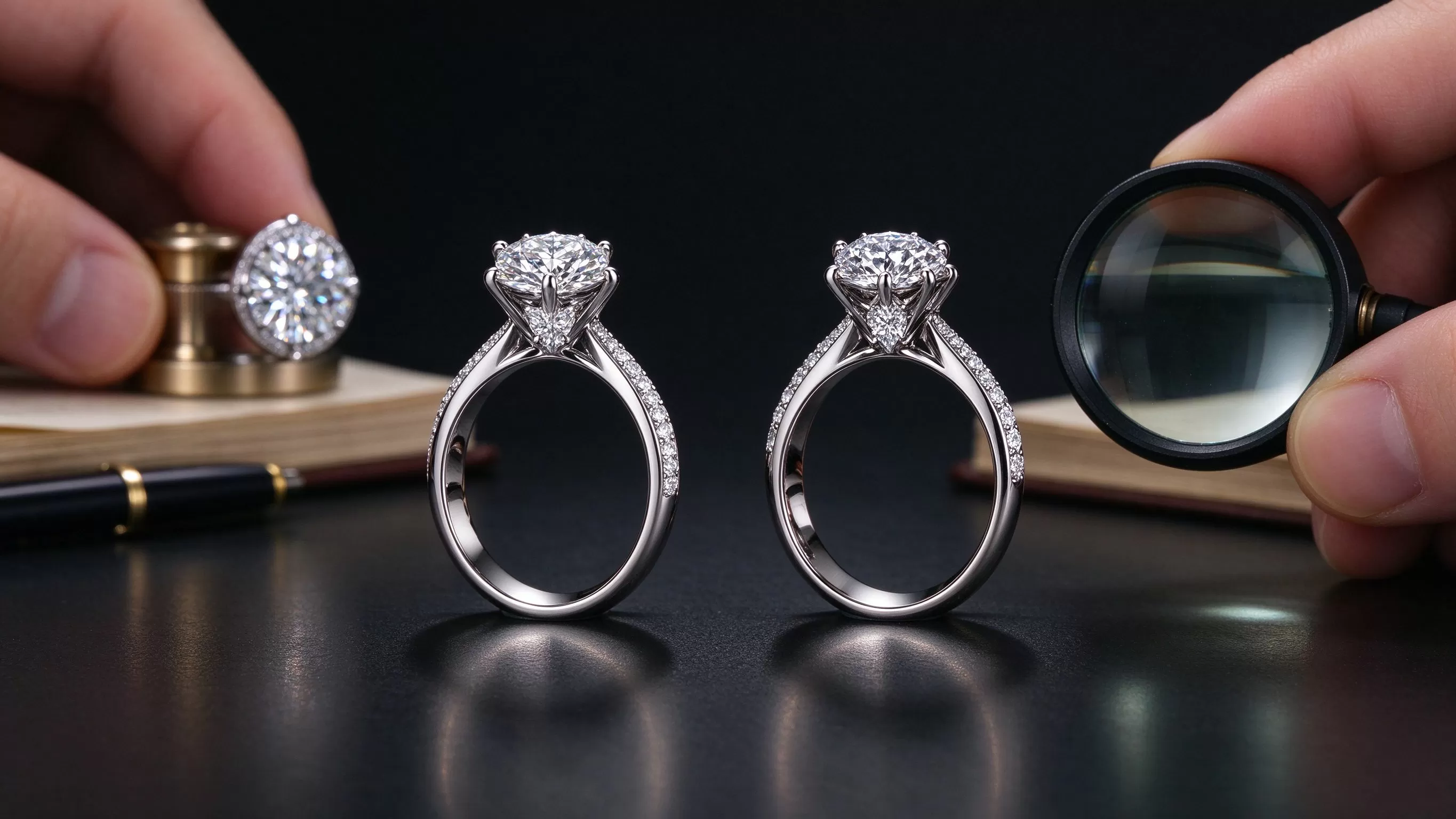
Both metals hold diamonds and colored gems beautifully. Platinum's softness lets prongs grip a stone very securely, and many high-end engagement rings use platinum prongs even on a white gold shank, precisely because the metal holds its setting. Palladium's stiffness makes it excellent for thin, modern bands and tension-style settings, where a rigid metal is an advantage.
For an engagement ring with a center diamond, platinum remains the traditional choice because the dense, soft metal can be burnished tightly around the girdle. For a wedding band worn alone or stacked, palladium is equally at home and noticeably lighter. If you are choosing a matching his-and-hers set, many couples now put the engagement ring in platinum and the bands in palladium to manage the total cost.
Because both metals are naturally white, they pair seamlessly with colorless diamonds and with cool-toned sapphires. Yellow or rose gold accents contrast sharply against either, and two-tone designs work well in both. For more on how white metals pair with stones, our white gold versus platinum bridal guide covers the most common comparison.
Hypoallergenic and Skin Feel
This is the category where both metals shine, but palladium has a slight edge in marketing. Platinum, especially Pt950 alloyed with cobalt, is safe for nearly everyone. Palladium, alloyed with ruthenium, is even more widely recommended for severe nickel allergies because it contains no nickel, no copper in most formulations, and is so pure that skin rarely reacts. If you have a history of turning green or developing a rash under rings, palladium is the safest low-risk choice available in fine jewelry.
The skin feel of the two metals also differs. Platinum, being denser, holds warmth and feels "anchored" on the finger. Palladium, being lighter, feels cooler and less intrusive. For someone who lives in a warm climate or removes rings often, palladium's lightness can be more comfortable. For someone who wants the ring to feel permanent and weighty, platinum delivers.
Maintenance and Long-Term Costs
Neither metal needs rhodium plating, which is the main recurring cost of white gold. Platinum develops a patina that you can choose to polish or leave; over decades, a platinum ring loses almost no metal because it merely redistributes. Palladium stays bright with almost no maintenance, and because it is harder, it scratches less often. Both metals can be professionally cleaned in an ultrasonic machine safely, provided the setting has no fractures.
The long-term cost difference is subtle. Platinum may need occasional re-polishing if you prefer a mirror finish, and resizing or prong repair on platinum is more expensive than on gold because of the specialist work. Palladium resizing is similarly specialist-level. Budget for both metals as "fine jewelry with occasional service," not as plated fashion jewelry that must be re-dipped annually. Our platinum patina care guide details the routine.
Ethics, Recycling, and Sourcing
Both metals score well on the ethical front compared with newly mined alternatives. Platinum and palladium are among the most recycled precious metals, and much of the jewelry-grade material in circulation is refined from industrial scrap rather than fresh mining. Because neither metal is sold with the marketing mythology that surrounds diamond, buyers do not pay for a conflict premium or a branded supply chain. Many modern designers prefer both metals for sustainable lines precisely because they are endlessly recyclable and require no plating.
For wholesale buyers and brands, the practical sourcing difference is that platinum casting demands specialist foundries equipped for high-temperature melting, which limits suppliers and adds cost. Palladium is easier to source and cast in standard fine-jewelry workshops, which is one reason smaller brands launch with palladium bands before moving to platinum. If you are building a line, read our guide to finding reliable jewelry manufacturers to understand how alloy choice affects minimum order and tooling.
How to Decide
- Choose platinum if you want the heaviest, most traditional white band, a developing patina, and secure prong settings, and budget allows it.
- Choose palladium if you want a naturally white, hypoallergenic band that is light, stays bright, and costs well under platinum.
- Choose platinum for an engagement ring center setting where prong grip matters; choose palladium for a comfortable everyday band.
- If you have severe metal allergies, both metals are safe, with palladium being the lower-allergy option.
- Try both on for weight before deciding, because the difference in hand-feel is more persuasive than any description.
Frequently Asked Questions
Is palladium as good as platinum for jewelry? Palladium is a genuine precious platinum-group metal, naturally white and hypoallergenic. It is lighter and harder than platinum, making it comfortable and affordable, though it lacks platinum's weight and rich patina.
Why is platinum more expensive than palladium? Platinum is denser and requires more specialist work, and it carries stronger luxury demand. Palladium is lighter and more abundant, so a matching ring uses less metal and costs less.
Does palladium tarnish or turn yellow? No. Palladium stays naturally white and never needs rhodium plating. It may develop a soft satin patina over the years, but it will not yellow or tarnish.
Which is better for metal allergies? Both are nickel-free and hypoallergenic. Palladium is especially recommended for sensitive skin because of its high purity and simple alloying.
Can a palladium ring be resized? Yes, but palladium melts and welds at higher temperatures than platinum, so an experienced jeweler should do the work rather than a general repair shop.
Bottom Line
Platinum and palladium are two ways to own a naturally white, hypoallergenic precious metal without the plating treadmill of white gold. Platinum wins on tradition, weight, and the warm patina that develops over a lifetime. Palladium wins on price, lightness, and a bright, modern finish that ages beautifully. The right choice is usually decided by how the ring feels on your finger and what you can spend, not by any claim that one metal is "better" in absolute terms. We cast both platinum and palladium bands in our Shenzhen workshop in Henggang, Longgang, and we can produce matching or two-tone sets at wholesale. If you want samples to compare weight, or a quote on a custom band, email service@holycome.com. More metal deep dives live in our Metal Guide library.