Professional Jewelry Cleaning vs At-Home: Which Do You Need
Every piece of jewelry eventually looks dull, and the first question is whether you can fix it at home or need to take it to a jeweler. The answer depends on what is causing the dullness. Most of the time, a few minutes with warm soapy water and a soft cloth restores the shine, and paying for a professional clean is unnecessary. But some situations, hidden dirt under a stone, loose prongs, heavy tarnish, or a piece with a fragile setting, genuinely need a professional. This guide explains the difference so you do not waste money on a home job you cannot do, or damage a precious piece trying to save the cost.
We will cover what home cleaning can and cannot fix, what a jeweler actually does during a professional clean, which pieces should never be cleaned at home, and how often to schedule professional visits. If you are starting at home, our general cleaning guide has the safe routine, and our ultrasonic guide explains why those machines are not always safe.
The confusion between home and professional cleaning is common. People assume that if a little soap and water works, more powerful machines must work better, or conversely that any dull piece needs a jeweler. Both assumptions are wrong. Home cleaning works for surface film, but powerful home machines can damage fragile stones, while a jeweler knows which pieces can handle professional equipment. The cost difference is not the main factor, because home cleaning is nearly free; the real difference is the inspection and the ability to reach hidden dirt. This guide will help you decide, piece by piece, where each job belongs.
What Home Cleaning Can Do
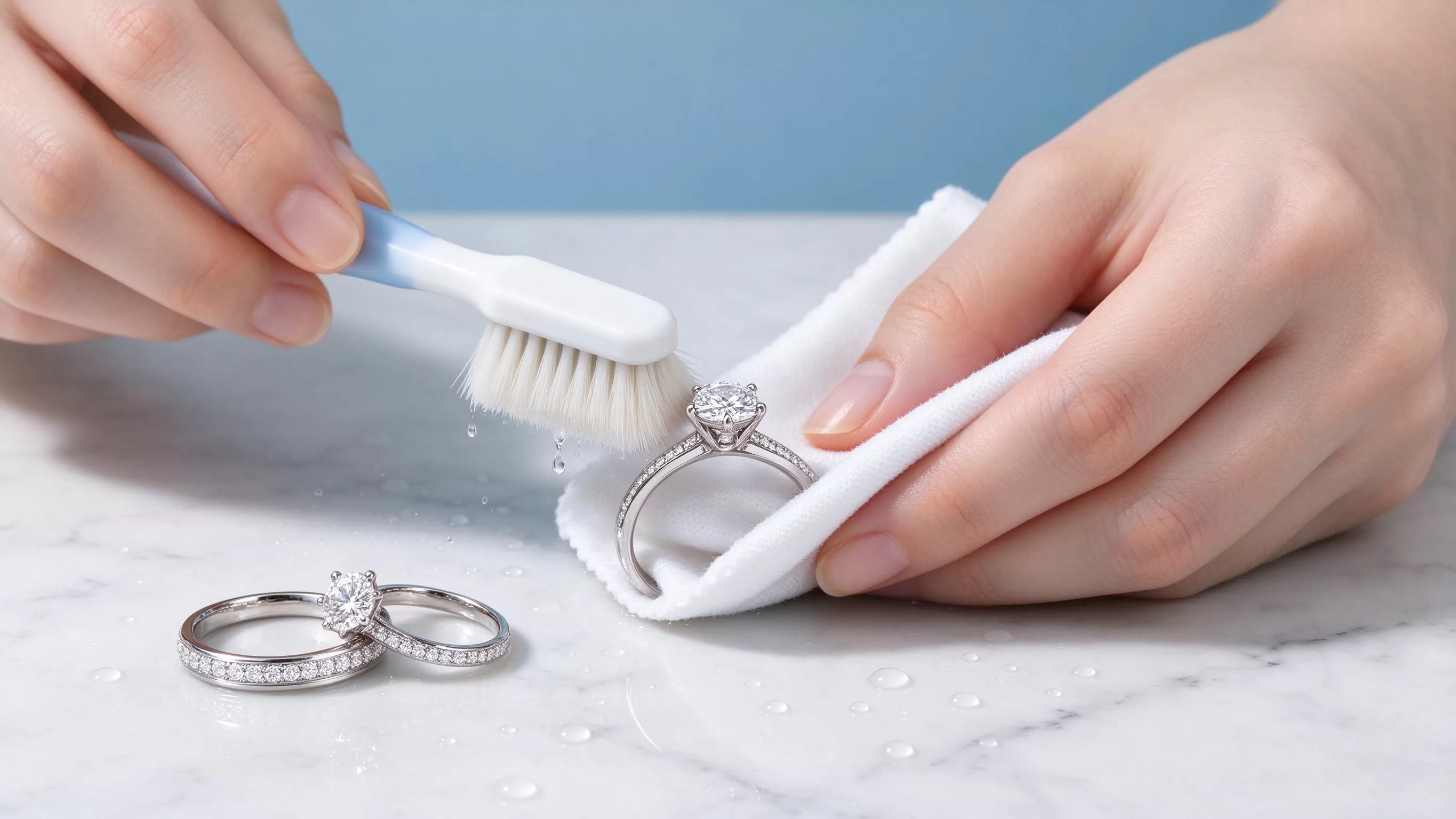
Home cleaning handles the most common problem: surface film. Soap, lotion, skin oil, and daily grime build up on gold and gemstones, making them look dull. A soak in warm soapy water, a gentle brush, and a rinse remove that film and restore sparkle. This works for most gold, platinum, diamond, sapphire, ruby, and sterling silver pieces. It is safe, free, and takes ten minutes.
Home cleaning also removes light tarnish on silver. A polishing cloth takes off the thin gray film that builds up over months. For gold, a polishing cloth removes light scratches and restores shine, as our polishing cloth guide explains. Between professional visits, home cleaning keeps your pieces looking good.
What home cleaning cannot do is reach dirt under stones, around prongs, or inside hidden settings. A ring worn for years accumulates skin oil and lotion under the stone, which home brushing cannot dislodge. That hidden dirt dulls the center stone, and only an ultrasonic or steam clean can remove it. Home cleaning also cannot fix loose prongs, bent bands, worn plating, or scratches deep enough to need refinishing. Those are professional jobs.
What a Professional Clean Actually Does
A jeweler starts by inspecting the piece. They check prongs, settings, and stones for damage before any cleaning, because a loose stone can fall out during an ultrasonic cycle. This inspection alone is worth the visit, because catching a loose prong early saves the stone. If everything is secure, the jeweler cleans the piece.
The professional clean uses an ultrasonic machine, which uses high-frequency sound waves in a cleaning solution to dislodge dirt from crevices, followed by steam to blast away remaining grime. This reaches under stones and around settings in a way hand brushing cannot. Then the jeweler hand-polishes the piece with a cloth, checks the prongs again, and returns it looking new. For white gold, a professional clean often includes a rhodium touch-up if the plating is worn.
The cost of a professional clean is usually modest, and many jewelers clean pieces you bought from them for free. The real value is the inspection: a jeweler catches a loose prong, a crack in a stone, or a worn band that you would never notice at home. That inspection alone justifies an annual visit for fine jewelry.
Which Pieces Should Never Be Cleaned at Home
Some pieces are dangerous to clean at home. Soft gems, including opal, emerald, pearl, turquoise, lapis, and amber, can be damaged by soaking, harsh chemicals, or ultrasonic machines. These stones need a jeweler who knows how to handle them. Our stone-by-stone guide lists safe methods.
Treated or fractured stones, including clarity-enhanced diamonds, dyed gems, and heat-treated stones with unstable coatings, should be cleaned professionally. Antique and vintage jewelry, with old settings and delicate work, also benefits from a professional who understands construction. Plated and vermeil pieces should never be dipped or ultrasonic cleaned at home, as our plated care guide explains.
Pearl and opal jewelry are the clearest cases. A pearl necklace soaked in water loses its luster, and an opal cleaned in an ultrasonic machine can crack. These pieces need a jeweler with the right materials. If you are unsure about a piece, ask a professional rather than experimenting at home. When in doubt, a gentle wipe with a soft dry cloth is always safe, and it is better than guessing and damaging something valuable.
How Often to Clean Professionally
For daily-wear rings, a professional clean and inspection once or twice a year is enough. Between visits, gentle home cleaning keeps the piece bright. For special-occasion jewelry, a professional clean once a year before a big event is a reasonable schedule. The annual inspection is the real reason to go, because prongs loosen over time and a loose stone is the most common way people lose gems.
If you wear your ring every day, consider the annual clean a preventive maintenance task, like a dental checkup. Catching a loose prong early is cheap; replacing a lost diamond is expensive. Many jewelers offer free cleaning and inspection for lifetime, so there is no cost to going in. Our repair guide explains the common issues that inspections catch.
Home Cleaning Products to Avoid
Not every home product is safe. Jewelry cleaning dips are designed for solid gold and silver, and they strip plating, dull treated stones, and can damage antique settings. Ultrasonic machines bought for home use are risky for the same reasons. Toothpaste, baking soda, and powdered abrasives scratch gold and silver. Bleach and harsh chemicals pit metal and attack prongs.
The safe home toolkit is short: warm water, mild fragrance-free dish soap, a soft baby toothbrush, a lint-free cloth, and a jewelry polishing cloth. That is enough for 90 percent of home cleaning. If a piece does not come clean with those, it is probably a job for a professional rather than a stronger chemical. Our diamond cleaning guide uses exactly this method.
Travel and Professional Cleaning
If you travel often, you do not need to wait until you get home to get jewelry cleaned. Most jewelers will clean a piece for a small fee or free, even if you did not buy it there, while you wait. This is useful before a big event on a trip, or after a beach vacation when salt and sunscreen have filmed your rings. A quick clean at a local jeweler restores sparkle for dinner. Our travel care guide covers packing and on-the-road cleaning.
When traveling, never pack fine jewelry in checked luggage, and keep cleaning supplies simple. A small jewelry cloth in your travel pouch is enough for wiping off sunscreen and sweat on the road. Save the deep clean for when you get home, or for a local jeweler if you need the piece to look its best for photos.
What to Do Before a Big Event
Weddings, parties, and anniversaries are the most common reason people want a professional clean. Bring the piece to a jeweler a few days before the event, not the morning of, in case the inspection finds a loose prong that needs fixing. A professional clean and polish makes an engagement ring look new for photos, and the inspection prevents a stone from falling out during the event.
For the night before, avoid applying lotion or perfume after putting the jewelry on. The day of, a quick wipe with a cloth removes any film. This routine means the piece looks its best without last-minute stress. If you are buying a new piece for the event, ask the jeweler to clean and inspect it before pickup, so it arrives ready to wear.
How to Find a Good Jeweler
A good jeweler is worth keeping, because they get to know your collection over years. Look for a local jeweler who does cleaning and inspection, rather than a big chain that treats cleaning as a transaction. Ask whether they inspect prongs before cleaning, and whether they do repairs on site. A jeweler who can tighten a prong while you wait is more useful than one who sends pieces away.
For valuable or antique pieces, ask about their experience with the stone type. A jeweler who regularly cleans opals and pearls will know the safe methods, while a general jeweler may default to an ultrasonic cycle that damages them. Read reviews, and ask friends for recommendations. Our repair guide lists common services and what they cost.
Cost Comparison: Home vs Professional
Home cleaning costs almost nothing: warm water, dish soap, and a cloth. A professional clean costs between ten and fifty dollars depending on the jeweler and the piece, and many jewelers clean pieces you bought from them for free. For the price of one professional clean, you can buy a year's worth of polishing cloths and soap. So financially, home cleaning is the obvious choice for routine dullness.
The professional visit is not really about the clean. It is about the inspection. A loose prong that would cost fifty dollars to tighten today can cost thousands if the stone is lost. The professional clean is the low-cost reason to get the inspection. Think of it as a checkup, not a wash. If your jeweler offers free cleaning and inspection, take advantage of it, because the inspection alone is the valuable part.
Frequently Asked Questions
Is professional jewelry cleaning worth it? For routine dullness, home cleaning is enough. Professional cleaning is worth it for hidden dirt, loose prongs, and fragile settings.
What do jewelers use to clean jewelry? Ultrasonic cleaners, steam, and hand brushing, plus a prong inspection.
Is ultrasonic cleaning safe for all jewelry? No. Soft and treated stones can be damaged. A jeweler knows which pieces can take it.
How often should I get jewelry professionally cleaned? Once or twice a year for a deep clean and prong inspection.
Can I damage jewelry by cleaning it at home? Yes, with the wrong products. Gentle soap and water is safe for most pieces.
Use Home Cleaning for Most Things, Professionals for the Rest
The right balance is simple. Clean most pieces at home with warm soapy water and a soft cloth, and take fine jewelry to a professional once or twice a year for a deep clean and prong inspection. Soft gems, plated pieces, and vintage jewelry go to the jeweler, not the kitchen sink. This split keeps your pieces bright and catches problems before they become expensive repairs.
A useful rule of thumb: if a piece looks dull after a gentle home soak, it is probably hidden dirt under the stone or a worn finish, not surface grime. Take it to a jeweler. If it looks better after the soak, home cleaning was the right call. Over time, you will learn which of your pieces respond to home care and which genuinely need professional attention, and that knowledge saves both money and stress. Building a relationship with one trusted jeweler means someone who knows your pieces, remembers your settings, and can spot a change quickly. That familiarity is worth more than the cheapest clean in town. We clean, inspect, and re-set jewelry in our Shenzhen workshop in Henggang, Longgang, and we can advise on whether a piece needs a professional clean or a safe home wipe. Email service@holycome.com for a cleaning service quote. More care guides live in our Care & Cleaning library.