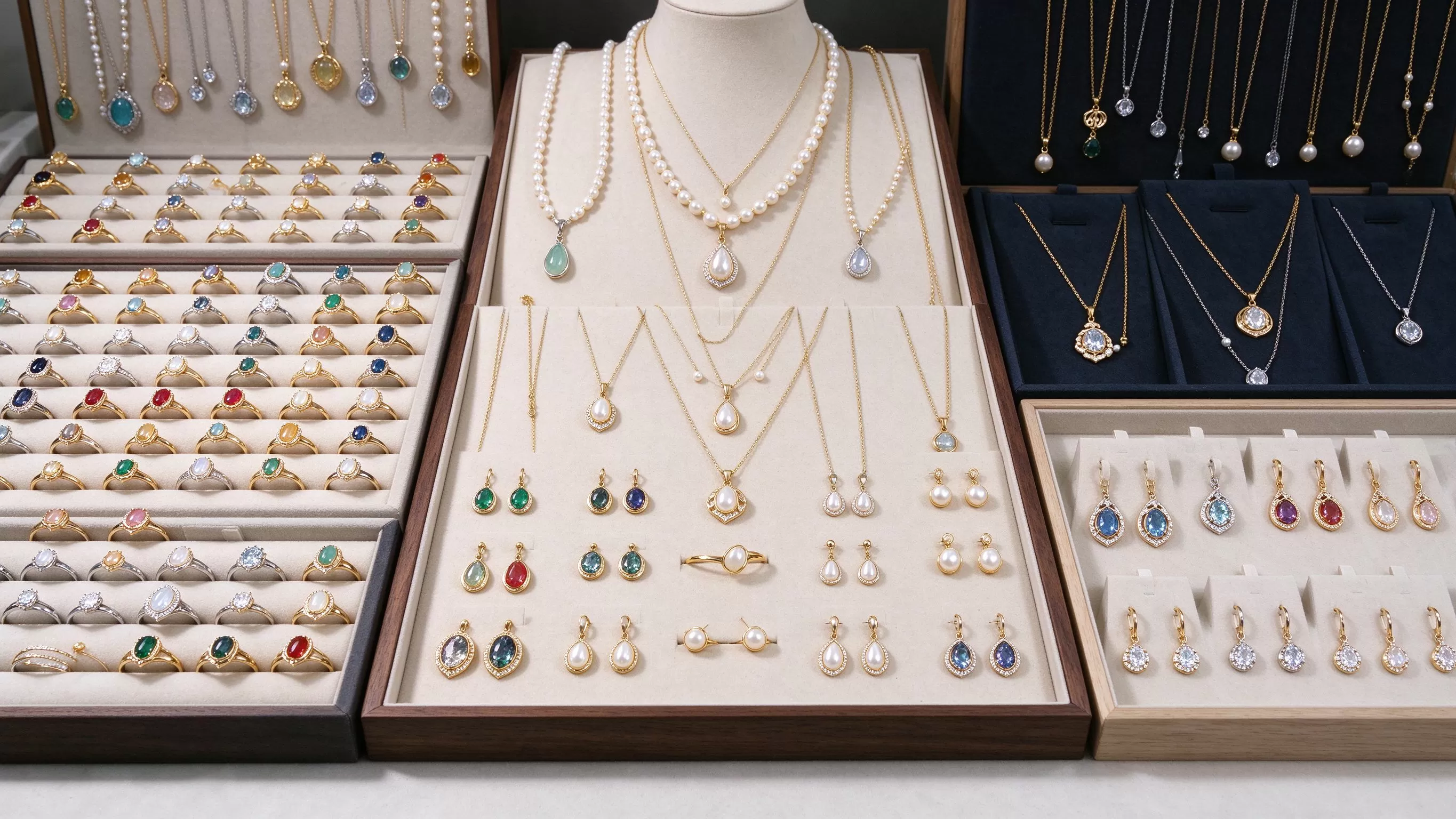
Vintage-inspired jewelry — Art Deco geometry, Victorian filigree, Edwardian halos — consistently outsells generic modern designs. But retailers do not need to buy actual antiques. Sourcing vintage-style reproduction jewelry wholesale lets you stock the look at modern margins. This guide explains how to do it right.
Vintage Style vs Actual Vintage
Actual antique jewelry is rare, expensive and often in worn condition. Vintage-style reproductions are newly made pieces that borrow period design language: milgrain edges, open filigree, halo settings, geometric motifs. They are affordable, consistent and brand-new. Understanding the difference helps you position the product — and avoid being sold "vintage" when it is actually new (see our guide to buying real vintage).

The Period Styles That Sell
Art Deco (1920s–30s)
Geometric shapes, milgrain edges, baguette stones and symmetrical lines. This is the most commercially popular vintage revival, especially for engagement and bridal.
Victorian (1837–1901)
Flowers, scrollwork, lockets and rose gold warmth. Strong in pendants and earrings.
Edwardian (1901–1910s)
Delicate filigree, lace-like metalwork, halos. The most romantic, delicate look.
For the style history, read our vintage styles guide.
What to Specify When Sourcing
- Milgrain edges — the tiny beaded border is the hallmark of period look.
- Open filigree or lacework on the shank, not a plain modern band.
- Correct settings — pavé and bezel as period styles require.
- Finish — antique silver or rhodium can mimic aged metal; specify if you want it.
- Metal — sterling silver with rhodium for the Edwardian look, rose gold for Victorian.
A precise tech pack with reference photos is what gets the factory close to the look on the first sample.
Positioning and Pricing
Vintage-style pieces sell on story and design detail. They do not need antique price tags, but they should be merchandised with the period named ("Art Deco inspired"). Because reproductions are made in wholesale volumes, you can price them at accessible retail while keeping healthy margins.
The Bottom Line
You do not need antiques to sell the vintage look. Source well-made reproductions, specify period details like milgrain and filigree, and merchandise them by era. It is a proven, repeatable wholesale category.
Getting the Vintage Look Without Overpaying
The art of vintage-style sourcing is to borrow the period details without paying antique prices. The details that read as "vintage" are specific: milgrain beading along the edges, open filigree on the shank, and correct setting types like pavé and bezels. If a reproduction skips these details, it looks modern and cheap, not vintage. Give the factory clear reference photos of the exact era you want, and ask for those hallmark details by name. A piece with proper milgrain and filigree reads authentic; one without them just looks like a plain modern ring.
Period details to specify
- Milgrain beaded edges for Art Deco and Edwardian looks.
- Open filigree or lace-like metalwork on the band.
- Correct period setting types (pavé, bezel, channel).
- Antique silver or warm gold finish where appropriate.
Merchandising Vintage-Style Pieces
Vintage-style pieces sell when you name the era. Market them as "Art Deco inspired" or "Edwardian style" rather than generic "classic rings," because buyers respond to the story. The vintage styles guide explains each period so you can describe your line accurately. Because reproductions are made in volume, you can price them accessibly while keeping healthy margins. Position them as affordable heirlooms — the look of antiques, the consistency of new manufacturing — and they become a steady, repeatable category in your catalog.