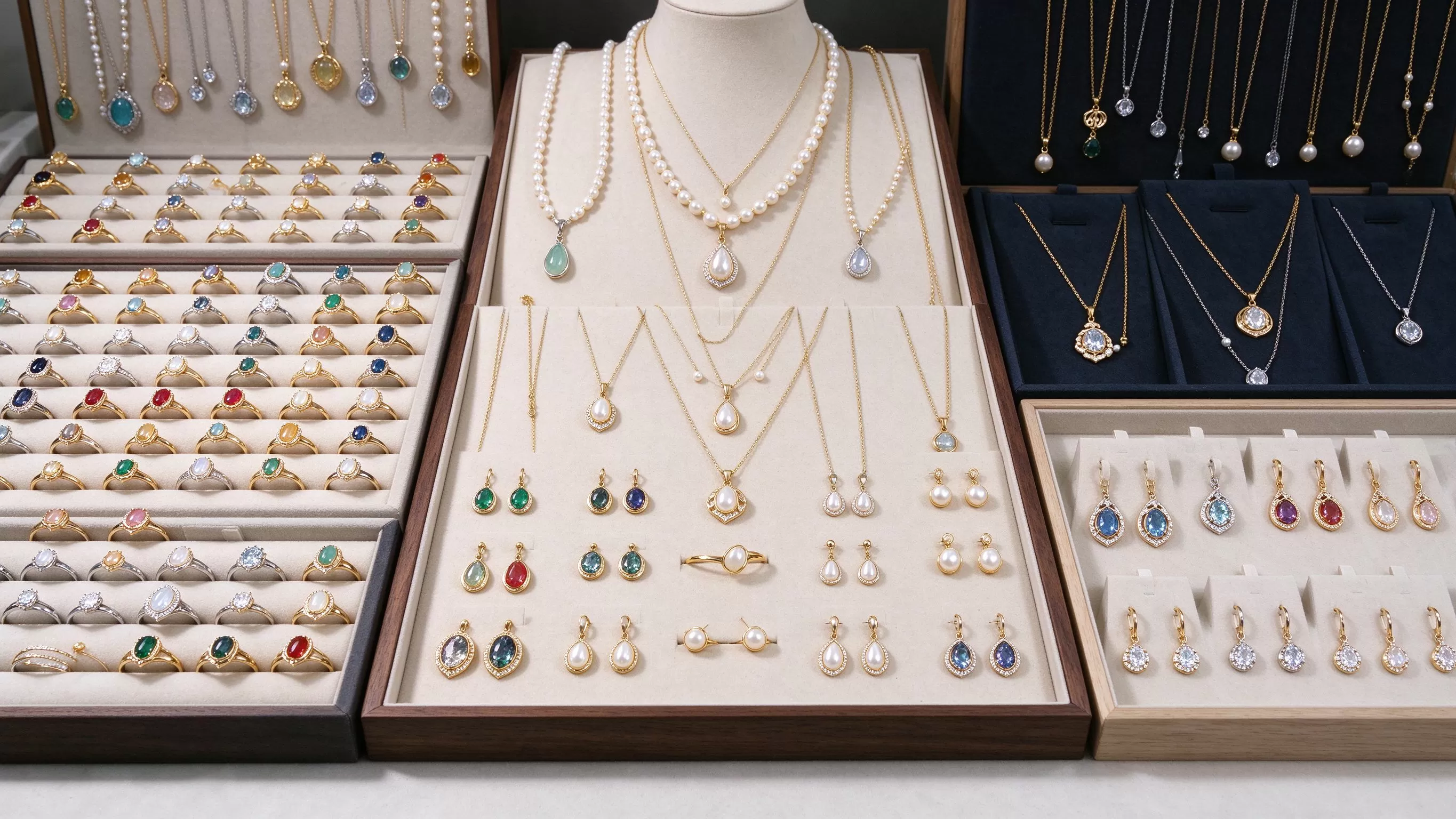
In wholesale jewelry, the catalog only gets a buyer's attention — the sample kit closes the order. Buyers need to feel the weight, see the finish and test the clasp before they commit to a line. Assembling the right samples and a clean lookbook is one of the highest-return investments a brand can make.
Why a Sample Kit Matters More Than a Catalog
Photos show design; samples show quality. A buyer who can hold your ring, turn it in the light and test the clasp is comparing your metal thickness, your plating quality and your stones against the competition in their hand. That tactile comparison is what justifies your price point. This is especially true when buyers are deciding between a wholesaler, trader or factory — the sample reveals who actually controls quality.
What Goes Into the Kit
Hero samples
Choose 8–15 of your strongest pieces — the ones that best represent the line. Include one of each major category (ring, necklace, earring, bracelet) so the buyer can evaluate your range.
Material and finish references
Include small swatches showing your metal finishes, plating colors and stone quality. This lets buyers compare against their current line side by side.
The lookbook / line sheet
A clean printed or PDF lookbook with each piece photographed, plus a line sheet listing SKU, metal, dimensions, price and MOQ. Keep it professional — buyers use it to write orders.
For packaging that supports the kit, see our guide to private-label packaging.
How to Prepare Samples for Maximum Impact
- Clean and polish every piece before it ships — a tarnished sample tells the buyer your quality is low.
- Price each piece on the line sheet, not secretly; hesitation kills orders.
- Label samples with SKUs so the buyer can write the correct order numbers.
- Protect them in transit — scratched samples arrive as damaged samples. Use proper boxes and padding.
Using the Kit in Meetings and Trade Shows
At a trade show, the kit lets you move from "here is our catalog" to "try this on." At a factory visit, bring your best seller as a reference so the manufacturer understands the quality bar. A sample kit also streamlines sample approval because you already have a quality benchmark.
The Bottom Line
A jewelry sample kit turns interest into orders. Pick your strongest pieces, present them cleanly with a professional line sheet, and let the buyer hold the quality. In wholesale, what you can touch is what gets bought.
Packaging and Presentation in the Kit
A sample kit is judged partly by how it feels in the buyer's hands, so packaging matters. Samples should arrive in proper boxes or pouches, clean and untarnished, not loose in a jumbled bag. A scratched or fingerprinted sample signals poor quality even if the piece itself is good. Include a simple branded insert with your brand and contact details, so the buyer remembers who showed them the pieces. This is the same thinking behind private-label packaging — presentation is part of the product, and a professional kit closes more orders than a pile of loose samples.
Kit presentation checklist
- Each sample clean, polished and in its own box or pouch.
- SKU labels so buyers can write correct orders.
- A professional line sheet with price and MOQ.
- Your contact details and brand on a clean insert.
Following Up After the Show
The sample kit does the selling, but the follow-up seals the order. Send the line sheet while the pieces are still fresh in the buyer's mind, and note which samples they reacted to most. Keep the samples or leave them on consignment where appropriate, so the buyer can revisit the quality. Track which pieces get orders and double down on those, while phasing out samples that drew no reaction. Over time, your sample kit becomes a precise tool — showing you exactly what your market wants.