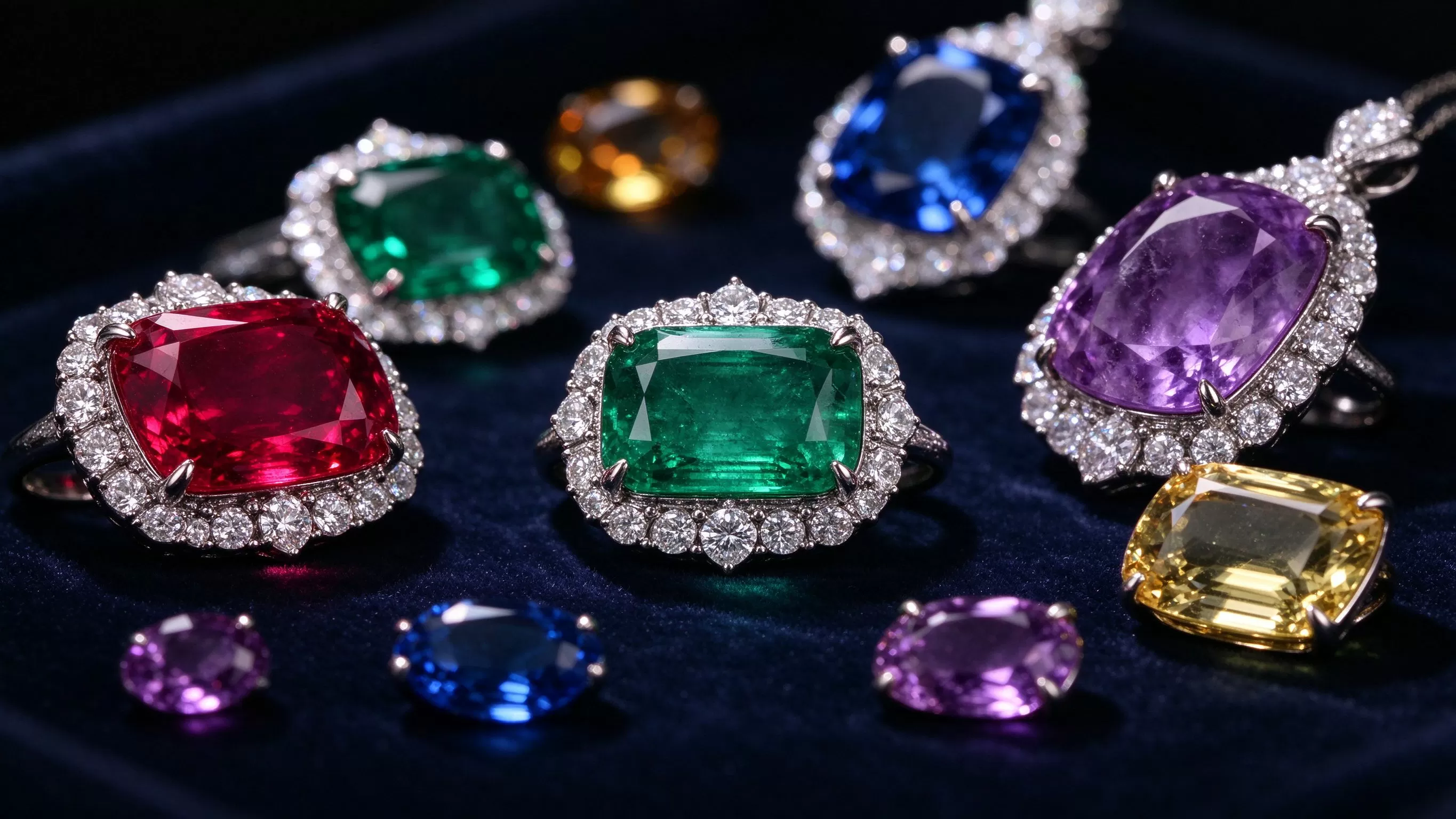
A buyer at a wholesale market sees a tray of 10x8mm oval purple stones priced at $1.80 per piece, minimum order 500, labeled "natural amethyst, Uruguay." Commercial Uruguayan amethyst in that size currently runs $4 to $12 per stone even at origin, and saturated deep-purple material goes higher. The price is less than half of what real amethyst should cost. The buyer is holding purple glass, or possibly a glass-and-amethyst doublet, and if she reorders 1,000 units she will be the one explaining the difference to 1,000 end customers.
This guide is for sourcing managers, boutique buyers and online retailers who need a repeatable way to separate amethyst from purple glass before a purchase order is signed. We cover why glass keeps slipping into parcels, five field tests that take under fifteen minutes, the price bands that expose mislabeling, and the disclosure rules that make a wrong guess expensive.
Why purple glass keeps passing as amethyst
Glass can be colored, faceted and cut to mimic amethyst almost perfectly, and it costs a tenth of the lowest-grade commercial stone. It is sold by the kilogram. Glass is also made into doublets, with a thin layer of real amethyst on top and purple cement below, which makes a quick visual check unreliable. Unlike amethyst, glass has no crystal growth structure, so it lacks the color zoning and internal fractures buyers are trained to look for. A parallel case is documented in our notes on separating emerald from green glass; the same bubble and flow-line logic applies to purple material.
Five field tests that separate amethyst from glass
1. Loupe inclusion check (10x). Look at the surface and under the girdle. Natural amethyst shows angular healed fractures, thin color zoning bands and jagged fissures. Glass shows round bubbles, swirling flow lines and sometimes a visible glue line around the crown. Round bubbles mean glass, period.
2. Thermal reaction. Hold the stone against your cheek for five seconds. Amethyst and other minerals feel cool against skin and stay cool; glass warms up almost immediately. A stone that feels room-temperature is a red flag.
3. Refractive index with a refractometer. Amethyst reads 1.544 to 1.553 with a visible double-refraction split. Common lead glass reads near 1.50 to 1.55 as a single flat line. This is the single most objective field test and the one a wholesaler should keep on the buying desk. The GIA amethyst reference lists the exact RI and specific gravity range.
4. Dichroism check with a polaroid filter. Amethyst shows weak to moderate dichroism, shifting between deep purple and reddish-purple as you rotate the stone. Glass is isotropic and looks the same from every angle.
5. Dip and microscope check. Immersing the stone in clean water under magnification reveals assembly layers and foil backings that a dry loupe hides. A cement line that follows the facet junction is a doublet, not a single natural stone.
Price bands that expose a mislabeled parcel
As a rule of thumb, commercial amethyst at 10x8mm currently sits in the $4 to $12 per stone band depending on color saturation and clarity; fine deep-purple material is higher. Any "amethyst" offered under roughly $2.50 per stone in that size should be assumed to be glass, a composite or heavily treated until tested. Treatments on natural amethyst (heat to lighten or deepen color) are accepted and common, but they must be disclosed. Selling a glass-filled composite as "natural amethyst" on a retail listing is a compliance exposure, not just a quality problem. For more on how other colored stones split between natural and imitation, see ruby versus garnet and sapphire versus blue topaz.
A simple buy-back test for the booth
Ask the booth to buy the stone back, or exchange it, in writing. A seller confident the parcel is natural amethyst will agree to a short return window for lab re-testing; a seller pushing a "today only" price with no return clause is signaling they do not want the stones examined. Keep the booth card, the receipt and a photo of the parcel label, because these are the documents a lab or payment provider will ask for if a later test comes back as glass. The cost of a refractometer and loupe is recovered on the first parcel that would otherwise have been mislabeled.
Frequently asked questions
How can I tell amethyst from purple glass with just a loupe?
Look for round bubbles and swirl flow lines, which confirm glass, versus angular healed fractures and color zoning bands, which indicate natural amethyst. A visible glue line around the crown means a doublet.
Does natural amethyst have bubbles?
Almost never. Round bubbles are a signature of glass or flux-grown synthetic material. Natural amethyst shows fractures, zoning and mineral inclusions instead.
Is heated amethyst still natural?
Yes. Heat treatment to lighten or deepen color is universal in commercial amethyst and accepted, but it must be disclosed. Glass filling or doublet assembly is a different product category.
What price should I pay for 8mm amethyst?
Commercial material in that size currently runs $3 to $10 per stone depending on saturation. Anything below roughly $2 should be tested before you reorder.
Want a consistent amethyst line that has been tested and disclosed? HOLYCOME ships natural amethyst parcels with size, color and treatment per lot. Send us your target price band and quantity for a factory quote and parcel photos.
Frequently Asked Questions
How do I verify a factory before a bulk order?
Request a production video, business licence, export records and a paid sample run.
What payment terms do you offer?
30% T/T deposit with the balance against the bill of lading.
What is your normal reject rate?
3 to 5% under 10x loupe inspection; defective units are replaced free in the next shipment.
Where is the factory?
Wuzhou, Guangxi, China, with shipments via Guangzhou or Shenzhen.