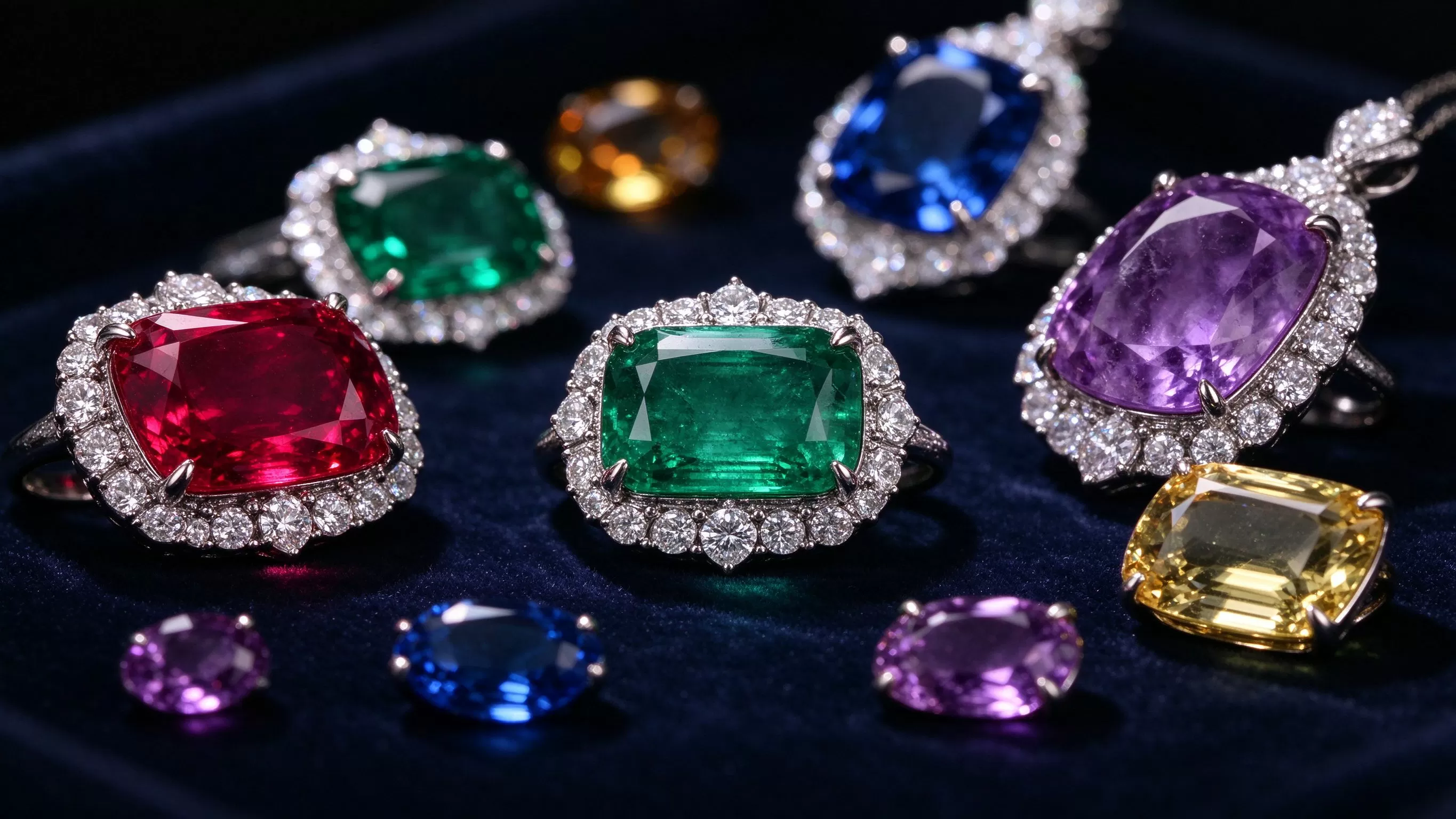
A boutique buyer walks a trade-show booth and sees a strand of 4mm red beads priced at $6 per strand wholesale. The booth card says natural ruby. The math does not work: untreated commercial ruby in that size usually clears $40 per strand even at origin. Most likely the parcel is pyrope or almandine garnet, and the buyer who reorders 500 units without checking inherits a mislabeling problem that lands on the store website, not the booth.
This guide is for wholesale buyers, boutique owners and sourcing managers who need a fast, repeatable way to separate ruby from red garnet before a PO is signed. We cover the mineral difference, four field tests that take under ten minutes, the price bands that expose mislabeling, and the disclosure rules that make a wrong guess expensive.
Ruby and garnet are not cousins; they are different minerals
Ruby is the red variety of corundum, aluminum oxide (Al2O3), colored by trace chromium. On the Mohs scale corundum sits at 9, second only to diamond. That hardness is why ruby survives daily wear in rings and bracelets that garnet cannot.
Garnet is not one mineral but a group of silicates. The red trade material is mostly pyrope, almandine, or a pyrope-almandine mix, with spessartine showing orange-red tones. Mohs hardness runs 6.5 to 7.5, and the group lacks the cleavage toughness of corundum, so garnet facets chip more easily on abraded contact.
The price gap is the first warning sign. Commercial ruby, even heat-treated, trades from roughly $15 to $150 per carat for clean 1 to 3mm melee, with fine unheated material far higher. Red garnet, even top-grade rhodolite, rarely moves above $50 per carat in sizes under three millimeters and usually clears $5 to $15. A ruby price that looks like garnet is garnet.
Four tests that separate the two in ten minutes
Refractive index. A $300 refractometer reads ruby at 1.762 to 1.770. Pyrope-almandine garnet reads 1.74 to 1.83, but most red garnets sit around 1.76 to 1.79, overlapping ruby on the low end, so RI alone is not enough.
Pleochroism. Ruby is strongly dichroic: rotate a dichroscope and you see purplish-red shift to orangey-red. Most red garnets are singly refractive and show the same red from every angle. This is the fastest on-the-spot separator when light is good.
Long-wave UV fluorescence. Chrome-bearing ruby often glows cherry red under a 365nm long-wave lamp. Red garnets from the pyrope-almandine series are almost always inert. A ruby that does not fluoresce can still be real, but a strong red glow confirms ruby.
Inclusions. Under 10x magnification, ruby commonly shows rutile silk, hexagonal growth zoning and fingerprint halos. Red garnet shows rounded crystal grains, angular healing fractures and sometimes color-zoned rims. A gemologist loupe plus the GIA 4Cs reference removes most doubt.
For the formal baseline on how color, clarity and cut are graded, see the GIA 4Cs guide. When the stone is already mounted and you cannot test it, a lab certificate is the only defensible route.
What mislabeling costs your store
Under the FTC Jewelry Guides, selling garnet as ruby is deceptive pricing and deceptive naming, not a wording slip. Penalties run from corrective advertising to civil penalties per violation. On your own site, one customer photograph plus a refund request can trigger a marketplace takedown. For wholesale buyers, the safer habit is to ask the supplier for a laboratory report on the first order of any new red parcel.
If you are weighing which red gems actually move at retail, our comparison of sapphire vs blue topaz shows how color and durability drive repeat orders, and our certificate comparison explains which reports suppliers actually honor. Buyers who want to avoid the whole red-gemstone headache often cross-shop cubic zirconia vs moissanite for price-stable red melee, and our jade identification guide uses the same test-or-report discipline for another commonly mislabeled stone.
Ruby vs garnet: side-by-side buying summary
| Property | Ruby (corundum) | Red garnet |
|---|---|---|
| Mohs hardness | 9 | 6.5 to 7.5 |
| Dichroism | Strong purple/orange-red | Usually none |
| Long-wave UV | Often red glow | Inert |
| Wholesale price per carat, 1 to 3mm | $15 to $150+ | $5 to $15 |
| Best retail use | Fine jewelry, engagement | Affordable stacking, gift line |
Frequently asked questions
Is garnet just cheap ruby?
No. Garnet is a silicate group with lower hardness and different optical behavior. It is a legitimate affordable red gem, but it is not a lower grade of ruby, and marketing it as ruby violates FTC naming rules.
Can I tell ruby from garnet with the naked eye?
Ruby tends toward blue-red or purplish-red with a bright neon tone in good light, while almandine garnet looks brownish-red and dark in incandescent light. But eye separation is a hint, not a verdict. Use a loupe, UV lamp and refractometer, or a lab report.
Does heat-treated ruby still count as ruby?
Yes. Heat treatment is accepted industry practice and must be disclosed, but the stone remains corundum. Glass-filled or fracture-healed ruby is a different disclosure category and should be labeled as treated.
Which red gem resells faster at retail?
Ruby anchors fine jewelry and anniversary pieces; garnet moves in impulse gifting, birthstone lines for January and stacking bracelets. Most retailers stock both and label them correctly.
How many samples should I test before a bulk order?
Test a minimum of three random loose stones from the parcel plus one mounted sample. If any reads as garnet under dichroscope and UV, treat the whole shipment as garnet until the supplier provides a corrected report.
Source red gems you can defend. HOLYCOME supplies ruby melee, rhodolite garnet strands and corundum assortments with optional third-party lab reports on every bulk order. Book a factory walkthrough or request a red-gemstone sample pack for your QA team.