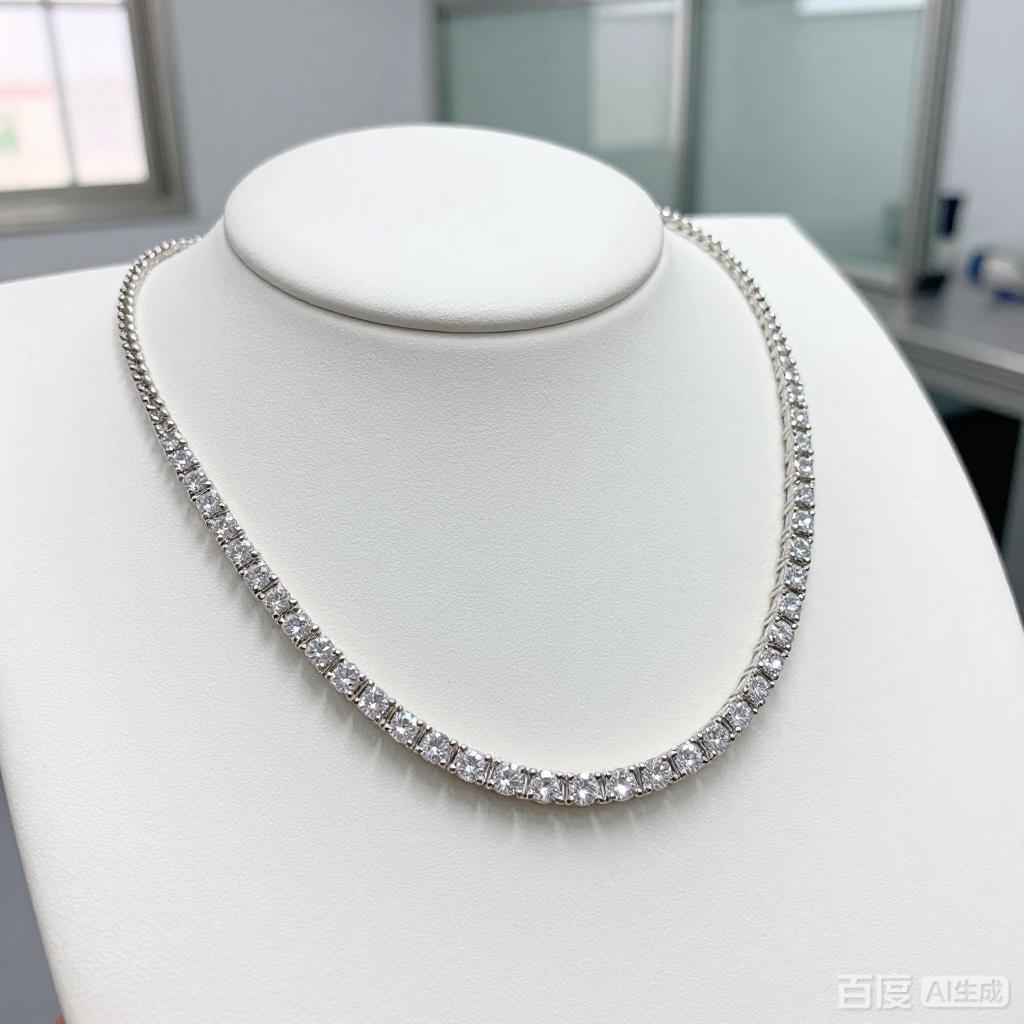
A jewelry retailer in Florida contacted us in Q2 2025 with a problem that is distressingly common in diamond tennis necklaces. They had ordered 120 pieces of "10ct tw 4-prong diamond tennis necklaces" in 14K white gold from an online supplier, paying $890 per piece. When the necklaces arrived, they noticed two things immediately. First, the necklaces felt light—14K gold 16-inch 4-prong tennis necklaces set with 10ct of diamonds should weigh around 18-22 grams; these weighed 13 grams. Their bench jeweler investigated and found the channels were thin cast walls rather than properly constructed 4-prong settings, the posts between stones were hollow in places, and several sections of the chain snapped under finger pressure. Second, when they had a sample independently appraised, total diamond weight was actually 7.8ct rather than 10ct—stones were 0.2-0.3mm smaller than specified across the entire necklace, a trick that adds up to 22% less stone across 50+ settings and is invisible to the naked eye without weighing each stone.
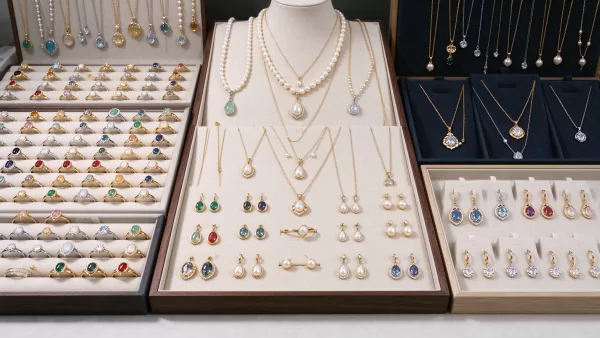
Diamond tennis necklaces are the highest-tolerance piece in diamond jewelry manufacturing. A single tennis necklace has 30-80 individually set diamonds that must be perfectly matched in color, clarity, size, and alignment, with settings spaced so precisely that the necklace lies flat and flexes smoothly in all directions. A single mis-set stone, a single loose stone, or a single poorly soldered link can ruin a $2,000-$10,000 piece at retail. As a diamond tennis necklace manufacturer with in-house stone matching, setting, and assembly teams, we produce 400-700 diamond tennis necklaces per month. This guide walks through the production process, quality requirements, and spec decisions that make a tennis necklace hold up to wear.
Tennis Necklace Manufacturing Process
Diamond tennis necklace production is more assembly-line work than single-piece craft—each necklace requires dozens of stones to be set in sequence and connected into a flexible chain:
- Stone pairing and sorting. Unlike a solitaire ring (one main stone), a tennis necklace uses 30-80 diamonds (typically 2.0mm to 4.0mm round brilliants, matching 4-prong or channel settings). All stones in a necklace must be matched for color (within 0.5 grades), clarity (within one grade), and diameter (within 0.03mm per stone) so the necklace appears as a continuous line of uniform sparkle. Matching this many stones requires a large inventory of melee; from a 500-stone parcel of stated G-H/VS 3.0mm rounds, only 60-70% will make it into a matched necklace run by our standards—the rest go into bracelets, rings, or smaller designs where per-stone matching is less critical.
- Setting production. Tennis necklace settings are produced either as individual links (each link holds one stone, links connect to form the chain) or as continuous channel sections (4-6 stones per cast section, sections soldered together). Individual link construction offers more flexibility (the necklace drapes better) but requires more soldering and thus more QC points. Channel construction is faster and more rigid but can feel stiff if not properly engineered. Most of our commercial production uses individual 4-prong links for premium drape.
- Channel cutting / prong notching. Each link's seat is cut or each prong notched to the exact diameter of the stone that will go into it. This is critical: seats that are too large leave stones loose; seats that are too small prevent stones from seating level, creating an uneven line. Seat depth must also be precise—stones that sit too high catch on clothing; stones that sit too low lose sparkle from blocked light.
- Stone setting. Stones are set one at a time into each link. For 4-prong tennis settings, the stone is placed in the seat, each prong is pressed over the girdle, and the tip is burnished smooth. Setting a 50-stone necklace takes a skilled setter 3-4 hours; the stones must be set level, prongs must all face the same direction, and there must be no visible gaps between stones when links are assembled. One crooked stone creates a visible "snaggletooth" line that is visible at arm's length.
- Link assembly and soldering. Set links are connected to form the chain. The clasp (typically a box clasp with safety latch on tennis necklaces) is attached. Each link connection is soldered; solder joints on tennis necklaces must be completely clean because any excess solder clogs the joints and prevents the necklace from flexing. A well-made tennis necklace drapes softly over the hand and lays flat on a surface without kinking.
- Polish, rhodium, and QC. The entire necklace is polished (including between stones and inside link connections—areas that require small polishing tools and patience). White gold pieces are rhodium plated. Each stone is tested for tightness with a probe. The necklace is flexed in all directions to test joint mobility. Any stone that catches light differently from the others is flagged; any stiff link is resoldered or replaced. The clasp is tested for secure closure. Finally, the necklace is laid on a flat white surface under 5500K daylight and inspected end-to-end for straightness, even stone spacing, and consistent sparkle.
Total production time for a standard 16-inch 4-prong tennis necklace: 15-20 business days after stones are sorted. Channel-set and custom-link designs: 20-25 business days.
Tennis Necklace Setting Styles Compared
| Style | Construction | Stones Visible | Flexibility | Durability | Price Level |
|---|---|---|---|---|---|
| 4-Prong (classic) | Each stone held by 4 prongs, individual links | Maximum (minimal metal visible) | Excellent (best drape) | Good (prongs checked periodically) | $$ |
| 3-Prong | 3 prongs per stone, alternating directions | Even more stone visible | Excellent | Moderate (fewer prongs per stone) | $$ |
| Channel Set | Stones between metal walls, no prongs | Good (table visible, sides covered) | Moderate (stiffer chain) | Very good (stones fully protected) | $$$ |
| Bezel / Half-Bezel | Metal rims surround each stone | Less metal than channel, smooth surface | Good | Excellent (most secure) | $$$ |
| H Tennis / Illusion | H-shaped links between stones create visual pattern | H-pattern adds design element | Good | Good | $$ |
| Fancy Shape (emerald/cushion/oval) | Fancy-cut stones instead of rounds | Unique look | Varies by link design | Good (bezel recommended for fancies) | $$$$ |
The 4-prong tennis necklace is the classic—the style Chris Evert made famous when she stopped a 1978 US Open match to find her lost diamond line bracelet (hence the name "tennis bracelet," later applied to necklaces). It remains our highest-volume necklace SKU. See our tennis necklace collection.
Stone Specifications and Sizing
Tennis necklaces are specified by total diamond weight and stone diameter. Stone count varies by length and stone size. Common configurations:
- 3.0ct tw (2.5mm stones, ~60 stones, 16 inches): entry price point, delicate everyday wear
- 5.0ct tw (3.0mm stones, ~54 stones, 16 inches): most popular commercial size, noticeable but not flashy
- 7.0ct tw (3.3mm stones, ~55 stones, 16 inches): mid-premium, strong bridal/gifting segment
- 10.0ct tw (3.7-3.8mm stones, ~57 stones, 16 inches): statement size, luxury segment
- 15.0ct tw (4.0mm stones, ~70 stones, 17 inches): high-end statement piece
- 20.0ct+ tw (4.5mm+ stones, various lengths): high jewelry
Important: Stone diameter tolerance of 0.1mm per stone across a 50-stone necklace adds up to 5mm total "shrinkage" in total diamond weight—this is the scam the Florida retailer encountered (undersized stones across the necklace). Our production sorts every stone by diameter to 0.03mm and weighs total stone content before and after setting. Every necklace we ship has its total diamond weight verified by weighing all stones before setting, not by multiplying stated stone size by stone count.
Standard necklace lengths: 16 inches (choker / collarbone), 18 inches (princess / most popular), 20 inches (matinee). Adjustable lengths (16-18 inch extender) available at $15-25 extra. GIA grading standards apply to all stones; the FTC Jewelry Guides require accurate carat weight disclosure, so weighing all stones is not just good practice—it is a legal requirement. See Wikipedia's coverage of tennis bracelet origins for the Chris Evert backstory.
Metal Options and Construction Quality
Tennis necklaces are typically made in 14K white gold (the standard), with 18K gold and platinum options for premium lines. Silver tennis necklaces exist but are not recommended for pieces over 3ct tw—silver is soft enough that prongs bend and stones fall out with regular wear at higher stone weights.
Construction quality markers to evaluate in samples:
- Link thickness: 4-prong links should be cast from 1.10mm+ thick stock for gold; thinner links bend and do not hold stones securely. Total metal weight for a 10ct tw 16-inch 14K white gold necklace should be 18-22 grams; lighter pieces indicate hollowed or thinned links.
- Clasp quality: Box clasps with two side safety latches (figure-8 safety) are the standard for diamond tennis necklaces. Lobster clasps are insufficient for pieces over 3ct tw. Magnetic clasps should never be used for high-value diamond necklaces.
- Hinge and loop construction: Links must flex both horizontally (around the neck) and slightly vertically (to lay flat when the wearer moves). Stiff links catch on each other and create kinks that can stress solder joints over time.
- Prong thickness: Prong tips should be 0.25-0.35mm thick after setting. Thinner tips catch on clothing and wear thin; thicker tips cover more diamond and reduce sparkle.
- Chain continuity: Lay the necklace flat on a white surface. Stones should form an uninterrupted even line with no gaps, no raised stones, no tilted stones, and no stones visibly larger or smaller than neighbors.
See our construction standards guide.
Pricing, MOQ, and Lead Times
Wholesale pricing for 4-prong lab grown diamond tennis necklaces in 14K white gold (G-H/VS, 16 inches, box clasp with safety):
- 3ct tw (2.5mm): $340-$540
- 5ct tw (3.0mm): $520-$850
- 7ct tw (3.3mm): $740-$1,200
- 10ct tw (3.8mm): $1,100-$1,800
- 15ct tw (4.0mm): $1,650-$2,700
- 20ct tw+ (4.5mm+): $2,600-$4,500
18K gold adds 25-40% to metal cost; platinum adds 2-3x. Channel and bezel settings add 15-25% over 4-prong due to higher labor. D-F color is 10-15% above G-H; SI clarity is 10-15% below VS. Fancy shape stones (emerald, cushion, oval) carry 20-35% premium.
MOQ: Stock designs (existing 4-prong molds): 10 pieces per size/grade/length in gold. Silver tennis necklaces: 30 pieces per SKU (2ct and 3ct only; not recommended for higher stone weights). Custom designs (new link shapes, graduated sizes, mixed shapes): 20 pieces gold per style, plus mold/CAD development fee of $300-$600. Sample pieces: 1-2 pieces at 1.5x wholesale, credited against bulk orders of 50+ pieces.
Lead times: Stock link designs with standard stone sizes (3-10ct tw, G-H/VS): 15-20 business days. Larger stone sizes (15ct+), fancy colors, or custom lengths: 25-35 days. Custom link designs from new CAD: 30-40 days after sample approval. Channel and bezel settings add 3-5 days. See current necklace pricing.
Quality Control for Tennis Necklaces
Tennis necklace QC is labor-intensive because of the number of stones and links involved:
- Total diamond weight verification: All stones weighed on a precision carat scale to 0.001ct before setting. Total weight is recorded on the job card; finished necklace must reflect this weight (minus 0.005-0.01ct for setting dust loss, which we account for in specs).
- Diameter sorting: Every stone measured to 0.01mm; stones outside 0.03mm of the target are rejected.
- Color and clarity matching: Stones sorted by gemologists into matched groups before setting; any outlier stone in color or clarity visible after assembly is replaced.
- Stone-by-stone tightness test: After setting and again after polish/rhodium, every stone is checked with a metal probe. A single loose stone in a tennis necklace can lead to the stone falling out during wear, often unnoticed due to the number of stones.
- Flex and drape test: The finished necklace is flexed through its full range of motion and laid across a curved surface (simulating neck drape). Links must move freely without kinking.
- Flat alignment inspection: Laid on a white surface under daylight lighting, the stone line must be straight and even with no tilted or raised stones.
- Clasp test: Box clasp opened and closed 20 times; safety latches tested for secure engagement.
- Rhodium coverage: Under magnification, rhodium plating must be complete including between prongs and inside link connections (areas that are easy to miss on longer plating cycles).
Our defect rate on finished tennis necklaces is under 2.0% (higher than stud earrings or solitaire rings due to complexity), with the most common defects being individual loose stones and individual color-mismatched stones caught in final QC and corrected before shipment.
Frequently Asked Questions
Q: How do we verify the total diamond weight when we receive the necklaces?
A: We include a detailed carat weight certificate with every tennis necklace listing total weight, number of stones, average stone size, color, and clarity. For verification, you can weigh all stones if you melt down the setting (destructive), or use a diamond gauge to measure a sampling of stone diameters and use diamond weight calculators (a 3.0mm round brilliant is approximately 0.10ct). The most reliable non-destructive check: weigh the finished piece and compare against expected metal weight + diamond weight for the spec; significant light weight is a red flag for undersized stones.
Q: Can you make graduated tennis necklaces (stones larger in center, smaller toward clasp)?
A: Yes. Graduated tennis necklaces use stones that increase in size from the clasp to the center front (e.g., 2.5mm at clasp graduating to 4.0mm at center). These require more sorting labor (more stone sizes to match across the piece) and custom link sizing for each position. MOQ 20 pieces per length/grade; lead time 25-30 days. Graduated necklaces carry a 20-30% price premium over uniform stone necklaces.
Q: Do you supply tennis necklaces with natural diamond options?
A: Our primary production uses IGI-certified lab grown diamonds. Natural diamond tennis necklaces can be produced through our diamond sourcing network at prevailing natural diamond market rates plus 5% sourcing fee. Note that natural diamond tennis necklaces cost 3-6x lab grown depending on stone sizes and grades, and lead time increases by 2-3 weeks for stone sourcing.
Q: How should tennis necklaces be packaged for retail?
A: Tennis necklaces should be shipped and displayed flat (not coiled in small boxes), because coiling can create permanent kinks in stiff sections. We provide long presentation boxes (20-inch) that lay necklaces straight, with anti-tarnish strips for silver. Custom branded boxes are available at MOQ 200 ($4-8/box). Each necklace ships in an individual poly bag within the presentation box, with a certificate of authenticity and care card.
Q: What's the difference between a tennis necklace and a tennis bracelet in production?
A: They share the same 4-prong/channel construction logic, but necklaces are longer (16-20 inches vs 7 inches), have more stones (30-80 vs 20-40), and require more robust clasps (box clasp with safety vs fold-over or lobster clasp on bracelets). Production time for a tennis necklace is roughly double that of a tennis bracelet of the same stone size. We produce matching tennis bracelet + necklace sets at MOQ 20 sets.
Q: Can you make diamond riviere necklaces (older cut stones, hand-set prong styles for vintage look)?
A: Yes. Riviere necklaces are the vintage predecessor to modern tennis necklaces, typically using older-cut stones (old mine, old European, or cushion cuts) in individual collet settings with small connectors between stones. These are more labor-intensive (hand setting, smaller batch production) and require vintage-cut stones; MOQ 10 pieces in 18K gold, lead time 35-45 days.
Key Takeaways for Tennis Necklace Buyers
- 4-prong individual-link construction produces the best drape and remains the commercial volume leader
- Undersized stones across a necklace (0.1mm per stone) can reduce total diamond weight by 20%+ with no visible difference to the naked eye—weigh and diameter-check
- Finished 10ct tw 14K white gold tennis necklaces should weigh 18-22 grams total; lighter weight indicates thin/hollow links
- Box clasp with two safety latches is the minimum acceptable closure for diamond tennis necklaces
- 10ct tw G-H/VS 4-prong lab diamond tennis necklaces wholesale at $1,100-$1,800 in 14K white gold
- MOQ 10 pieces gold per SKU; lead time 15-20 days for standard sizes
- Stone-by-stone tightness testing at two production stages prevents the most common field failure (stones falling out unnoticed)
The Florida retailer who lost money on undersized stones now orders all their tennis necklaces from us and has rebuilt their bridal necklace business with zero weight discrepancy returns. The lesson: diamond tennis necklaces have more places to cut corners than almost any other jewelry category, because the complexity creates hiding spots for sloppy work. A manufacturer who weighs all stones, sorts by diameter, and tests every prong catches those problems before they reach your customer. Send us your tennis necklace specs (total carat weight, stone size, setting style, metal, length, quantity) and we will return a detailed quote with weight verification documentation within 48 hours.