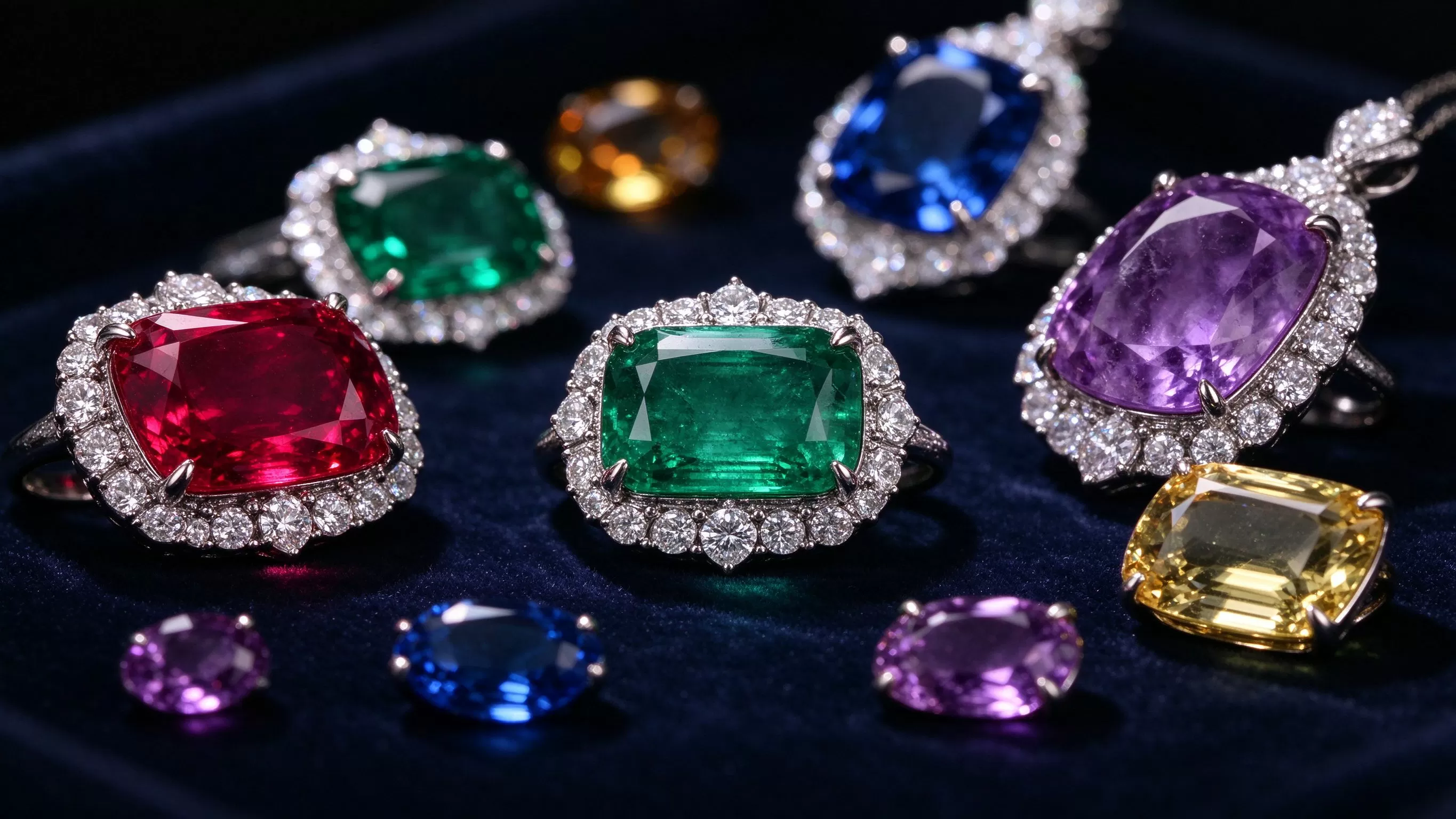
A customer asks why a ring costs ten times the loose stone price, and the salesperson fumbles the answer. Wholesale buyers who understand the markup chain can price their own lines sharply and explain value to retail clients. This is how price actually builds from rough stone to the shop shelf, and where the biggest percentages sit.
The layers of the chain
Price is not a single markup; it is a stack of margins taken at each step. Rough is sold by miners to cutters. Cutting turns rough into polished stones and adds a margin. Manufacturing casts or fabricates the setting and mounts the stone. Wholesale adds a margin and sells to retailers. Retail adds the largest single margin and sells to the customer. Each layer also carries overhead: rent, labor, certification, marketing and inventory carrying cost. FTC pricing and disclosure expectations for the finished piece are in the Guides for the Jewelry, Precious Metals, and Pewter Industries, and metal marking rules are in 16 CFR Part 23.
Where the biggest margins live
The largest percentage gap is usually at retail, where jewelry commonly carries keystone (double wholesale cost) or higher. The second variable layer is branding: a branded setting can carry a multiplier that is unrelated to material cost. On the stone side, markup depends on rarity. Fine color or unusual cuts carry bigger per-carat spreads; standard round brilliants are near-commodity and move on thin margins. Lab-grown stones compress the rough and cutting layers because production is industrial, which is why lab-grown bridal undercuts natural by a wide margin; see how lab-grown pricing has moved.
How manufacturing adds cost
A setting is not just metal weight. Casting, polishing, stone setting, finishing and QC each add labor. A simple solitaire uses one process; a halo with 30 small side stones doubles the setting labor. Small stones add cost per piece even though they are cheap individually, because every stone must be picked and set. When you quote a line, separate the metal weight cost, the stone cost, and the setting labor; most buyers under-estimate setting labor by 20 to 30 percent. Compare this with wholesale MOQ and factory audit to see how order size changes the per-piece labor rate.
How to read a competitor's price
When a competitor undercuts you, work backward through the layers rather than assuming they are losing money. They may be buying direct from a cutter (skipping one layer), using a lab-grown stone at a fraction of the natural cost, running a thinner retail margin to build volume, or cutting corners on finishing labor. The dangerous low-price competitor is the one who skips certification; a stone without a verifiable report is where the hidden cost sits. Verify any certificate before you match a price, using GIA report reading and IGI report reading.
How certification and branding shift the math
Two parcels of the same carat and color can sit at very different retail prices purely because of paper. A GIA-graded natural stone carries grading cost and a trust premium; an IGI-graded lab-grown stone costs far less upstream. Branded settings layer on top a marketing budget that shows up as a multiplier rather than any added material. Wholesale buyers should separate three line items on every quote: stone (with and without certificate), metal setting labor, and brand premium. When a retail customer pushes back on price, you can show which of the three is negotiable: usually the brand premium and the margin, not the stone or the labor. Tie the certificate step to IGI report reading and GIA report verification so a low price never hides an unverifiable stone.
Reading the discount: when cheap is real
Not every under-priced competitor is cutting corners. A factory that runs high volume on a single popular shape, or that buys lab-grown direct from the grower, can legitimately shave a layer off the chain. The way to tell the difference is to ask for the certificate and the origin statement; a price that cannot be matched with paper is the one to walk away from.
FAQ
What is the typical retail markup on jewelry?
Retail commonly marks wholesale cost up by roughly 2x (keystone), sometimes more for branded or fine pieces; the exact number varies by category.
Where does the most markup happen?
The retail margin and brand premium are the largest single layers; lab-grown stones compress the upstream rough and cutting margins.
Why are small side stones expensive in total?
Individually cheap, but each small stone must be picked, set and polished, so setting labor across many small stones adds up quickly.
How do I price my own wholesale line?
Add material, stone and setting labor, then layer your wholesale margin on top and leave room for the retailer's keystone; never price to the consumer price yourself.
Wholesale note: gemmanufacturer.com publishes factory-direct pricing on certified parcels with no brand markup, so buyers can build their own margin instead of inheriting a branded one.
Related reading: The Jewelry Supply Chain: From Mine to Retail Explained, The Jewelry Supply Chain: Mine To Counter Markups, Jewelry Casting: The Lost-Wax Process Explained for Manufacturers.