Jewelry Metal Recycling and Refining: The Closed-Loop Supply Chain
Every jewelry manufacturer produces scrap. A ring is cast from a sprue that has to be cut off, a bead of gold is filed away during finishing, a casting is rejected and melted, and old pieces are brought in for repair. None of that gold, silver, or platinum is thrown away. It goes back to a refinery, is purified, and returns to the foundry as fresh casting grain. That quiet loop is the recycling and refining side of the jewelry industry, and it is far larger and more consequential than most shoppers realize. A surprising share of the gold in a new ring today was once in another piece of jewelry, a dental crown, or an old watch, refined and poured anew.
This guide explains how jewelry metal recycling and refining actually work, why the industry already runs on a closed loop far more than the marketing suggests, what "recycled gold" really means, and how a manufacturer handles scrap to keep quality high and costs down. If you have ever wondered whether your new gold ring is made from freshly mined metal or from recycled material, the answer is more often the latter than you might think.
Why Jewelry Metal Is Almost Never Wasted
Gold and silver are unique among industrial materials because they are not consumed. A kilogram of gold used in jewelry is not burned up or chemically altered; it is simply reshaped, and it can be melted and reshaped again indefinitely without losing its properties. That permanence means there is no such thing as a worn-out gold ring that cannot be recovered. Every gram of gold ever mined is, in principle, still available somewhere, because refining restores it to a pure state regardless of what object it was last part of. This is why the jewelry industry recycles its own metal so thoroughly: throwing gold away makes no economic sense when it can be recovered for a fraction of the cost of mining new gold.
In practice, a jewelry factory keeps a scrap box that is anything but incidental. Filings from polishing, broken castings, old sprues, and the offcuts from sawing are collected separately, because they are pure working capital. A mid-size workshop may send kilograms of gold and silver scrap to a refinery every month, and the refinery returns refined metal or credits the value. This internal recycling loop is not a trendy sustainability program; it is how the industry has operated for a century. Factories track their scrap carefully because it is literally money, and a skilled operator knows that a poorly managed scrap room quietly bleeds profit. For the consumer-facing version of this story, our recycled gold and eco metals guide covers the buying side.
The closed loop also extends beyond the factory. When a customer sells an old ring or brings a broken piece for repair, that gold does not vanish. It is either resold as secondhand jewelry, melted into scrap, or refined and re-enters the manufacturing pipeline. Secondhand gold and recycled industrial gold together make up a large share of the gold supply available to the jewelry industry each year, alongside newly mined metal. The idea that "all gold is freshly dug" is simply not true, and the existence of this loop is one reason gold has held its value so reliably: supply is continually recycled rather than consumed.
How Refining Actually Purifies the Metal
The scrap that leaves a jewelry workshop is a messy mixture. It may contain gold alloy mixed with solder, residue from polishing compounds, tiny stones left in filings, and traces of other metals. A refinery's job is to separate the precious metal from everything else and bring it back to a known purity. The process starts by assaying, or testing, the scrap to determine how much gold, silver, platinum, and other metals it contains. The refinery weighs the value of the scrap before it begins, so the customer knows what credit they will receive. Assaying is the crucial step that builds trust, because a refinery that under-assays a customer's scrap will not keep that customer long.
Refining itself uses chemical and electrochemical processes that separate gold and other precious metals from base metals to a high purity. The result is pure gold, silver, or platinum that the refinery casts into standardized grains or bars. For a jewelry factory, the useful product is "casting grain" of a known alloy, such as 14k yellow gold, ready to be poured into a new mold. Because refining removes all the previous alloying elements, the factory can rebuild the exact alloy they want from pure metal, mixing in the precise amounts of copper, silver, or zinc needed. This is why recycled metal is chemically identical to newly mined metal once refined: gold is gold, regardless of its history.
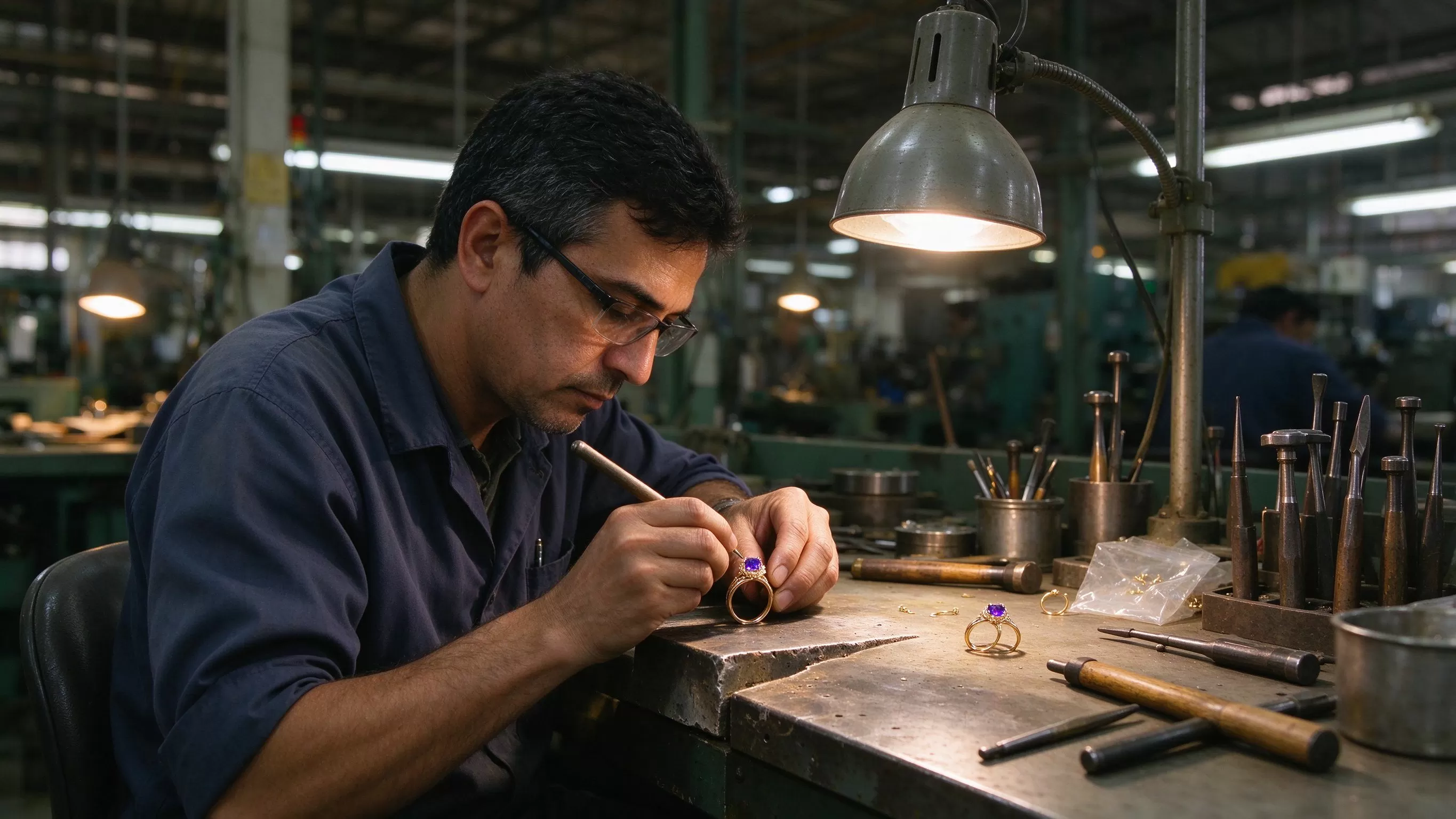
The quality risk in recycling is contamination. If filings containing residual solder or plating are mixed with pure scrap, the refined alloy can carry trace impurities that affect color or castability. Professional factories segregate their scrap: gold separate from silver, plated pieces separate from solid, and filings kept clean so the refinery returns a predictable alloy. A factory that dumps everything into one bucket gets back metal of uncertain quality, which shows up later as discolored castings or brittle solder joints. Good internal scrap handling is an unsung part of consistent manufacturing quality control.
What "Recycled Gold" Actually Means on a Label
The phrase "recycled gold" appears on more and more jewelry, and it means something specific: the gold was refined from previously existing sources rather than freshly mined. Because refined gold is chemically indistinguishable from newly mined gold, the difference is ethical and environmental rather than physical. Using recycled gold avoids the environmental impact of mining new ore, which is the appeal for brands marketing sustainable jewelry. But the term is also easy to misuse, because almost all refined gold has some recycled content, and a brand can label a piece "recycled" with varying levels of verification.
Certified recycled gold programs give the claim credibility by tracing the metal through accredited refiners and chain-of-custody systems, so a brand can document that its gold came from a responsible recycled source rather than ambiguous scrap. For a buyer, the practical point is that "recycled gold" is not a different or better material; it is the same gold with a documented, lower-impact history. If sustainability matters to your customers, ask whether the recycled metal comes through a certified refinery chain rather than accepting the label at face value. Our overview of sustainable manufacturing practices digs into the wider ethics behind the claim.
There is also a quiet truth worth stating: because the industry already recycles so much of its own metal, most jewelry has always contained recycled content, even before the marketing trend. What changed is not the practice but the transparency and the certification. A factory in 1990 recycled its scrap exactly the way a factory does today; it simply did not advertise it. Modern buyers should see "recycled gold" as a verification of responsible sourcing, not as proof that a piece was made by some new green process that did not exist before.
The Economics: Why Refining Matters to Price
Recycling is woven into the economics of jewelry manufacturing because the metal value is a large, recoverable component. When a factory casts a ring, it loses some gold in the sprue and filings, but that gold is returned as credit, so the net metal cost is only the gold that stays in the finished piece. This changes how manufacturers price their work: they do not buy gold and waste it; they buy gold and recover most of the offcuts. For a brand, this means the metal cost in a wholesale quote is closer to the net weight in the piece than the gross weight poured, and understanding the loop helps you read a quote intelligently. Our guide to cost breakdown explains where metal sits in the math.
For secondhand and estate jewelry, the recycling loop is also what sets the floor value. Even if a piece is broken, out of style, or missing stones, its gold content is worth the melt value, recoverable through refining. That is why a buyer can always resell old gold at near the spot price minus a refining margin. Conversely, when you buy a new piece, a portion of what you paid is for the craft, not the metal, and if you ever melt that piece you recover only the metal value, not the retail markup. Understanding this distinction prevents the common mistake of expecting a retail piece to hold its full purchase price as metal value. Our note on metal resale value details the gap between retail price and melt value.
Platinum and silver follow the same logic but at different scales. Silver is cheaper, so its refining margin matters more relative to value, and silver scrap is handled in larger volumes. Platinum is more expensive and denser, so its scrap is treasured and refined with care, and platinum filings are never casually discarded. In every case, though, the principle holds: precious metal is recovered, refined, and returned, which is one reason the jewelry industry is, structurally, one of the most naturally circular manufacturing sectors that exists.
The Environmental Angle Without the Hype
Recycled jewelry metal genuinely lowers the environmental footprint of a piece, because refining recycled scrap uses far less energy and generates far less disturbance than mining new ore. Mining gold moves enormous amounts of earth for tiny amounts of metal, and it carries real impacts on land and water. Refining already-collected metal sidesteps almost all of that. So when a brand advertises recycled gold, there is a real environmental benefit behind it, and the claim is not pure marketing.
The honest caveat is that recycling is not the whole story. Even with recycled metal, a piece still requires casting, energy, water, and transport, and the labor and treatment steps matter too. A truly responsible brand pairs recycled metal with attention to working conditions, treatment disclosure, and packaging, rather than leaning on "recycled" as a single green badge. For buyers, the balanced view is to welcome recycled metal as a meaningful improvement while asking the rest of the sourcing questions: where the stones come from, how workers are treated, and how durable the piece will be. The closed loop is a strong foundation, not the whole house.
Frequently Asked Questions
Is recycled gold the same quality as newly mined gold? Yes. Once refined, gold is chemically pure and identical regardless of whether it was mined or recycled. The difference is the environmental impact of its source, not the material itself.
How much of a new ring's gold is recycled? A large share of global gold supply comes from recycled sources, and factories routinely recycle their own casting scrap. A typical new piece likely contains some recycled content, though certified recycled gold traces it explicitly.
Does recycling weaken the gold or change its color? Proper refining restores pure metal, and the factory rebuilds the exact alloy, so color and strength are controlled. Contaminated scrap can affect quality, which is why professional factories segregate their scrap carefully.
What does certified recycled gold mean? It means the metal was traced through an accredited refinery with documented chain of custody, rather than coming from ambiguous scrap. It gives the "recycled" claim verifiable backing.
Can I melt down my old jewelry to make a new piece? Often yes, but professional factories prefer to refine old pieces into known alloy rather than directly melt unknown jewelry, because old pieces may contain solder, plating, or mixed metals that affect the result.
A Loop That Was Always Running
The recycling and refining side of jewelry is a quiet, efficient machine that has operated for longer than "sustainability" has been a marketing word. Gold and silver are not consumed; they are reshaped, recovered, and poured again, and a factory's scrap room is its working capital made physical. For a buyer or brand, the lesson is twofold. Recognize that recycled metal is a real, meaningful improvement with a lower footprint, and ask the right questions about certification and chain of custody rather than taking the label at face value. We operate a closed-loop scrap and refining process in our own workshop, segregating and refining our offcuts to reduce waste and to supply consistent, traceable casting grain. For a quote on a piece made from certified recycled metal, write to service@holycome.com, and read more about how the industry works in our Industry Insights series.