Understanding the economics of jewelry manufacturing is essential for building a profitable business. This guide breaks down costs, explains pricing strategies, and reveals profit margins across different sales channels.
Cost Breakdown of a Typical Jewelry Piece
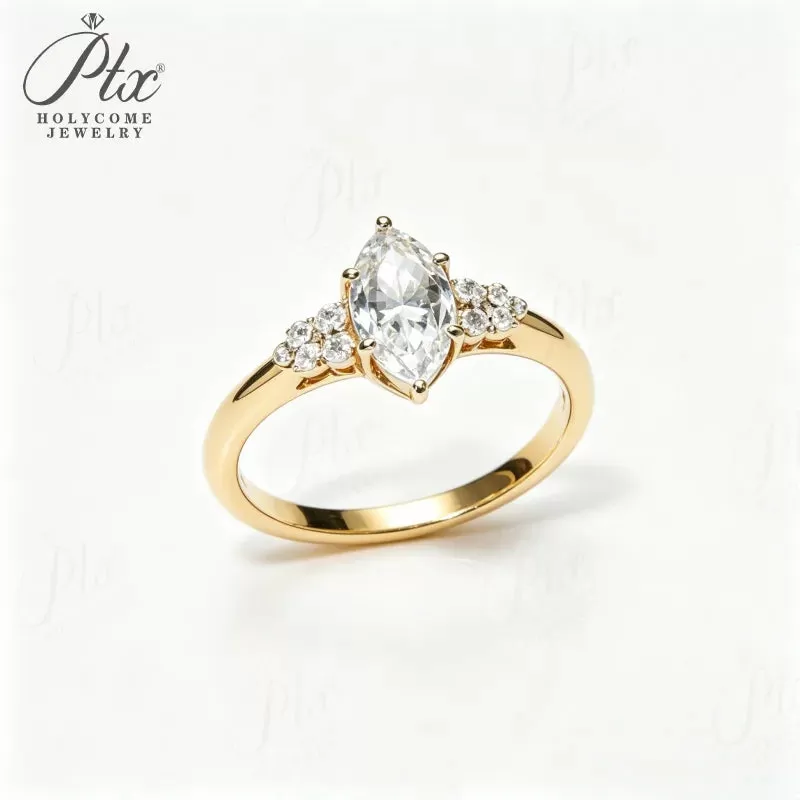
For a 14K gold solitaire ring with a 1ct moissanite:
| Cost Component | Amount | pct of Total |
|---|---|---|
| Materials (gold + stone) | 80-150 dollars | 40-55pct |
| Labor (casting, setting, polishing) | 30-60 dollars | 15-25pct |
| Overhead (rent, equipment, utilities) | 15-30 dollars | 8-15pct |
| Packaging | 2-5 dollars | 1-3pct |
| Quality control | 3-5 dollars | 2-3pct |
| Shipping/handling | 2-5 dollars | 1-3pct |
| Total manufacturing cost | 132-255 dollars | 100pct |
| Wholesale price | 200-400 dollars | Markup 1.5-2x |
| Retail price | 500-1500 dollars | Markup 2.5-5x |
Material Costs
Materials typically account for 40-60pct of manufacturing cost:
- Gold - Priced by weight; 14K gold contains 58.3pct pure gold
- Silver - Much cheaper than gold; material cost usually minimal
- Platinum - Denser and more expensive; material cost is 2-3x gold
- Gemstones - Range from 1 dollar (CZ) to 10,000+ dollars (diamond). Moissanite offers best value
- Findings - Clasps, chains, earring backs add 1-10 dollars per piece
Labor Costs
| Country | Hourly Rate | Typical Ring Labor |
|---|---|---|
| China | 3-8 dollars/hr | 10-30 dollars |
| India | 2-5 dollars/hr | 8-25 dollars |
| Thailand | 4-8 dollars/hr | 15-35 dollars |
| Italy | 20-40 dollars/hr | 50-150 dollars |
| USA | 25-50 dollars/hr | 80-200 dollars |
Labor includes: CAD design, casting, filing, stone setting, polishing, plating, and quality control. Complex pieces (pave, halo, vintage) require more labor than simple solitaire rings.
Overhead Costs
- Equipment - Casting machines, polishers, setting tools (10,000-50,000 dollars initial)
- Rent - Workshop/office space
- Utilities - Electricity for kilns and equipment (significant for casting)
- Insurance - For precious metals and inventory
- Software - CAD, inventory, accounting
- Waste - Metal loss in casting (5-15pct), defective pieces
- Compliance - Certifications, testing, legal
Pricing Strategies
| Method | Formula | Best For |
|---|---|---|
| Cost-plus | Cost x markup (2-3x) | Wholesale, basic pieces |
| Keystone | Wholesale x 2 | Retail standard |
| Value-based | Price based on perceived value | Premium brands |
| Competitive | Match or beat competitors | Commodity jewelry |
| Premium | High price for exclusivity | Luxury brands |
Profit Margins by Channel
| Channel | Markup | Margin |
|---|---|---|
| Manufacturer direct | 2-3x cost | 50-67pct |
| Wholesale distributor | 1.5-2x | 33-50pct |
| Retail store | 2-5x wholesale | 50-80pct |
| Online DTC | 3-5x cost | 67-80pct |
| Luxury brand | 5-10x cost | 80-90pct |
Direct-to-consumer (DTC) brands have the highest margins because they eliminate wholesale and retail markups. However, they also bear marketing and customer acquisition costs that traditional wholesalers do not.
MOQ and Volume Pricing
| Order Quantity | Per-Unit Cost | Savings vs 1pc |
|---|---|---|
| 1 piece (custom) | 150-300 dollars | Base |
| 10-50 pieces | 100-200 dollars | 20-35pct |
| 50-100 pieces | 80-150 dollars | 35-45pct |
| 100-500 pieces | 60-120 dollars | 45-55pct |
| 500+ pieces | 50-100 dollars | 50-60pct |
Improving Profitability
- Optimize material use and recycle metal scraps
- Increase efficiency through batch processing and CAD/CAM
- Reduce defects with better QC
- Source materials directly from source
- Offer value-added services (custom design, engraving)
- Manage inventory to reduce carrying costs
- Consider DTC sales for higher margins
Common Financial Pitfalls
- Underpricing (not covering all costs including overhead and waste)
- Overstocking slow-moving inventory
- Poor cash flow management (precious metals tie up capital)
- Ignoring hidden costs (packaging, shipping, returns, payment fees)
- Not accounting for metal price fluctuations
- Underestimating labor time for complex pieces
Frequently Asked Questions
What is the typical profit margin for jewelry?
Margins vary by channel: manufacturers earn 50-67pct gross margin (2-3x cost), retailers earn 50-80pct (keystone to 5x markup), and direct-to-consumer brands earn 67-80pct (3-5x cost). Luxury brands can earn 80-90pct margins. The key is understanding all costs (materials, labor, overhead, marketing) before setting prices.
How much does it cost to manufacture a jewelry piece?
A typical 14K gold ring with moissanite costs 130-255 dollars to manufacture: 80-150 materials, 30-60 labor, 15-30 overhead, 5-15 packaging/QC/shipping. Silver jewelry costs 10-50 dollars to manufacture. Diamond jewelry costs 500-10,000+ depending on stone quality. CAD and 3D printing have reduced setup costs, making small-batch production viable.
Why is jewelry so expensive compared to manufacturing cost?
The retail price includes multiple markups: manufacturer (2-3x), wholesaler (1.5-2x), retailer (2-5x). A 150 dollar manufacturing cost can become 500-2500 dollars at retail. Additionally, jewelry retail has high overhead (rent, staff, insurance, security) and slow inventory turnover. Direct-to-consumer brands eliminate middlemen and can offer 30-50pct lower prices.
How can I improve jewelry manufacturing profitability?
Key strategies: (1) optimize material use and recycle metal scraps, (2) increase production efficiency through batch processing and CAD/CAM, (3) reduce defects with better QC, (4) source materials directly, (5) offer value-added services (custom design, engraving), (6) manage inventory to reduce carrying costs, (7) consider DTC sales for higher margins. Track gross margin and inventory turnover monthly.
More expert guides at GemManufacturer. Wholesale: service@holycome.com.