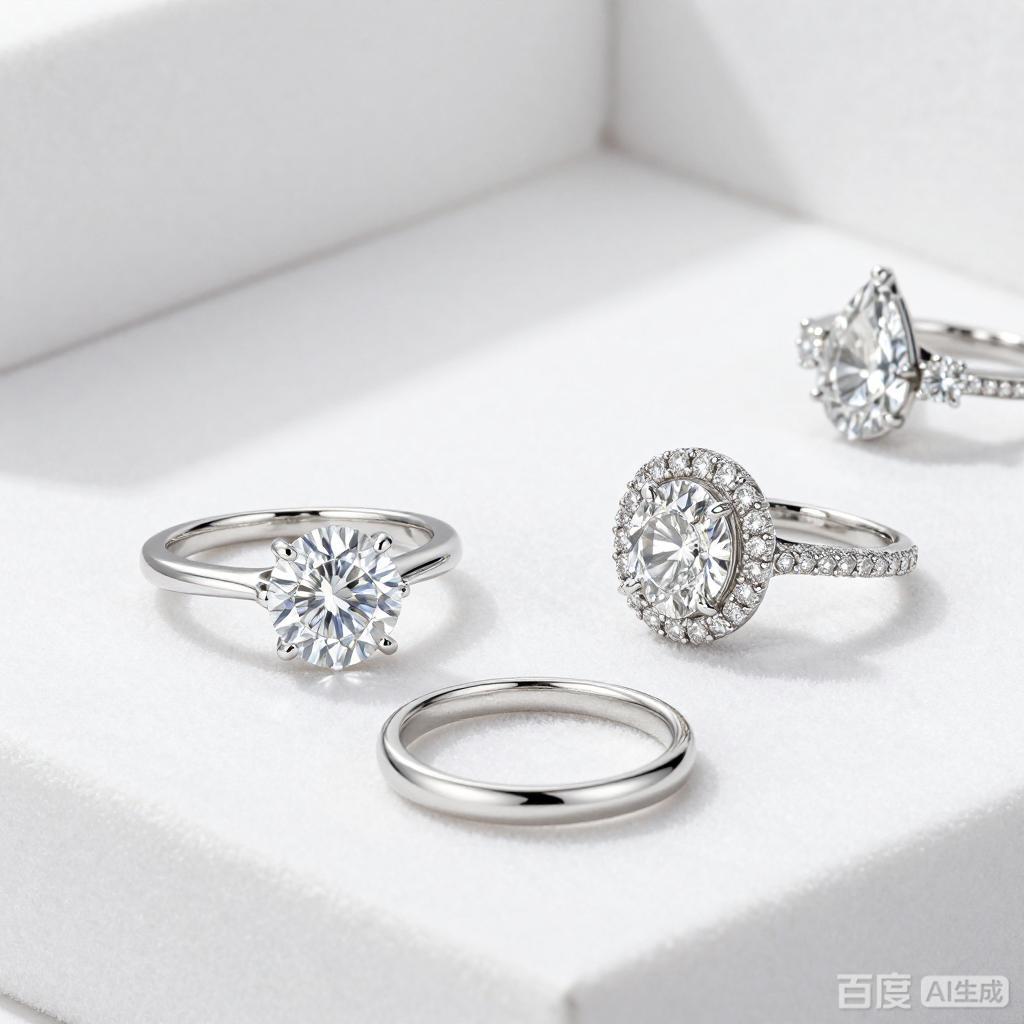
A DTC bridal brand in Los Angeles came to us in March 2025 with a problem most startup founders would not see coming: their initial manufacturer was delivering diamond engagement rings with 15-20% center stone weight variance. They had ordered 1ct round solitaire rings, but a third of the pieces arrived with 0.92-0.95ct centers while the invoices and certificates showed 1.00ct. Their customers started weighing stones on digital scales and complaining. The brand lost two wholesale accounts and received 11 returns in a single month. When they switched to us, our production team built a weight-verification step into their QC: every center stone is weighed, Sarin-scanned, and photographed before setting, with stone weight and measurements printed on the job card. After three months shipping 180+ rings, variance complaints dropped to zero and they regained their lost accounts.
This story gets repeated in different forms across the diamond engagement ring industry: center stone swapping, poor polish quality on head prongs, rhodium finish that wears off in weeks, shanks that bend under light wear, stones that fall out because prongs were never tightened properly. When you pick a diamond engagement ring manufacturer, you are choosing a partner whose quality control directly impacts your brand reputation and return rate. As a lab diamond engagement ring manufacturer with full in-house production—stone sourcing through finished ring—we work with 60+ bridal brands across North America, Europe, and the Middle East. This guide walks through how engagement rings are manufactured, what to look for in a supplier, and how to build a reliable bridal collection.
Engagement Ring Manufacturing: From Stone to Finished Ring
Diamond engagement ring manufacturing breaks down into eight core stages:
- Center stone selection and verification. The center diamond is picked from inventory (or custom-grown) per the order specification. Each stone is Sarin-scanned, weighed, and matched to its certificate before any production begins. Stone dimensions (especially table diameter and total depth) are recorded because they determine head size, prong placement, and setting depth.
- Design and CAD modeling. The ring is modeled in CAD software (MatrixGold, Rhino, or ZBrush) based on the specific center stone measurements. CAD files are reviewed for structural integrity—prong thickness, shank cross-section, head height, stone seat depth, and clearance for side stones. CAD approval takes 1-3 days; 3D wax prints take 1 additional day.
- Wax printing and tree assembly. Wax models are printed on 3D wax printers (25 micron layer height for jewelry detail). Wax models are assembled onto a "tree" (central wax sprue with multiple waxes attached) for casting. Tree size varies by metal type and piece complexity; typical trees hold 15-30 rings.
- Casting. The wax tree is invested (encased in a plaster-like investment material), burned out in a kiln over 8-10 hours (leaving a hollow cavity), and metal is cast into the cavity via centrifugal or vacuum casting. Common metals: 925 sterling silver, 10K/14K/18K yellow/white/rose gold, platinum 950. Burnout temperature is 730-760°C; casting temperature varies by metal.
- Pre-polish and assembly. Cast rings are cut from the tree, sprues are ground off, and the ring gets a preliminary polish. Heads (prong settings that hold the center stone) are soldered onto the shank if not cast as one piece. Solder joints are critical: poor solder leads to head separation, the number one cause of center stone loss.
- Stone setting. Center diamond is set into the head: prongs are notched (seated), the stone is pressed into the seat, and prong tips are burnished over the stone's girdle. Side stones (pavé, channel, halo) are set after the center stone. Pavé setting requires drilling small holes, notching beads, and pushing metal over each melee stone—labor-intensive but produces the most diamond coverage.
- Polishing and finishing. The ring goes through multiple polishing stages: rough polish (sanding out casting texture), prepolish (preparing surface for final), and final mirror polish (creating a high luster). White gold receives rhodium plating for bright white finish. Matte, brushed, or hammered finishes are applied before final inspection.
- Final quality control. Finished rings are inspected under 10x loupe for polish quality, stone security (prongs checked with a probe), surface defects, correct size, center stone matching certificate, rhodium coverage, and finish consistency. Rings are ultrasonically cleaned, steam cleaned, and packaged.
Total production time for a standard solitaire ring: 10-15 business days after stone selection. Halo and three-stone designs with side stones: 15-20 days. Custom designs with customer-provided CAD: 20-25 days.
Setting Styles We Manufacture
| Setting Style | Description | Typical Side Stones | Production Difficulty | Best For |
|---|---|---|---|---|
| Solitaire | Single center stone, plain or simple shank | None | Low | Classic, timeless programs, budget price points |
| Halo | Center stone surrounded by a ring of small diamonds | 1.2-1.8mm melee, 20-40 stones | Medium-high | Maximum perceived size, vintage-inspired looks |
| Pavé | Shank set with continuous small diamonds | 1.0-1.5mm melee, 20-60 stones | High | Maximum sparkle, premium bridal lines |
| Three-stone | Center + two side stones | Two stones (various shapes) | Medium | Symbolic "past present future" programs |
| Bezel | Metal rim surrounds the center stone | None or minimal | Medium | Active lifestyles, modern aesthetic, security |
| Channel | Side stones set between two metal walls | 2-3mm stones in channel | Medium | Smooth modern look, snag-free wear |
| Split shank | Shank divides into two bands near the center | Varies | Medium-high | Statement designs, larger looks |
| Vintage/Antique | Milgrain, filigree, hand engraving details | Pavé + accent stones | Very high | Heritage/retro collections, premium price points |
Solitaire and three-stone rings have the lowest return rates in production (fewer stones to set, fewer things to go wrong). Pavé and halo settings produce higher sparkle but require tighter QC due to the number of small stones and their tendency to loosen over time if not set correctly. Explore our engagement ring collection.
Metal Options and Quality Standards
We manufacture engagement rings in five standard metals:
- 925 Sterling Silver (rhodium plated): Entry-level price point, used for fashion/bridal alternative lines and sample programs. Not recommended for everyday bridal wear (wears faster, prongs bend more easily, rhodium requires re-plating every 6-12 months). MOQ 30 pieces per SKU.
- 10K Gold (white/yellow/rose): 41.7% gold, durable and affordable. White gold needs rhodium plating. Common in US mid-market bridal. Price 15-20% below 14K.
- 14K Gold (white/yellow/rose): 58.3% gold—the gold standard for US engagement rings. Balances durability (hard enough for daily wear, less prone to bending than 18K), color (rich but not overly saturated), and price. White gold requires rhodium plating for bright white finish.
- 18K Gold (white/yellow/rose): 75% gold, richer color, slightly softer (easier to scratch, prongs require attention over time). Preferred in European and high-end markets. Yellow and rose 18K are worn without plating; white 18K needs rhodium.
- Platinum 950 (Pt950): 95% platinum (alloyed with ruthenium or cobalt for hardness). Most durable, most expensive (3-5x gold price due to material density). Does not wear down like gold—prongs hold stones more securely over time. Natural white color (no rhodium needed). MOQ 10 pieces due to higher per-unit value.
All gold is supplied with alloy content certification and tested via XRF gun before casting. We do not use gold-plated or gold-filled metal in engagement ring construction. See our metal quality guide.
Center Stone Sourcing and Certification
Center stones are the highest-value component of any engagement ring. Our stone sourcing process:
IGI certification default: Every center stone 0.30ct and above comes with IGI certification and laser inscription. GIA reports available at $25-$60 per stone premium. Certificates are shipped with the finished ring; our team matches stone to cert before setting AND after polishing to guard against any swap during production.
Stone size and grade inventory: We maintain 80,000+ carats of polished lab diamond inventory across rounds and fancies from 0.30ct to 5.00ct, D-J color, IF-SI2 clarity. Common stocking grades for commercial bridal programs: D-F/VS (premium), G-H/VS (best value), G-H/SI (affordable), I-J/SI (entry). We can also grow stones to custom specs (specific size, color, clarity) for flagship pieces.
Center stone security protocol:
- Each center stone is photographed and weighed before setting; photos are stored in the production record
- Girdle inscription is checked before setting and again after the ring is finished and polished
- Each stone's measurements (diameter, depth) are recorded on the job card and must match the finished piece
- Prongs are pressure-tested with a stone probe after setting AND after final polish; any loose prong is re-burnished before QC approval
Side stones (melee) for halos and pavé are also lab grown diamonds, color-matched to within one grade of the center stone. Melee sizes range from 0.8mm to 2.0mm depending on design. We do not use CZ or moissanite as side stones in diamond engagement ring programs unless explicitly requested.
MOQ, Pricing, and Lead Times
Engagement ring wholesale pricing varies by metal, center stone size/grade, and setting complexity. Indicative ranges:
- Sterling silver solitaire (no center stone / semi-mount): $18-$45 per piece; with 1ct D-F/VS lab diamond center: $290-$470
- 14K gold solitaire semi-mount: $120-$220; with 1ct D-F/VS: $430-$680
- 14K gold halo with pavé band: $200-$380 semi-mount; with 1ct D-F/VS center: $520-$850
- Platinum 950 solitaire semi-mount: $350-$600; with 1ct D-F/VS center: $680-$1,100
MOQ by program type:
- Stock designs (existing catalog): 30 pieces per SKU silver, 10 pieces per SKU gold/platinum
- Custom designs (customer CAD): 50 pieces silver, 20 pieces gold/platinum per SKU; custom CAD development fee $150-$300
- Sample orders: 1-3 pieces available at 1.5x-2x wholesale price; sample cost credited against first bulk order of 50+ pieces
- Center stone only (no setting): no MOQ
Lead times:
- Stock designs from existing mold, center stones from inventory: 15-20 business days
- Custom designs from new CAD: 25-30 business days after CAD approval and stone selection
- Sample pieces: 10-15 business days
- Rush orders (5-10 day production): +25% rush fee available on most designs
See current diamond ring pricing.
Quality Control Points for Engagement Rings
The specific QC checks that prevent the problems that sink bridal brands:
- Stone weight and measurement verification: Center stone weighed to 0.001ct and Sarin-measured before and after production. Discrepancies investigated immediately.
- Prong security: Every prong is tested with a metal probe at two stages (post-setting and post-polish). Loose prongs are re-burnished. We reject any prong with tip thickness under 0.30mm (too thin to hold long-term).
- Solder joint integrity: Head-to-shank solder joints are inspected under magnification. Cold solder joints (weak, gray, porous) are re-soldered—these are the #1 cause of center stone loss in the field.
- Polish quality: Ring must be free of file marks, sanding lines, casting texture, and polishing residue both inside the shank (comfort fit interior) and in hard-to-reach areas (under the head, between prongs).
- Rhodium plating coverage and thickness: White gold rings receive 0.5-1.0 micron rhodium plating; coverage must be uniform across all surfaces including under the head and inside the shank.
- Ring size accuracy: Finished rings measured on a ring mandrel to within 1/4 US size (size 4-12 standard).
- Finish matching: All pieces in a single order must match in finish (mirror polish / brushed / matte / hammered) to within visual tolerance.
- Packaging: Rings are shipped in individual ring boxes, wrapped to prevent scratching, with certificate included and care instructions.
Our defect rate on finished engagement rings is under 1.2%, tracked monthly by reason code (stone loose, polish defect, size off, rhodium issue, etc.). Any defective piece is remade at our cost within 5 business days.
Frequently Asked Questions
Q: Can you supply semi-mounts (without center stone) so we can set customer-supplied diamonds?
A: Yes. Semi-mounts are available in all settings and metals. Semi-mount MOQ is the same as finished rings: 30 silver / 10 gold per SKU. We also supply "blank heads" (unset settings) for custom stone sizes by request. All semi-mounts are manufactured to accommodate standard diamond diameters per ring size.
Q: Do you offer branded packaging and private labeling?
A: Yes. Private labeling options include laser engraving of your brand name/Logo inside the shank (no extra charge for orders over 50 pieces), custom ring boxes with your logo (minimum 500 boxes, $2-5/box depending on style), and branded certificate sleeves. Engraving is available inside the shank for personalization (customer names, dates) at $3 per ring.
Q: What warranty do you offer on finished engagement rings?
A: We provide a 12-month manufacturing warranty covering manufacturing defects: loose stones due to prong failure (not accidental damage), solder joint failure, rhodium peeling, and casting porosity issues. We do not cover normal wear and tear, resizing done by third parties, accidental damage, or lost stones due to customer impact. Our defect rate is under 1.2%, and any defective piece is repaired or replaced free of charge.
Q: Can you match existing designs from photos or physical samples?
A: Yes—this is a common request. Send us the original ring (or high-resolution photos from multiple angles with dimensions), and our CAD team will replicate it. Design matching typically takes 3-5 days for CAD, with a sample produced in 10-15 days for approval before bulk production. We can also sign NDAs for proprietary designs.
Q: What ring sizes do you manufacture, and can you do half and quarter sizes?
A: Standard US sizes 4 through 12 in whole and half sizes. Quarter sizes available with 1-week additional lead time. International sizing (UK/AU, EU, JP) available by request with our size conversion chart. Wide-band rings (5mm+) are sized 1/4 size larger to account for band width taking more finger space.
Q: Can you supply both lab grown and natural diamond options?
A: Our primary production uses IGI-certified lab grown diamonds. For brands that want natural diamond options, we can source GIA-certified natural diamonds through our network of diamond dealers at prevailing market rates plus a 5% sourcing fee. Note: natural diamonds carry a significant price premium (3-6x depending on size/grade) and longer lead times (2-3 weeks for sourcing specific stones).
Building a Bridal Collection with a Reliable Manufacturer
- Start with 3-5 proven silhouettes (solitaire, halo, pavé band, three-stone, vintage) in 14K white gold, offering 3-5 center stone sizes per design
- Order samples first (1-3 pieces) to validate fit, finish, stone quality, and overall feel before committing to bulk
- Choose a manufacturer with in-house stone sourcing, setting, and polishing—controlling the full chain eliminates finger-pointing when problems arise
- Center stone verification (weighing, scanning, inscription check) at multiple production stages is non-negotiable; this is the number one place value leaks through stone swapping
- Prong security testing at two production stages (post-setting and post-polish) prevents the majority of stone loss complaints
- Plan 4-6 week lead times for initial orders; once a design is in ongoing production, reorders run 15-20 days
- Track defect rates by reason code with your manufacturer; a good partner will share their QC data and show improvement over time
The brand that came to us with the stone weight variance problem now runs a 75-SKU bridal program with us, shipping 80-120 rings per month with a 0.4% defect rate. They regained their lost wholesale accounts and added 14 new retailers in the following six months. The difference was not magic—it was tighter QC on center stone handling and a manufacturer who treated their stones like the high-value components they are. Send us your engagement ring designs or CAD files—we will quote production within 48 hours and produce samples within 2 weeks for your review.
Sterling silver terminology used in this guide follows the Wikipedia entry on sterling silver.