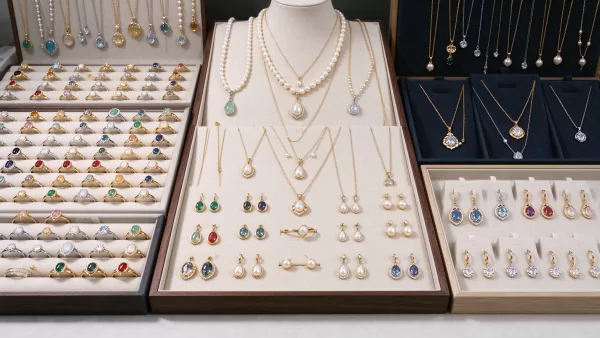
The fine jewelry market has shifted over the past decade as lab grown diamonds moved from novelty to mainstream, and lab grown diamond necklaces manufacturing now sits at the center of that transformation for brands, retailers, and private-label buyers. Chemically, physically, and optically identical to mined diamonds yet priced 40–60% lower at wholesale, lab grown diamonds open solitaire pendants for everyday gifting, halo drops for bridal-adjacent lines, and full-carat tennis necklaces for aspirational buyers. As an ISO-certified fine jewelry factory with over fifteen years in pendant production, we have built lab grown diamond necklaces manufacturing workflows tuned to B2B demands: consistent IGI-certified stone quality, repeatable bail and chain integrity, and lead times supporting seasonal retail calendars without shortcuts.
What separates a lab grown diamond necklace that sells through at full retail from one that lands in clearance is rarely the certificate alone. It is the precision of the wax model, the wall thickness of a bezel, heat management during bail soldering, and weight balancing that keeps a pendant from flipping forward. This guide walks through production standards and QC benchmarks defining professional lab grown diamond necklaces manufacturing, drawing on specs we use daily and partner feedback from Japan, the Middle East, Europe, and North America.
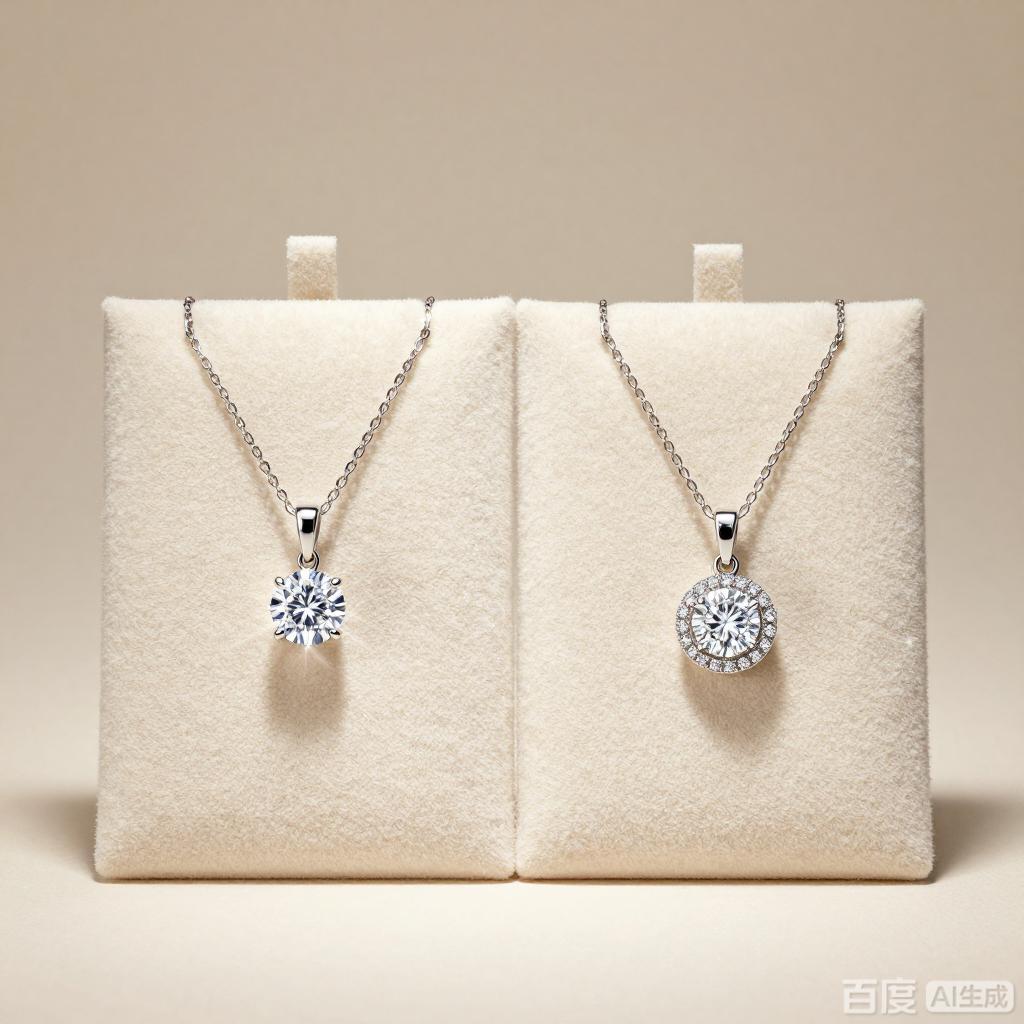
Table of Contents
- Core Pendant Styles
- Chain Materials and Clasps
- Bail Soldering Standards
- Bezel and Prong Setting
- Weight Balancing to Prevent Flip
- Japan and Middle East Client Case
- FOB Pricing Comparison
- FAQ
Core Pendant Styles in Lab Grown Diamond Necklaces Manufacturing
Every production run in lab grown diamond necklaces manufacturing begins with style selection, because pendant geometry dictates stone size, setting method, chain gauge, bail construction, and unit cost. We produce three families—solitaire, halo, and tennis—with center stones IGI certified per standards from the GIA.
Solitaire Pendants
The solitaire remains the best-selling SKU across every market, covering round brilliants from 0.25 ct to 2 ct in solid 14K white, yellow, or rose gold with 4-prong heads standard and 6-prong available. Four-prong exposes more table for light return; six-prong adds vintage feel and extra security. Sterling silver pieces with 14K gold-plated finish and gold-filled bails serve the value tier. Browse our gemstones catalog.
Halo and Tennis Necklaces
Halo designs surround a center stone with micro-pavé accents, amplifying perceived size at a fraction of a larger solitaire's cost. Our halo line uses 0.8–1.3 mm accents hand-set in individual seats with no shared prongs to prevent stone loss. Tennis necklaces are the premium tier: continuous round brilliants prong-set along a flexible chain with a box clasp and figure-8 safety, produced 2–20 ct total weight in 16" and 18" lengths.
Chain Materials, Gauges, and Clasp Specifications
A pendant is only as wearable as its chain, and chain selection is an engineering step in our lab grown diamond necklaces manufacturing workflow. We stock solid gold cable, box, rope, and Figaro links with minimum 0.9 mm gauge, scaling to 1.3 mm for pendants above 4 grams. Sterling silver chains ship in matching profiles with rhodium plating.
Clasp Selection
Solitaire and halo pendants use spring ring or lobster clasps—lobsters are our default for higher pull-strength on daily-wear chains; spring rings substitute at no cost on silver pieces under 1.5 grams. Tennis necklaces ship exclusively with box clasps and figure-8 safety latches. Every clasp is cycle-tested to 500 actions; finished pieces pull-tested at 5 kg. Metals comply with EU REACH, stamping follows FTC Jewelry Guides. Cross-merchandise with our wholesale category.
Bail Soldering Standards for Diamond Pendants
The bail is the most under-engineered component in mass-market lab grown diamond necklaces manufacturing, and the leading cause of lost-pendant warranty claims. A bail that opens or detaches destroys consumer trust, so we treat bail construction as structural.
Materials, Inner Diameter, and Heat Control
For silver pendants we use 14K gold-filled bails soldered to the body, resisting chain-threading wear and tarnish. For solid gold pieces, bails are matching 14K or 18K gold—never gold-filled or plated—to prevent color break at the joint. Every bail carries an inner diameter of 3.5 mm or larger to fit chains up to 2.5 mm rope or 3 mm cable; pieces over 2 ct use 4.0–4.5 mm bails. Reference: Wikipedia synthetic diamond. Soldering requires 3 mm minimum clearance between joint and set diamond, with heat-sink paste on the head. We use pulse-arc welding on gold and laser welding on silver. Every bail is 10x inspected and pull-tested at 5 kg under ISO 9001.
Bezel and Prong Setting for Diamonds
Setting quality distinguishes a clean, bright pendant from one that traps dirt or chips at the girdle, and it is a core differentiator in lab grown diamond necklaces manufacturing. Our setters work prong, bezel, halo micro-pavé, and channel styles.
Bezel Walls and Prong Tips
Bezel settings call for a uniform 0.3 mm wall around the stone with a bright-cut edge rolling smoothly over the girdle without covering the table. Walls thinner than 0.3 mm deform under polishing; over 0.4 mm they deaden light return. Prong heads support the diamond at the girdle and lower crown (never the culet) with hand-burnished, rounded tips. Halo micro-pavé uses individual drilled seats for each accent; we avoid shared-prong pavé, which causes most accent-stone loss. Every piece is checked under 10x after setting.
Weight Balancing to Prevent Pendant Flip
Of all engineering details in lab grown diamond necklaces manufacturing, weight balancing most directly affects how a necklace looks when worn—and is most often overlooked. A pendant that flips or twists is a piece the customer stops wearing.
Center of Gravity and Chain Matching
When a pendant hangs from its bail, its center of gravity must lie below the attachment point and in front of the chain plane. A heavier back—common on thick bezels or engraved backs—causes the piece to roll. Our model builders counterbalance by adding a thin weighted platform on the lower front or moving the bail slightly above geometric center. Solitaires over 1 ct receive a contoured back plate adding 0.15–0.25 grams low and forward; halos need only bail placement adjustment. Pendants pair with chains weighing at least 40% of pendant weight for pieces under 2 grams, scaling to 60% above 3 grams. IGI paperwork is on our certificates page, care guidance on the care and cleaning guide.
Client Case: Japan and Middle East High-End Jewelry Brand
In early 2024 we began working with a luxury jewelry brand headquartered in Tokyo with flagship retail in Dubai and Riyadh, where wear performance is non-negotiable. The brand approached us after issues with their previous lab grown diamond necklaces manufacturing partner: bail angle inconsistency causing flip, accent stones falling from micro-pavé within weeks, and tennis clasps failing drop-testing.
We started with a 45-piece sample covering solitaires 0.5–1.5 ct, three halo designs, and a 5 ct tennis necklace. We re-engineered CAD for weight distribution, rebuilt halos with individual-seat micro-pavé, specified a box clasp for the tennis piece, and upgraded bails to 14K gold-filled on silver and solid gold on gold with 3.5 mm minimum inner diameter. Sampling took 12 days and passed a 14-day wear test. Bulk production began at MOQ 15 per style in gold and 30 in silver, with 18–25 day gold lead time. Within six months the brand expanded to oval halos and a men's dog-tag solitaire, reaching 74% sell-through. See our buying guide for first-order planning.
Pendant Style and FOB Pricing Comparison
The table below summarizes core categories, stone weights, recommended chains, and FOB pricing for 14K gold at standard MOQ. Silver pricing runs approximately 55–65% lower.
| Pendant Style | Diamond Total Weight | Chain Type | FOB Price (USD, 14K Gold) |
|---|---|---|---|
| Solitaire Pendant (4-prong) | 0.25 – 2.0 ct | 0.9 mm+ cable, lobster clasp | $210 – $1,450 |
| Halo Pendant (round) | 0.50 – 2.5 ct (center + accents) | 1.0 mm+ box/cable, lobster | $360 – $1,820 |
| Bezel-Set Solitaire | 0.30 – 1.5 ct | 1.0 mm cable/rope, spring ring | $260 – $1,180 |
| Three-Stone Pendant | 0.75 – 3.0 ct total | 1.1 mm+ cable, lobster clasp | $480 – $2,150 |
| Tennis Necklace (line) | 2.0 – 20 ct total | Integrated, box clasp w/ safety | $890 – $9,600 |
| Pendant Only (no chain) | Same as above, chain removed | Bail only, no chain supplied | Less 8–12% vs. pendant + chain |
FOB Dongguan. MOQ: 15 pieces/style in gold, 30 pieces/style in silver. Lead time: 18–25 days gold, 15–20 days silver. IGI certification included.
Frequently Asked Questions
What is the MOQ for lab grown diamond necklaces manufacturing?
Our standard MOQ is 15 pieces per style in solid 14K or 18K gold and 30 pieces per style in sterling silver. Mixed-SKU orders are welcome within a single metal type. First-time partners can request a 6-piece sample pack at sample pricing with 7–10 day turnaround.
What certification is included?
Center stones 0.3 ct and above come with IGI reports certifying carat, color, clarity, cut, and lab grown origin. Accent stones are IGI-certified melee. GIA-certified center stones are available at additional cost with extended lead time.
How do you prevent diamond damage during bail soldering?
We maintain minimum 3 mm clearance between solder joints and set diamonds, apply heat-sink paste, and use pulse-arc welding on gold and laser welding on silver rather than open-torch near stones. Post-setting soldering is avoided; every piece is 10x inspected after.
What keeps pendants from flipping forward?
Weight balancing is engineered at CAD stage, with center of gravity positioned below and forward of the bail. Solitaires over 1 ct receive a contoured front back plate. Chain weight is specified at a 40–60% ratio to pendant weight for rigidity.
What are typical production lead times?
Gold production runs 18–25 days from order confirmation; silver runs 15–20 days. Client-provided CAD adds 7–10 days for sampling; original designs add 14–18 days. Rush production at 15% upcharge shortens gold lead times to 12–15 days.
Partner With HOLYCOME for Your Lab Grown Diamond Necklace Program
Partnering with a factory that understands structural details—the 3.5 mm bail inner diameter, the 0.3 mm bezel wall, weight distribution preventing flip, heat management during soldering—is what separates a program that sells through at full margin from one that generates returns. Our lab grown diamond necklaces manufacturing program is built on fifteen years of production, ISO 9001 systems, and direct feedback from partners in Japan, the Middle East, Europe, and North America. Every piece is cast, set, soldered, polished, and inspected in our Dongguan workshop.
Whether you are placing your first solitaire order, scaling a halo and tennis program, or launching a private-label Q4 line, our team tailors production to your specs. Contact our B2B sales team to request a line sheet, sample quote, or custom consultation. Build your next lab grown diamond necklace category with a lab grown diamond necklaces manufacturing partner that sweats the engineering details so your customers only see the sparkle.