Pool, Hot Tub and Chlorine: How They Damage Jewelry
Most people take off their engagement ring before getting into a chlorinated pool, but they leave it on for a hot tub, a hotel plunge pool, or a long soak in a Jacuzzi. That is the moment jewelry gets damaged, because heat and chlorine together are far more aggressive than chlorine alone. The diamond or sapphire on your finger is fine; the metal holding it is what suffers. Over a single hot-tub session, nothing may seem wrong, but repeated exposure pits karat gold, dulls silver, weakens prongs, and can eventually loosen a stone that you thought was set securely.
This guide explains exactly which pool and hot tub chemicals damage which jewelry, why the heat makes it worse, what you should remove before swimming, and how to rescue a piece that has already been exposed. If you are planning a beach vacation, our travel jewelry guide covers packing, and our chemical damage guide covers the everyday products that also harm gems.
What Pool and Hot Tub Water Contains
Swimming pools are treated with chlorine, usually in the form of chlorinated compounds that keep bacteria under control. At normal pool levels, chlorine is mild enough for skin, but it reacts slowly with the copper and silver in karat gold alloys. Over time, that reaction pits the surface, turning a polished ring into a slightly rough finish. Hot tubs use higher chlorine levels and heat, which dramatically speeds the chemical reaction. A hot tub session is far more damaging than a lap in a pool, because heat accelerates corrosion and softens metal.
Hot tubs also often use bromine instead of chlorine, which is similarly aggressive. Saltwater pools, which use dissolved salt to generate chlorine, are less harsh than traditional pools but still produce chlorine, and the salt itself can accelerate tarnish on silver. Hot springs and mineral pools contain sulfur and other minerals that tarnish silver almost immediately. In short, any treated water is a reason to remove jewelry, not just the obvious blue pool water.
The third factor is soap and sunscreen residue. Before swimming, most people apply sunscreen and body lotion, which film the jewelry, and the chlorine then mixes with that film to create a dull coating on the stone and metal. The combination is why a ring worn on a beach vacation looks dull within days, even if the stone itself is undamaged.
How Chlorine Affects Each Metal
Karated gold (10k, 14k, 18k) is alloyed with copper, silver, zinc, or nickel to make it hard enough for jewelry. Chlorine reacts with those alloy metals, especially copper, causing tiny pits on the surface. A ring worn repeatedly in a hot tub develops a matte, pitted finish, and the prongs can become brittle enough to crack. Pure 24k gold is not affected by chlorine, but almost no jewelry is made of pure gold because it is too soft. This is why the warning exists: it is the alloy, not the gold, that suffers.
Sterling silver tarnishes mainly from sulfur, but chlorinated water accelerates general dulling and can turn plated silver pieces gray. White gold, which is rhodium-plated, loses its plating faster in hot chlorinated water, revealing the yellow metal underneath. Platinum and palladium are more resistant to chlorine, but they are not immune, and hot tub heat can still dull their finish. Titanium, stainless steel, and tungsten are essentially unaffected by chlorine, which is one reason modern men's bands can be worn swimming.
The most dangerous combination is a thin karat gold ring with delicate prongs. Repeated hot tub exposure can weaken a prong to the point that it breaks, and a stone lost in a pool is usually never found. This is not a hypothetical problem; jewelers see it regularly.
How Chlorine Affects Gemstones
The hard gems you expect to survive are mostly fine. Diamond, sapphire, ruby, and moissanite are chemically inert and do not react with chlorine. A diamond worn in a pool will not be damaged as a stone. The risk is the setting, not the gem.
Softer and treated gems are more sensitive. Emerald, which is oil-filled, can have its oil affected by hot chlorinated water. Opal can dehydrate in hot tubs. Pearls and porous gems absorb chemicals, which can dull their nacre. Turquoise, lapis, and other soft stones can discolor. If you wear colored gemstone jewelry in a pool, assume the stone may be dulled even if it does not crack.
Pearls are the biggest casualty. Chlorine etches the nacre of pearls, turning them from lustrous to chalky within a single hot tub session. Never wear pearls in a pool, hot tub, or even the shower. Our pearl care guide explains why.
What to Remove Before Swimming
The safest rule is simple: remove all fine jewelry before entering any treated water. Engagement rings, wedding bands, earrings, necklaces, and bracelets should go in a dry pouch, not on the pool edge where they can be knocked into the water. A small jewelry case in your beach bag is the right approach, because leaving a ring on a wet towel or a lounge chair is how it gets lost.
If you forget and swim with your jewelry on, do not panic. A single lap in a normal pool rarely causes damage. The problem is repeated exposure, especially in hot tubs. If you regularly swim for exercise, make ring removal part of your routine before pool time, not after. For hot tubs, remove everything except maybe a titanium or stainless steel band, and never tempt fate by leaving a delicate opal or pearl piece near the water's edge.
For earrings, small studs are often left in, but chlorine can irritate freshly pierced ears. If your piercings are healed, gold studs are usually fine for an occasional swim, but remove them for a long hot tub soak. Our earring cleaning guide covers after-swim care.
How to Rescue Jewelry Already Exposed
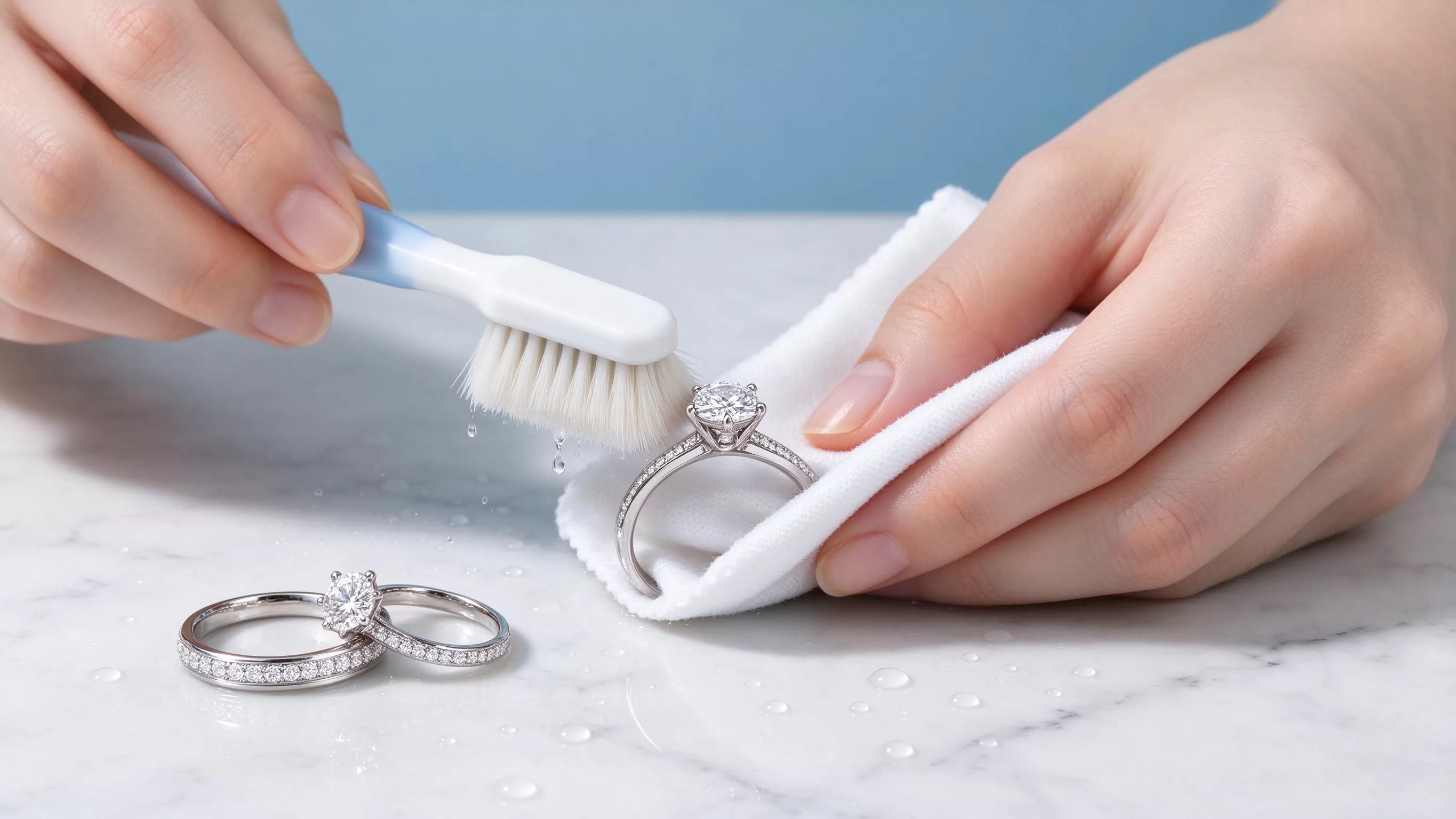
If you have swum with your jewelry on, rinse it immediately in fresh, clean water as soon as you get out. This removes the chlorine residue before it dries onto the metal. Then clean the piece with warm soapy water and a soft brush, paying attention to the prongs and the area under the setting. Pat dry with a soft cloth.
If the metal looks pitted or the prongs feel rough, take the piece to a jeweler. Pitting cannot be polished away at home, and weakened prongs must be tightened or replaced before the stone is lost. For white gold that has lost its rhodium plating, a re-plating service restores the white finish. For pearls that have been in chlorine, there is no home fix; the nacre damage is permanent, so prevention matters more than rescue.
If a ring has been in a hot tub repeatedly and the stone feels loose, stop wearing it and have it checked. A loose prong can fail without warning, and the pool is the worst place to lose a stone.
Vacation and Hotel Tips
Hotel pools and hot tubs are the most common place people damage jewelry, because they are on vacation and leave rings on. Get into the habit of leaving fine jewelry in the hotel safe or a pouch, and wearing a cheap waterproof band if you want something on your finger while swimming. Many travelers buy a silicone wedding band for vacations precisely for this reason.
For the beach, saltwater is less harsh than chlorine, but sand scratches soft gems and metal. Rinse jewelry in fresh water after swimming in the ocean, and dry it thoroughly. Sunscreen and tanning oil film jewelry fast in tropical climates, so wipe rings and earrings with a soft cloth during the day. Our travel care guide has the full packing list.
Which Jewelry You Can Actually Swim In
If you want something on your finger or ears while swimming, not all jewelry is equal. Titanium, stainless steel, and tungsten bands are essentially immune to chlorine and saltwater, and they can be worn in pools and the ocean without concern. That is why many people buy a stainless steel or silicone band specifically for swimming and gym days, leaving the wedding ring in a locker. For earrings, small stainless steel or titanium studs are safe, but gold or silver studs should be removed for long hot tub soaks.
Fine jewelry with colored stones is the category to be most careful with. Emerald, opal, pearl, turquoise, and any porous or treated gem should never meet chlorinated water. Diamond, sapphire, and ruby are chemically safe, but their settings are not, so the risk is the prongs rather than the stone. If you must wear an engagement ring to the pool, choose a low-profile bezel setting that is less likely to catch, and rinse it immediately afterward. Even then, remove it for the hot tub.
A practical compromise many couples use is a silicone wedding band for travel, the gym, and the pool. It costs a few dollars, looks like a band from a distance, and if it slips off in the water, nothing is lost. Our article on titanium versus tungsten bands covers the durable alternatives for everyday wear.
The After-Swim Cleaning Routine
If you forget and swim with fine jewelry on, the recovery routine is straightforward. As soon as you leave the water, rinse the piece in fresh tap water for a minute, turning it so water flows under the prongs. Pat it dry with a towel, and when you get home, give it a proper clean: warm water with a drop of mild dish soap, a soft brush around the setting, and a thorough rinse. This removes the chlorine residue before it pits the metal.
If you regularly swim for exercise, make weekly cleaning part of your routine. A ring worn swimming once a week will film and pit over months, and a quick soak every weekend keeps the prongs visible and tight. Inspect the setting after cleaning: if a prong feels rough, catches on fabric, or the stone shifts, take it to a jeweler before the next swim. Catching a loose prong early is far cheaper than losing a stone in a pool.
Frequently Asked Questions
Does chlorine damage gold jewelry? Yes, over time. It pits the alloy in karated gold, especially in hot tubs, weakening prongs. Pure 24k gold is unaffected, but most jewelry is alloyed.
Can you wear a diamond ring in a pool? The diamond is safe, but chlorine can weaken the prongs. Remove any ring before swimming, especially in a hot tub.
Does chlorine turn silver black? Silver tarnishes from sulfur, not chlorine, but chlorinated water dulls silver and accelerates general tarnish. Remove silver before swimming.
What happens if you swim with jewelry on? Occasional exposure is usually harmless, but regular chlorinated water pits metal, dulls gems, and can loosen stones. Heat in a hot tub accelerates it.
How do I remove chlorine damage from jewelry? Rinse immediately in fresh water, then clean with warm soapy water. Pitted metal or loose prongs need a jeweler; prevention is easier than repair.
Take the Ring Off Before You Get In
The rule for pool and hot tub jewelry is simple: take it off. The stone on your finger is not the thing at risk; the tiny prongs holding it are, and chlorine plus heat weakens them faster than any other everyday exposure. A few seconds of removal before swimming saves a costly repair or a lost stone. If you are on vacation, leave fine jewelry in the safe and wear a silicone band for the pool. Over a lifetime of summers, this one habit will do more to keep your rings intact than any polishing cloth, and it takes barely a moment. We set and repair fine jewelry in our Shenzhen workshop in Henggang, Longgang, and we can inspect prongs or re-plate white gold after chlorine exposure. Email service@holycome.com if a ring feels loose or you need a setting checked. More protection tips live in our Care & Cleaning library.