Tourmaline Gemstone Guide: The Rainbow Mineral From Elba to Paraiba
Walk into any colored-stone room and the most colorful object in it is usually tourmaline. In a single tray you will find hot pink, electric blue, grass green, watermelon slices, and black crystals that look polished to a glass sheen. No other common gemstone arrives in so many colors, which is why tourmaline is both the easiest stone to fall for and the hardest to summarize. This guide explains what tourmaline is, why it comes in every color, where the famous Paraiba material comes from, and how to buy the reds, greens, and blues that hold their value.
The name tourmaline comes from a Sinhalese word for mixed gem gravels, and that mixed identity has followed the stone for centuries. Miners did not always know they were holding tourmaline; green crystals were sold as emerald, pink ones as rubellite, and the famous blue-green Paraiba was mistaken for other gems when it first surfaced in Brazil. Today gemologists separate the tourmaline family by chemistry, but for the buyer the practical question is simpler: which color is this, where is it from, and is it treated? Those three answers decide everything about price and longevity.
What Tourmaline Is: One Mineral, Many Colors
Tourmaline is a complex boron silicate that grows in long, prismatic crystals with characteristic triangular cross-sections. Its color comes from trace elements that substitute into the crystal lattice: iron gives green and blue, manganese gives pink and red, and combinations create the multicolor stones collectors love. Because the same mineral accepts so many different trace elements, it is the most multicolored gem family on earth, ranging from colorless through every hue to solid black.
That chemical flexibility is also why tourmaline appears in so many rock types. It grows in granite pegmatites, the coarse veins that produce large crystals, and it also forms in metamorphic rocks. The best gem crystals come from pegmatite pockets, where slow growth gives clean, elongated stones. Commercial tourmaline is mined in Brazil, Afghanistan, Nigeria, Mozambique, Madagascar, and the United States, with each locality producing a characteristic color range.
The Major Varieties Every Buyer Should Know
Tourmaline is sold under variety names that describe its color, and learning them removes most of the confusion. Elbaite is the gem-grade variety that covers nearly all jewelry tourmaline. Within it, rubellite is the pink-to-red variety, chrome tourmaline is the vivid green colored by chromium, indicolite is the blue variety, and achroite is the rare colorless stone. Schorl is the common black tourmaline, used in carvings and beads but rarely faceted for fine jewelry.
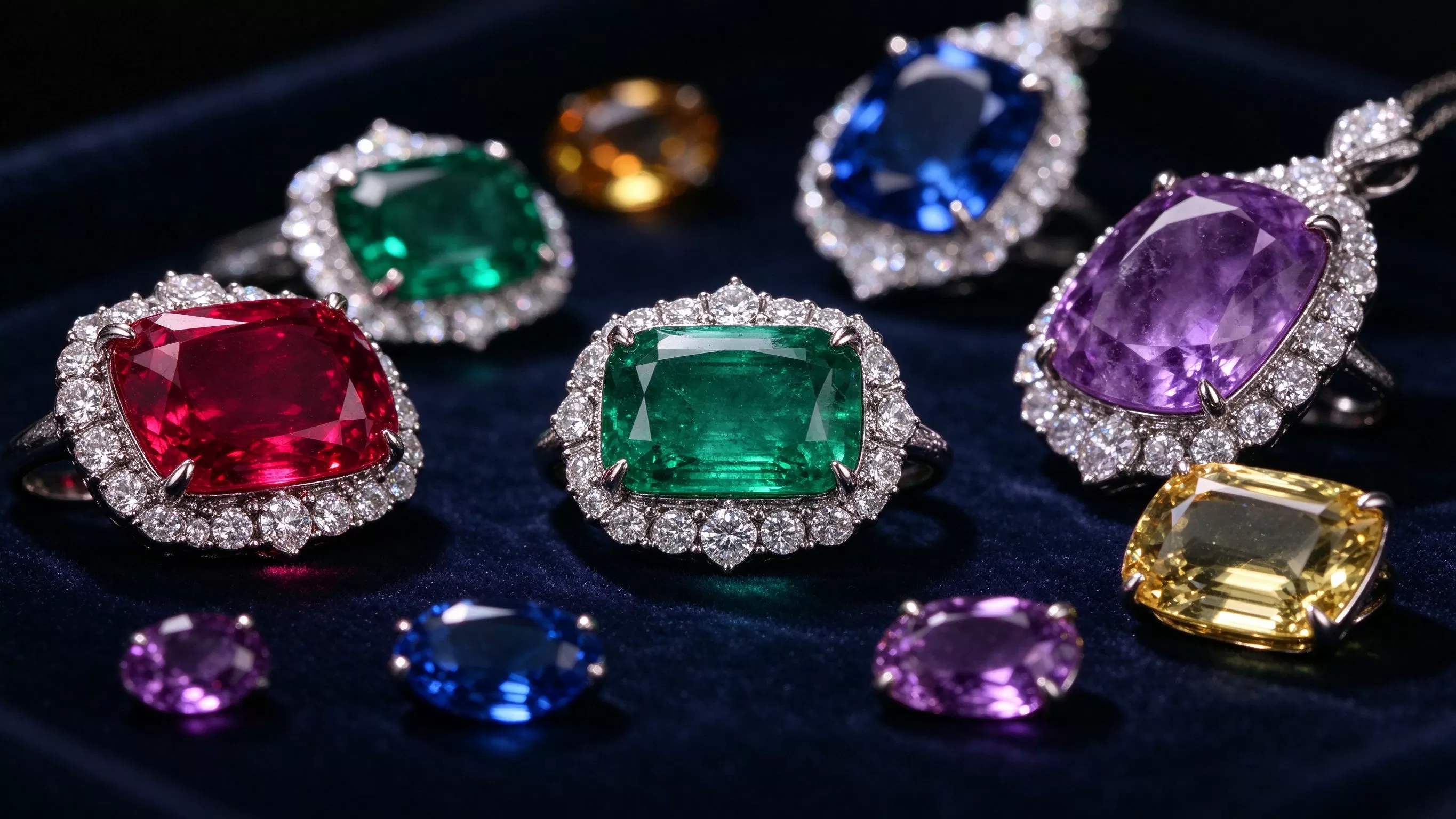
Watermelon tourmaline is the most famous variety of all: a crystal that is pink in the center and green around the outside, sliced into thin slices that look like watermelon cross-sections. It is usually set as a slice in pendants and earrings rather than faceted, because the concentric color bands are the whole point. Bi-colored and tri-colored tourmaline, which runs from pink to green or pink to clear, is used the same way, celebrated for its natural artwork.
Paraiba Tourmaline: The Electric Blue-Green Sensation
No tourmaline discussion is complete without Paraiba, the gem that redefined the market after its discovery in Brazil in 1989. Paraiba tourmaline gets its neon blue-green glow from copper, an element that had never been seen in gem tourmaline before. The color is impossible to describe casually: it is an electric, almost fluorescent turquoise that glows under almost any light, and it is one of the most valuable colored gems per carat when fine.
The original Paraiba mine in the Brazilian state of Paraiba produced only a small amount of material, and the best stones are now collector's pieces that sell for thousands of dollars per carat. When similar copper-bearing tourmaline was later found in Nigeria and Mozambique, the trade debate over whether to call all copper-bearing material "Paraiba" became heated. Today the convention is to specify the origin: Brazilian Paraiba is the premium reference, while African copper tourmaline is similar but usually less expensive. When you shop, ask not just whether the stone is Paraiba-colored but where it was mined, because origin is the price difference.
Color and Clarity: What to Look For
Across the whole tourmaline family, color saturation is the single biggest value driver. A pale, washed-out pink tourmaline is affordable and pretty, but a vivid hot pink rubellite is a different category of stone. Tourmaline also commonly shows color zoning, meaning the crystal is darker on one end and lighter on the other, and cutters orient the stone to hide the zoning. When you examine a tourmaline, look through the table and notice whether the color is even across the top or whether one side is noticeably darker.
Clarity in tourmaline ranges from eye-clean to heavily included. Many rubellites and pink stones contain fine, feathery inclusions that are accepted as normal, and a completely clean red tourmaline at a large size is unusual and pricey. Chrome green tourmaline is often cleaner than pink. Because tourmaline crystals are long and narrow, fine stones are cut into elongated ovals, cushions, and emerald cuts that match the rough. Expect the cut to follow the crystal rather than the other way around.
Treatments: Heating and the Pink-to-Red Question
Tourmaline is routinely heated, and buyers should understand exactly what that means. Many pink and red tourmalines are heated to lighten an overly brownish or purplish tone and to produce a cleaner, brighter red. Heating is stable, permanent, and widely accepted in the trade, and it is disclosed for finer stones. Some green and blue tourmalines are also heated to deepen or clarify color. Unlike the controversy around heated ruby, heated tourmaline is considered a normal, expected step, and the price reflects it.
The treatment to be wary of is irradiation and dyeing of very low-grade material, and especially the sale of glass-filled or reassembled stones. Copper-colored "Paraiba" that is suspiciously cheap is almost always either a much darker stone artificially brightened or an imitation. Always ask for a statement of treatment and origin, and for anything at Paraiba prices, insist on a laboratory report. Our guide to gemstone treatments and what certificates reveal explains how to read these disclosures.
Durability and Setting Tourmaline
Tourmaline ranks 7 to 7.5 on the Mohs scale, which is solidly wearable for rings, earrings, and necklaces. It is not as hard as sapphire, so it will scratch over years of heavy ring wear, but it is far tougher than emerald and holds a polish well. The one structural caution is that tourmaline has natural cleavage, meaning a hard, direct blow can split it along a plane, so protective settings are wise for rings. A bezel or a ring with rounded prongs shields the corners better than sharp tines.
Cleaning tourmaline is simple: warm soapy water and a soft brush. Ultrasonic cleaners are risky because they can open internal fractures in included stones, and steam should be avoided entirely. Keep tourmaline away from acids, perfume, and chlorine, as with most colored gems, and store pieces separately so they do not scratch softer neighbors. For the full routine, our guide to cleaning jewelry by stone type lays out the safe methods.
Where Tourmaline Comes From, Locality by Locality
Brazil is the largest producer, and its Minas Gerais deposits have supplied pink, green, and the famous Paraiba for decades. Afghanistan and Pakistan produce exceptional pastel and bright pink tourmaline, often in clean sizable crystals. Nigeria and Mozambique supply much of the commercial pink and green sold in contemporary jewelry, and they are also the source of the African copper tourmaline that competes with Brazilian Paraiba. Madagascar produces a wide range of colors, and the United States, particularly California and Maine, has a historic tourmaline tradition that still yields collector stones.
Locality matters most at the top end. Brazilian Paraiba commands the highest prices, Afghan pink is prized for its clarity, and Nigerian material is often the value entry point into the copper color. For everyday jewelry, origin is less important than color and clarity, but once you spend at collector levels, a certificate naming the mine is worth the paper it is printed on.
Buying Tourmaline on a Budget
One of tourmaline's best features is how much beauty you can buy for modest money. Fine pink and green tourmaline at one to three carats is available at prices that make ruby and emerald look excessive, which is why it is a favorite for first colored-stone purchases. The budget strategy is to favor color saturation over size, accept minor inclusions that are normal for the species, and choose a setting that protects the corners. You can own a two-carat bright pink tourmaline ring for the price of a one-carat lower-grade ruby.
Where to spend and where to save is straightforward. Save on the metal if your budget is tight, because tourmaline looks great in sterling silver and 10k gold, and the stone is the star. Do not save on color, because a pale stone will never look as expensive as a saturated one, even at twice the size. And never buy a tourmaline described as "neon blue" without a certificate, because that is the most imitated color in the family.
How Tourmaline Is Mined and Cut
Tourmaline grows in pegmatite veins that miners follow by hand, because the pockets of gem crystals are scattered and easily destroyed by heavy machinery. In Brazil and Africa, small-scale miners often dig narrow tunnels into the pegmatite and extract pockets of crystals by hand, then sort them at the surface. This artisanal reality is why fine tourmaline supply is so uneven: a single pocket can yield hundreds of kilos of common material and a handful of extraordinary rubellite crystals, and the market moves in waves as new pockets open. Buyers who track the market notice prices shift whenever a notable new find is announced.
Cutting tourmaline is a specialized job because the crystals are long, narrow, and often color-zoned. The cutter must orient each rough piece so the best color faces up, wasting a lot of weight in the process. That is why tourmaline is cut into elongated ovals, emerald cuts, and long cushions rather than perfect rounds: the shape follows the crystal. For watermelon and bi-color rough, the cutter slices thin cross-sections and polishes both sides rather than faceting, because the internal color pattern is the display. A well-cut tourmaline looks luminous and even; a poorly cut one looks dark through the bottom.
Tourmaline in History and Design
Tourmaline has a glamorous design history that many buyers do not know. In the Art Deco era, French and American jewelers set vivid tourmaline into clips, bracelets, and pendants, and wealthy collectors sent their gem cutters to Maine and Brazil for the best pink and green stones. Queen Elizabeth II and several Hollywood stars wore tourmaline pieces that are now museum objects. During the late twentieth century the stone fell out of fashion as diamonds dominated bridal jewelry, but the Paraiba discovery of 1989 reignited collector interest and never fully faded.
Today tourmaline is a designer favorite precisely because it is not a "default" gem. A pink tourmaline ring reads as considered and personal, while a diamond solitaire reads as conventional. Designers use the whole color range: rubellite in cocktail rings, indicolite in modern pendants, watermelon slices in one-of-a-kind earrings. If you want a colored stone that says you chose it deliberately rather than inherited it, tourmaline is one of the best answers in the case.
Pairing Tourmaline With Skin Tones and Metals
One reason tourmaline is so wearable is that there is a color for every complexion. Cooler pinks and indicolite blue look beautiful against fair skin, while warm rubellite and chrome green glow against deeper and olive tones. The beauty of the family is that you do not have to settle for a color that does not suit you; if pink feels too strong, a softer pastel tourmaline in the same family gives you the same stone in a gentler dose. That range is unique to a multicolored gem like this.
Metal pairing follows the hue. Yellow gold brings out the warmth in red and pink tourmaline, rose gold harmonizes with the softer pinks, and white gold or platinum makes blue and green stones look crisp and modern. Because tourmaline is affordable, you can try it in silver for a casual piece and later have the same design remade in gold. When you build a multi-stone look, pair tourmaline with diamonds or moissanite accents that let the center color read clearly; busy accent colors compete with the already colorful center.
A Practical Buying Checklist
Keep this list beside you the next time you compare tourmalines. The goal is to buy saturated, honest color rather than the largest stone in the tray.
- Name the variety and origin in writing: rubellite, indicolite, chrome, or Paraiba, and where it was mined.
- Confirm treatment status; heating is normal, but demand a certificate for Paraiba-priced stones.
- Favor saturated color over size; a small vivid stone beats a large pale one.
- Check for even color across the top and avoid stones with obvious dark zoning.
- Choose an elongated cut that follows the crystal, and a protective setting for rings.
- Compare prices against rubies and emeralds in the same size, and buy where the value is clearest.
How Tourmaline Compares to Similar Colors
Shoppers often weigh tourmaline against a more famous stone in the same color, and the comparison usually favors tourmaline on value. Green tourmaline, especially chrome green, is a vivid, clean alternative to emerald that costs far less and is tougher to wear. It lacks the deep, garden-like depth of fine Colombian emerald, but for an everyday green ring it scratches and chips less and cleans more easily. If the appeal is the color rather than the prestige, chrome tourmaline is the practical choice, and our emerald guide covers when the extra emerald investment is worth it.
Pink tourmaline sits in the same emotional neighborhood as morganite and pink sapphire. Pink sapphire is harder and pricier, morganite is softer and paler, and pink tourmaline sits between them with richer color than morganite and better value than sapphire. Red rubellite, meanwhile, is the affordable answer for anyone drawn to ruby's warmth without ruby's price and heat-treatment history. In every comparison, tourmaline wins on value and color variety, and it loses only on the raw prestige that comes with the most famous names. Choose the stone for the light it gives back, not the label on the box.
Long-Term Care and Resale of Tourmaline
A well-set tourmaline will stay beautiful for decades with ordinary attention. The two things that shorten its life are knocks that exploit its cleavage and chemicals that dull the polish. Treat it like you would any fine colored gem: off before gardening, cleaning, and gym work, on for daily office and evening wear. Over years, the high points of the facets will soften from friction, and a jeweler can repolish the stone during a setting check. Because tourmaline is inexpensive, repolishing costs little relative to the piece, and it restores the original sparkle completely.
On resale, remember that tourmaline is bought for enjoyment rather than as an investment. The average commercial stone will not appreciate the way a top ruby or Paraiba might, but it will hold most of its value if it is well-cut and untreated. The rare exceptions, especially fine Brazilian Paraiba and large clean rubellite, do hold or gain value over time. For the rest, think of tourmaline as jewelry you love wearing, not a financial asset, and you will be delighted with it rather than disappointed by its resale price.
Frequently Asked Questions
Is tourmaline a precious stone? Tourmaline is classified as a semi-precious colored gem, but fine Paraiba and rubellite now sell at prices that rival many "precious" stones. For most buyers it is an accessible, beautiful gem, with rare exceptions that are true collector's pieces.
What is the most valuable color of tourmaline? Neon copper-bearing blue-green Paraiba, especially from Brazil, is the most valuable. After that come vivid red rubellite and saturated chrome green. Pink and multicolor slices are more affordable.
Can tourmaline be worn in a ring? Yes. At 7 to 7.5 on the Mohs scale it is durable for daily wear, though it has natural cleavage, so choose a protective setting and avoid hard knocks. Clean it only with warm soapy water, never ultrasonic or steam.
Is tourmaline always heated? Many pink and red tourmalines are heated to improve color, and this is a normal, accepted, stable treatment. Ask whether a stone has been heated, and insist on a certificate for any Paraiba-priced purchase.
Choosing Your Color of Tourmaline
Tourmaline rewards the buyer who lets personal taste lead. If you want a conversation piece, nothing beats a watermelon slice pendant or a neon Paraiba. If you want an everyday ring with personality, a bright pink rubellite or a chrome green stone gives you color that costs a fraction of ruby or emerald. Match the metal to the hue, protect the corners, and buy the most saturated color you can afford, and the stone will keep surprising you every time the light catches it.
The family's greatest strength is also its trap: because tourmaline is available in nearly every color, a shopper can spend weeks comparing shades without ever deciding. The way out is to decide the role the jewelry plays first. A ring worn daily wants a durable, moderately saturated pink or green that flatters your wardrobe. A statement pendant wants the boldest, most unusual color you can find, even if it is less practical. Once the role is clear, the color choice becomes easy, and the rest is just checking treatment, origin, and cut.
Our factory works with tourmaline and other colored stones for custom jewelry, and we can help source the exact color, cut, and setting you have in mind. For a quote on a tourmaline ring, pendant, or earrings, contact us at service@holycome.com. Compare it against other colorful gems in our Gemstone Knowledge library before you decide.