Spinel Gemstone Guide: The Royal Red Long Mistaken for Ruby
Some of the most famous "rubies" in the British crown jewels were never ruby at all. The Black Prince's Ruby, set into the Imperial State Crown, is a 170-carat spinel that has worn a ruby label for six hundred years. That single mistake explains spinel's entire story: a gem so close to ruby in red that emperors and jewelers confused them for centuries, yet distinct in chemistry, softer in price, and quietly one of the most beautiful colored stones you can buy today. This guide separates spinel from ruby, explains where it comes from, and shows how to judge the vivid reds, pinks, and purples that make modern spinel one of the most exciting gems on the market.
Spinel is not a lesser ruby. It is its own mineral, magnesium aluminum oxide, and it crystallizes in the same geological beds as corundum, which is why the two grew up side by side in the mines of Myanmar. Once gemology learned to tell them apart in the 1800s, spinel was unfairly demoted as the "imposter," and for decades it traded cheaply. That reputation is reversing. Collectors now seek fine spinel specifically because it is untreated, often cleaner than ruby, and still far more affordable. If you want a red that reads like a crown jewel without a ruby budget, spinel is the stone to understand.
Spinel vs Ruby: How the Two Red Stones Actually Differ
The confusion between spinel and ruby is understandable when you hold them in the light. Both can be a vivid, saturated red, both form in marble deposits, and both have been treasured for millennia. Under testing, though, they diverge sharply. Ruby is corundum, 9 on the Mohs scale, while spinel sits at 8, slightly softer and a touch more brittle. Ruby gets its red from chromium, and so does red spinel, which is why the hues overlap so completely.
The practical differences matter more than the laboratory ones. Ruby is routinely heat-treated to improve color, and fine untreated ruby is extraordinarily expensive. Most spinel on the market is completely natural and untreated, because it does not respond well to heating. A clean, bright red spinel therefore often looks better value than a ruby of the same size, because you are not paying a premium for a famously treated stone. For a fuller comparison of the two red corundums and their cousins, see our guide to ruby and sapphire as corundum.
Visually, spinel has a slight edge in brilliance. It is a highly refractive stone that seems to glow from within, and its clean single refraction gives it a smoother, more glassy look than ruby's slightly heavier depth. In a ring, that glow reads as modern and lively, which is why contemporary designers have turned to spinel for engagement rings that want red without the ruby price tag.
The Color Spectrum of Spinel: Beyond Red
Red is the color everyone knows, but spinel is actually a rainbow in one mineral. Fine spinel appears in hot pink, hot orange, lavender, violet, and an unusual grayish-blue that collectors call "cobalt spinel," although it contains no cobalt at all. The most valuable colors are vivid red, hot neon pink, and electric cobalt blue, while softer mauve and lilac stones are affordable and flattering.
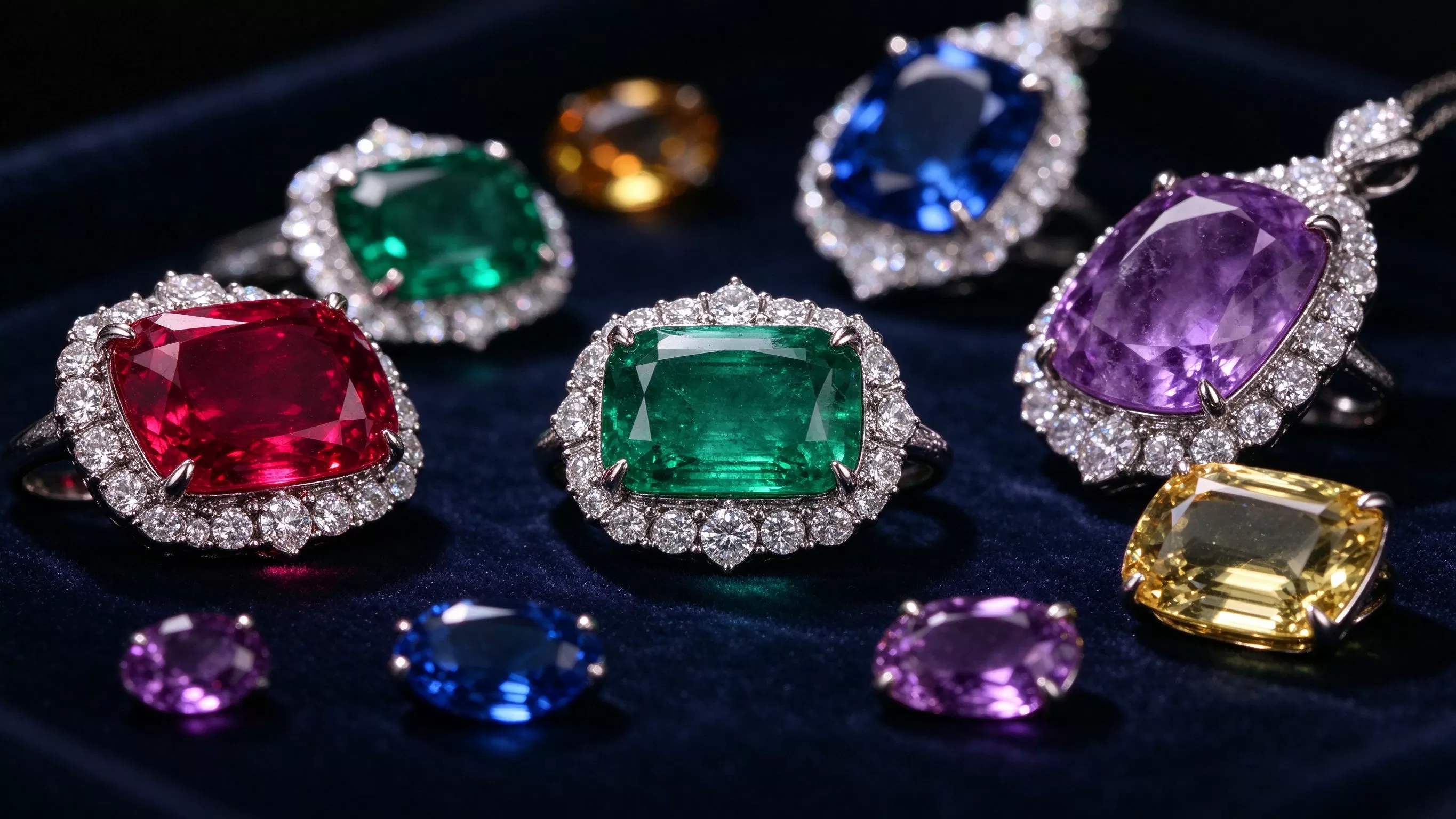
Red spinel is graded on the same warm-to-cool axis as ruby. The most coveted is a pure, slightly bluish red that dealers call "pigeon's blood" by analogy, although true equivalence to top Burmese ruby is rare. Orange-red "flame" spinel from Tanzania is a newer favorite, with a warm, fiery tone that photographs beautifully. Pink spinel, especially the hot neon pink from Mahenge, Tanzania, has become a bridal favorite for buyers who find ruby too traditional.
Blue spinel deserves special attention because it is so little understood. Fine cobalt-blue spinel is vivid, bright, and distinctly different from sapphire, and it can be a fraction of the price. Grayish or purplish blue spinel is less exciting, but a saturated electric blue is a collector's prize. When you shop blue spinel, hold it under natural light, because the color can shift dramatically between cool showroom bulbs and daylight.
Where Spinel Comes From: Mogok, Mahenge, and Beyond
The historical home of fine red spinel is Mogok, Myanmar, the same valley that produces the world's rarest ruby. For centuries miners pulled spinel and ruby from the same alluvial gravels, and the spinels were set aside as the "lesser" stones. Today Mogok spinel remains the reference standard for red, with a warm, saturated glow that commands strong prices.
The modern spinel boom really began in Tanzania. The Mahenge deposit, discovered in the mid-2000s, produced astonishing hot pink and red spinel in sizes and cleaness the trade had not seen, and it pushed spinel from a niche collector's stone into mainstream fine jewelry. Other sources include Vietnam, Tajikistan, and Sri Lanka, each with a characteristic color: Vietnamese spinel leans toward violet and hot pink, while Sri Lankan material tends toward softer lavender and grayish blue.
Treatments and Value: Why Untreated Matters
Spinel is one of the least treated colored gems you can buy. Unlike ruby and sapphire, which are almost universally heat-treated, spinel generally does not improve under heat, so the stone in the jewelry case is essentially the stone the mine produced. Some very low-grade material has been fracture-filled or dyed, but that is unusual and should be disclosed. For the buyer, this means a well-chosen spinel carries none of the treatment uncertainty that complicates ruby purchases.
Value in spinel tracks color first, then clarity, then size. The vivid reds and hot neons climb quickly in price once they exceed two carats, because top-color clean spinel is genuinely scarce. Soft pink and lilac spinel remains very accessible, which is how a buyer can own a three-carat gem that still looks like a fine colored stone. Because the market is younger than ruby's, pricing is less inflated, and patient shoppers can find excellent stones before spinel catches up.
Durability and Setting Spinel in Jewelry
At 8 on the Mohs scale, spinel is hard enough for rings, earrings, and necklaces, sitting just below sapphire and well above quartz. It is tougher than its slightly lower hardness suggests, with fewer hidden internal fractures than emerald, so a well-set spinel ring handles daily wear confidently. It resists scratching better than most colored stones outside the corundum family.
The main care note is that spinel, like most gems, dislikes acids and harsh chemicals. Remove spinel jewelry before cleaning, swimming in chlorinated pools, or applying perfume, and clean it with warm soapy water and a soft cloth. Ultrasonic cleaning is generally safe for a well-set spinel, but skip it if the stone has any visible internal fractures, as the vibration can propagate a crack. For the broader rules, our guide to cleaning jewelry by stone type covers the full list.
Famous Spinels: The Crown Jewels That Weren't Ruby
The history of spinel is a parade of misidentified crown jewels. Beyond the Black Prince's Ruby in the Imperial State Crown, the Timur Ruby in the British collection is a 361-carat spinel that was catalogued as a ruby until 1851. Spinels also adorned the Mughal thrones of India, where engraved stones carry imperial inscriptions. These pieces were never demoted in status once their true identity was known; if anything, their romance increased, because they had outlasted empires under a wrong name.
For a modern buyer, that history carries a useful lesson. Spinel was good enough for kings who could have any stone in the world. The fact that they wore it without knowing its name is the strongest possible endorsement. Today you can buy that same royal red at a fraction of the ruby price, in a stone that is chemically honest and largely untreated.
Choosing a Spinel: A Buyer's Checklist
Use this list the next time you compare spinels. Color and natural status should drive the decision; size is the easiest place to overspend without gaining beauty.
- Decide the color family first: vivid red, hot pink, or electric blue are the premium directions.
- View the stone in natural daylight, because spinel color shifts under artificial light.
- Confirm the stone is natural and untreated in writing; reject dyed or fracture-filled material at top prices.
- Favor eye-clean clarity; spinel often is cleaner than ruby at a similar grade.
- For rings, choose a protective prong or bezel setting and inspect the seat annually.
- Compare against ruby and pink sapphire before paying a collector's premium, as detailed in our ruby vs pink sapphire reference.
Spinel in Modern Bridal and Design
The rise of spinel in engagement jewelry is one of the clearest trends in colored-stone design over the last decade. Brides who want a red stone but who bridle at ruby's price and its near-universal heat treatment are choosing red and pink spinel instead. A two-carat hot pink spinel in a delicate setting looks contemporary and distinctly personal, and because most customers still expect pink to mean pink sapphire or morganite, a spinel reads as a confident, unusual choice rather than a safe one. Designers love it because its high refractive index makes even modest cuts glow brightly on camera and in evening light.
Spinel also scales into statement pieces beautifully. Larger pink and lavender spinels, ten carats and up, are obtainable at prices that would make a ruby buyer wince, and they make striking cocktail rings and earrings. For everyday wear, smaller red spinel studs or a solitaire pendant offer a pop of color that pairs with both gold and silver. The stone's neutral, slightly cool brilliance means it does not fight with other colors in a stacked look, which is why stylists layer spinel pendants alongside pearls and diamonds.
How Spinel Is Graded: The Four Factors Applied
Because spinel has only recently entered the mainstream, it does not yet have the rigid, universally accepted grading system that diamonds carry, but the same four principles apply. Color dominates: a saturated, slightly vivid hue outearns a pale or brownish one. Clarity matters because spinel is often naturally clean, so an eye-clean stone is the expectation rather than a bonus; obvious cloudiness or surface-reaching cracks reduce value sharply. Cut determines how the stone performs, and a well-proportioned round or oval will look far brighter than a deep, narrow cut that traps light.
Carat weight is where spinel is friendliest. Because fine spinel deposits do produce sizable crystals, the price does not explode the way it does for ruby above two carats. That makes spinel one of the few colored gems where you can step up to a bold size without a budget shock. The tradeoff is that the very top colors, especially electric cobalt blue and pure Mogok red, do spike in price once they exceed three or four clean carats, so the sizing freedom is greatest in pink, lavender, and softer reds.
If you are comparing a spinel against a pink sapphire on price, remember that sapphire is almost always heat-treated, while spinel usually is not. That difference in treatment transparency is worth real money when you hold the two years later and compare how each has aged. For the treatment background, our article on natural versus treated gemstones explains why untreated status matters to long-term value.
Care and Storage for Spinel Jewelry
Spinel is low-maintenance but not care-free. Weekly cleaning with warm water, a drop of mild dish soap, and a soft brush restores its glow, because skin oils and soap film dull its brilliant surface faster than you would notice. Rinse well and dry with a lint-free cloth. Avoid soaking spinel overnight, because prolonged exposure to soapy water can seep into the setting and loosen solder over years, and never apply jewelry dips directly to the stone when cleaning the metal around it.
Storage should be separate. Even though spinel is hard, it will scratch softer gems and metals next to it, and a hard knock can chip a girdle corner despite the stone's toughness. Keep each spinel piece in its own pouch or box slot, and check prongs twice a year by gently wiggling the stone. A spinel that moves in its seat needs a jeweler immediately, because a loose hard stone works itself out faster than a soft one. For the full storage rules that protect all your colored stones, see our gemstone storage guide.
Where to Buy Spinel and What to Ask For
Because spinel is still climbing in popularity, it is easiest to find through specialized colored-stone dealers rather than generic chain jewelers, who tend to stock ruby and sapphire and treat spinel as an afterthought. Online dealers who photograph stones in natural daylight and offer a return window are the most reliable route, because they let you compare several colors on your own terms. When you request a stone, ask for the exact species in writing, the origin if known, a clear statement that the stone is untreated, and a video of it moving under light so you can judge how the color behaves.
A certificate from a recognized laboratory adds confidence for anything above a modest price, although many smaller spinels are sold without full grading reports because the cost of the report would rival the stone. For mid-range purchases, a clear invoice describing species, origin, and treatment status is the practical minimum. If a seller is vague about whether a blue spinel is natural or glass, or whether a bright red spinel has been heated, walk away; those details are the whole point of buying spinel over a cheaper imitation.
Spinel Myths Worth Ignoring
Several outdated ideas still cling to spinel and can steer buyers wrong. The first is that spinel is "only a ruby substitute." That framing belongs to the era when misidentified crown jewels were reclassified and spinel was unfairly demoted. Fine spinel has its own identity, its own untreated character, and its own collector base, and it is bought on its own merits today. The second myth is that spinel is too soft for rings. At 8 on the Mohs scale it sits only one point below sapphire and is far tougher than its reputation suggests, as long as it is sensibly set.
A third myth is that all spinel is cheap. The affordable part of the market is real, but electric cobalt-blue and top Mogok red spinel are now genuine collector's stones with prices to match. The final myth is that spinel always looks like ruby. In fact, pink, lavender, and blue spinel rarely invite comparison at all, and the stone's modern popularity is driven as much by those non-red colors as by the famous red. Ignore the labels and judge the glow.
Pairing Spinel with Other Stones and Metals
Spinel is unusually easy to style because its brilliance reads well against almost any partner. Red and pink spinel pair naturally with diamonds or moissanite as a halo, where the white sparkle makes the colored center look more vivid. For a quieter look, a single oval pink spinel on a plain gold band needs no accent at all, and the stone's clean brilliance carries the whole ring. Yellow gold warms the reds, rose gold flatters the hot pinks, and white gold or platinum makes the blues look electric, so the metal choice is really a color-direction choice rather than a durability one.
Stacking spinel with other birthstones is another way collectors use it. Because spinel shares August with peridot and is also associated with other anniversaries, it works in mixed-stone rings and necklaces where each gem carries a personal meaning. When you build a multi-stone piece, keep spinel out of direct contact with much harder neighbors in the setting design, since over years of rubbing a sapphire next to a spinel can abrade the softer edge. A small bezel separating the stones solves this elegantly. For more on how stones sit next to each other in a design, our gemstone guides cover the durability of each.
Frequently Asked Questions
Is spinel a real gemstone or a synthetic one? Natural spinel is a real, mineralogical gemstone with ancient mining history. Synthetic spinel has existed since the 1900s and is used in costume jewelry, but fine natural spinel is a prized collector's material. Always confirm natural origin in writing.
Is spinel more expensive than ruby? No. Fine spinel is considerably cheaper than fine ruby of a similar red, because spinel spent decades mislabeled and under-valued. Top red and cobalt-blue spinel still commands strong prices, but it remains accessible next to ruby.
Can spinel be worn in an engagement ring? Yes. At 8 on the Mohs scale it is durable enough for daily wear, and its untreated, clean appearance makes it an appealing ruby alternative. Choose a protective setting and remove it for heavy hands-on work.
How can I tell spinel from ruby? Under testing, ruby is corundum at 9 on the Mohs scale, while spinel is 8 and has different optical properties. Visually, spinel often looks cleaner and glassier. A certificate from a recognized lab settles the species definitively.
The Underrated Red, Ready for the Spotlight
Spinel is the rare colored gem that offers royal history, a vivid untreated color, and a price that has not yet caught up to its beauty. Whether you are drawn to the historic red of Mogok, the hot pink of Mahenge, or the electric blue that feels like a modern discovery, spinel rewards buyers who look past the old "imposter" label and judge the stone on its own glow. Pick the most vivid, natural, eye-clean color you can afford, set it in a protective mounting, and it will outshine pieces twice the price.
Our team works with gemstone jewelry manufacturers in Wuzhou, China, and we source natural, untreated spinel in custom cuts and settings. If you would like help choosing a red, pink, or blue spinel, designing a spinel ring, or getting a quote on a set piece, write to us at service@holycome.com. Explore more colored stones in our Gemstone Knowledge library to compare spinel against ruby, sapphire, and emerald.