Diamond Fluorescence: Should You Worry About Blue Glow?
If you have shopped for a diamond, you have probably seen the word "fluorescence" on a grading report and wondered what it means. Some diamonds glow faintly blue under ultraviolet light, and this property has acquired a strange reputation: one buyer will tell you fluorescence ruins a stone, another will swear it makes a near-colorless diamond look whiter. The truth is far less dramatic. Fluorescence is a natural, common property of diamonds, and it is neither a defect nor a magic upgrade. It matters in specific, understandable ways, and understanding it helps you make a smarter purchase rather than an anxious one. This guide explains what fluorescence actually is, how it affects a diamond, when it helps, when it hurts, and how it is recorded on your grading report.
Whether you are comparing two diamonds or trying to read the fluorescence line on a report, this is a clear, practical explanation of one of the most misunderstood diamond characteristics.
What Diamond Fluorescence Actually Is
Fluorescence is a reaction to ultraviolet light. When certain diamonds are exposed to UV light, including sunlight and the black light used by jewelers, trace elements in the stone cause it to glow, most often in blue. Roughly a third of diamonds show some fluorescence, and it is graded on the report from none through faint, medium, strong, and very strong. It is a natural effect caused by nitrogen-related structures in the crystal, not something added or flawed. Under normal indoor lighting, you usually cannot see it at all; it only reveals itself under UV sources. Our guide to diamond color grades explains why this glow can change how color looks.
Importantly, fluorescence does not make a diamond fake or treated. It is an intrinsic property of how the crystal formed in the earth, just like color or clarity. A fluorescent diamond is a genuine natural diamond, and the fluorescence line on the report is simply information, not a warning label. Many beautiful, valuable diamonds have fluorescence, and famous stones throughout history have glowed. Treating it as a defect misunderstands what it is. The real questions are how visible it is and whether it helps or hurts the look of your specific stone. Our GIA report guide shows where this line appears on your certificate.
When Fluorescence Helps the Look
Here is the counterintuitive part: for diamonds in lower color grades, blue fluorescence can actually make the stone look whiter to the eye. A diamond with a faint yellowish tint, when it glows soft blue in daylight (which contains UV), can appear a touch cleaner or whiter than its color grade suggests. This is why some buyers deliberately choose a medium-faint fluorescent diamond in a lower color grade and get a brighter-looking stone for less money. In these cases, fluorescence is a gentle benefit that compensates for a slight warm tint. This is the legitimate, useful side of fluorescence, and it is one reason a fluorescent stone can be a smart value choice. Our color grading guide explains which grades benefit most.
This effect is subtle and depends on the stone. It works best in near-colorless to slightly tinted diamonds, where a soft blue glow neutralizes a mild yellow. It is not a transformation; the diamond is still its graded color under neutral light. But in natural daylight, which everyone actually sees diamonds in, the faint blue can pleasantly lift the appearance. Buyers who know this use it to their advantage, choosing a well-cut fluorescent stone in a slightly lower color grade and saving money while getting a bright-looking result. Fluorescence, in this narrow case, is a feature rather than a flaw.
When Fluorescence Hurts
The concern arises at the other end: very strong fluorescence in a high-color diamond. In rare cases, extremely strong blue fluorescence under UV can make a diamond look slightly hazy, oily, or cloudy to some observers, because the glow is so intense it overwhelms the stone's natural transparency. This is uncommon, and it almost exclusively affects the "very strong" grade, not the faint or medium ones. A diamond that looks foggy or milky in sunlight, rather than just glowing, is the scenario people should avoid. In these cases, the fluorescence slightly reduces the brilliance, and the stone may be priced accordingly. Our clarity guide distinguishes this from real internal clarity issues.
It is worth keeping perspective: the problematic cases are rare. Most faint and medium fluorescence is invisible in daily wear, and even strong fluorescence is perfectly fine in the vast majority of stones. The "fluorescence ruins diamonds" myth is greatly overstated, based on the small number of very-strong cases. The practical takeaway is not to fear fluorescence, but to avoid very strong fluorescence in your highest-color, most transparent stones, and to view faint and medium fluorescence as neutral or even helpful. When you compare stones, look at them in normal daylight, not just under a jeweler's UV lamp, and judge how they actually look to you.
How Fluorescence Affects Price and Value
Fluorescence moves price in predictable directions. Because of the myth that fluorescence is bad, stones with faint or medium fluorescence often sell for slightly less than non-fluorescent stones of the same grade, even when the effect is invisible. This means a knowledgeable buyer can sometimes get a better value, paying less for a stone that looks identical. At the very strong end, where the stone may look hazy, the discount is larger, reflecting the real, if uncommon, drawback. Our guide to certificate versus appraisal helps you understand how these features translate into value. In short: fluorescence usually gives you a small discount, and for most stones that discount is free value, not compensation for a real problem.
This is why fluorescence is such a good lesson in not overpaying for assumptions. A non-fluorescent diamond is not automatically better, and a fluorescent one is not automatically flawed. The market prices them slightly differently because of the myth, which means informed buyers can benefit. When two diamonds look the same to your eye in normal light, the fluorescent one often costs less for no visible difference. That is the kind of quiet value that rewards understanding the detail rather than fearing it. The goal is to buy the stone that looks best to you at the best price, not to chase an arbitrary label.
How to Read Fluorescence on Your Report
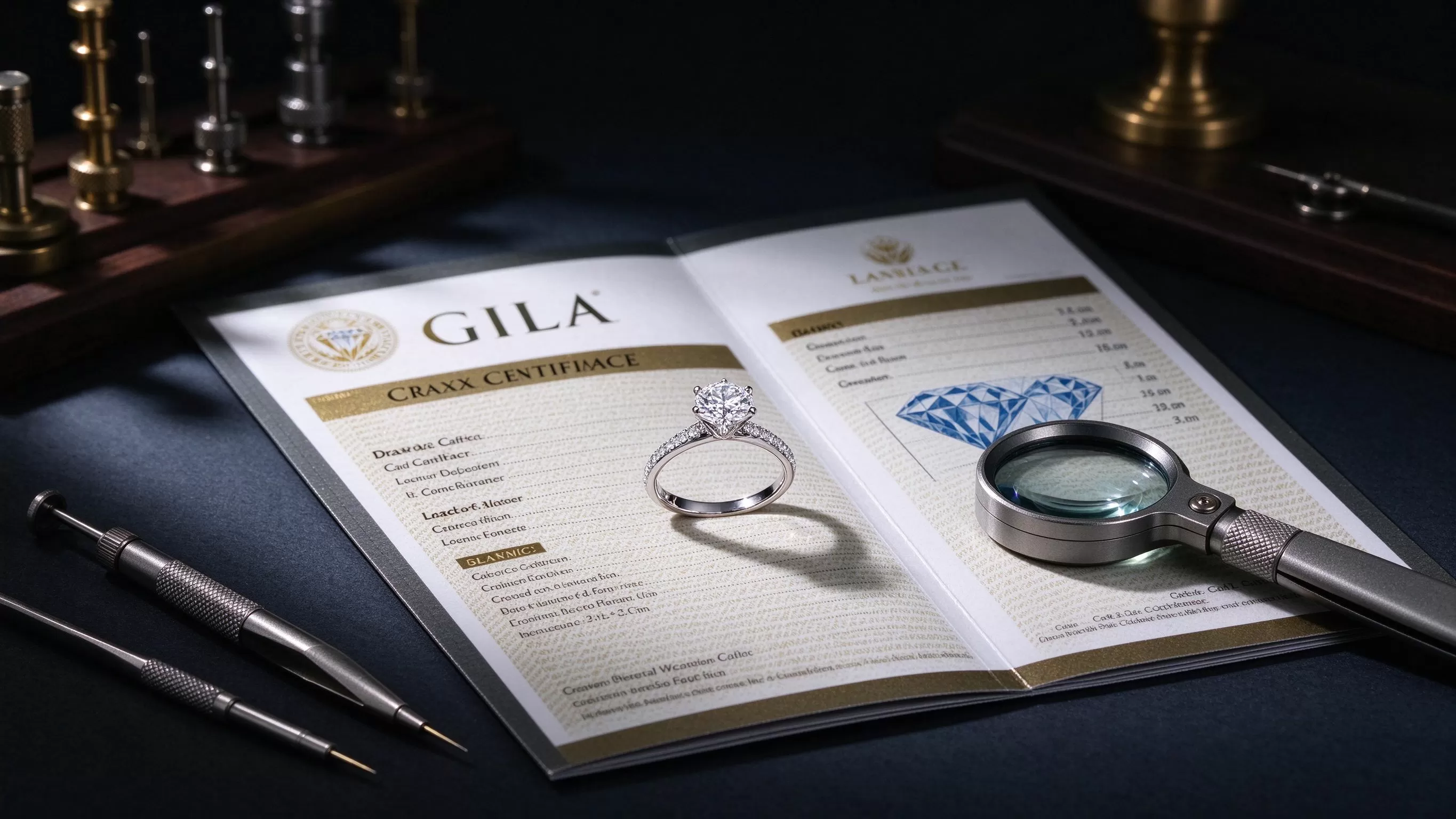
On a modern grading report, fluorescence is a clearly labeled line: none, faint, medium, strong, or very strong, with the color of the glow noted, usually blue. It is one data point among the 4Cs and does not change the other grades. Read it alongside the color grade: a faint blue fluorescence on a near-colorless stone is harmless, and possibly helpful, while a very strong fluorescence on a top-color stone is worth examining in person. Verify the report itself is genuine, because the fluorescence line is only trustworthy if the report is real. Our guide to spotting fake certificates and girdle inscriptions help you confirm the report matches the stone. The fluorescence line is simply one more thing to interpret, not to fear.
When in doubt, ask to view the stone under natural daylight, and if possible, under a UV lamp, so you can see the fluorescence yourself rather than relying on the label. Most buyers are surprised how invisible a "medium" fluorescence is in ordinary wear. The report tells you the property exists; your eyes in real light tell you whether it matters for this particular diamond. That combination, the data plus the direct view, is how you make a confident decision. Fluorescence is not something to veto out of hand; it is something to understand and weigh.
Fluorescence in Lab-Grown and Natural Diamonds
Fluorescence appears in natural diamonds, but it is worth noting how it fits into the broader diamond market today. Natural diamonds inherit fluorescence from their geological growth, and it varies stone to stone. Lab-grown diamonds, created in controlled conditions, can also exhibit fluorescence depending on their growth process and treatment, though it is less commonly a defining concern for buyers of lab-grown stones. What matters most is that any diamond, natural or lab-grown, is honestly described on its report. Our guide to lab-grown certification explains how these stones are documented. Whether natural or lab-grown, the principle is the same: fluorescence is information, not a reason to dismiss a stone out of hand.
Because buyers often over-index on the fluorescence line, they sometimes miss the grades that actually drive beauty and value: cut, clarity, and color. A well-cut diamond with faint fluorescence will almost always outperform a poorly cut one that is "perfect" on the fluorescence line. Keep fluorescence in proportion. It is a minor characteristic, one that nudges price and, in rare cases, appearance, but it is not the main event. A balanced reading of the whole report, with cut quality given its proper weight, serves you far better than fixating on a single line. Our cut grade guide explains why cut is the most important of the 4Cs. Use fluorescence as a tie-breaker and a value lever, not as a deciding rule.
The bottom line is reassuring: you do not need to be afraid of fluorescence. Read the line on the report, understand it is a common natural property, and judge the actual diamond in daylight. When you do, you will often find that a stone with faint blue glow, well cut and well priced, is a smarter buy than a non-fluorescent one you paid a premium for on principle. Let the stone and the numbers guide you, not the worry.
That is how fluorescence stops being a worry and starts being an advantage.
Good hunting.
Good hunting, and buy with confidence rather than with fear of the glow.
Frequently Asked Questions
What is diamond fluorescence? It is a natural glow, usually blue, that some diamonds emit under ultraviolet light, caused by trace elements in the crystal. About a third of diamonds show some fluorescence, graded on the report from none to very strong. It is a natural property, not a treatment or a flaw.
Is fluorescence bad for a diamond? Usually no. Faint and medium fluorescence is invisible in normal wear and often harmless. Rare very strong fluorescence can make a small number of high-color stones look slightly hazy, but this is uncommon. Most diamonds with fluorescence are perfectly beautiful.
Can fluorescence make a diamond look whiter? Sometimes, in near-colorless to slightly tinted stones. A soft blue glow in daylight can subtly neutralize a faint yellow tint, making the stone look brighter than its color grade. This is why a fluorescent lower-color diamond can be a smart value choice.
Does fluorescence lower the value? It often gives a small price discount, because of the common assumption that fluorescence is undesirable. For most stones that look identical to non-fluorescent ones, that discount is free value for an informed buyer.
Should I avoid fluorescent diamonds? Only very strong fluorescence in a top-color, highly transparent stone is worth examining closely. Faint and medium fluorescence is usually neutral or helpful. Judge the stone in natural daylight rather than avoiding it on principle.
Don't Fear the Glow
Diamond fluorescence is one of the most over-feared and under-understood diamond characteristics. It is a natural glow, usually blue, that appears under UV light and is almost always invisible in everyday wear. Far from ruining a stone, faint or medium fluorescence can gently brighten a near-colorless diamond and often comes with a price discount that rewards the informed buyer. The only cases worth cautioning about are rare very-strong stones that look hazy. Read the fluorescence line on your report, view the diamond in daylight, and buy the stone that looks best to you rather than the one with a reassuring label. We help clients understand every line on a grading report, including fluorescence, so they choose with confidence. If you want help interpreting a specific diamond's report, write to service@holycome.com, and explore more in our Certification Explained library.