Diamond Polish and Symmetry Grades: The Hidden Detail of Cut
When buyers think about a diamond's cut, they usually focus on the overall grade: Excellent, Very Good, and so on. But sitting just beneath that headline are two quiet little grades that matter a great deal: polish and symmetry. These two scores describe the craftsmanship of the finished diamond, and they reveal how precisely the facets were polished and how evenly they were arranged. A diamond can have an excellent cut grade yet still be let down by mediocre polish or symmetry, and the reverse is true too. Because most buyers never look at these lines, they are one of the best places to find a better stone for the money. This guide explains what polish and symmetry actually measure, why they matter for brilliance, and how to read them on your report.
If you have ever wondered why two diamonds with the same cut grade look different, polish and symmetry are often the hidden reason. Read on.
What Polish Measures
Polish is the quality of the diamond's surface finish. When a diamond is cut, each facet is polished by hand or machine, and a well-polished facet is smooth, flat, and free of scratches or polishing marks. The polish grade, ranging from poor to excellent, captures how flawless that surface finish is. Excellent polish means the facets are smooth and mirror-like, so light reflects cleanly off them. Lower polish means tiny polishing marks, scratches, or dull spots on the facets that scatter light instead of reflecting it. Our guide to cut grades explains how polish feeds into the overall cut score. Good polish is invisible until it is absent, and then the diamond looks slightly duller than it should.
The reason polish matters is optical. A diamond works by reflecting light off its facets back to your eye. If the facet surfaces are scratched or uneven, some light leaks out in the wrong direction, and the diamond loses a little of its sparkle. The effect is subtle at first, but at the margins, between a very good and an excellent polish, you can see a small but real difference in liveliness. This is why the lab grades polish separately: it is a real, measurable aspect of the cut's quality. When you compare diamonds, a difference in polish grade is not pedantic; it is a difference in how brightly the stone performs.
What Symmetry Measures
Symmetry is how precisely the facets are aligned and proportioned relative to one another. In an ideally cut diamond, the facets meet evenly, the table is centered, the crown and pavilion angles are balanced, and the whole stone looks precisely arranged. Symmetry grades how close to that ideal the cutter came. Poor symmetry means the facets are slightly off: the table is tilted, the crown angles vary, or the facets do not align cleanly. Just as with polish, lower symmetry scatters light and reduces the crispness of reflection. Our guide to diamond proportions shows the geometry behind symmetry. A beautifully symmetrical diamond reflects light in sharp, orderly flashes; an asymmetrical one looks slightly muddled by comparison.
Symmetry is also about the craftsmanship that survives viewing. Even with the naked eye, a noticeably asymmetrical diamond can look lopsided or slightly off, especially when viewed from the top. Excellent symmetry means the stone is visually balanced and clean. While modern cutting technology makes excellent symmetry common, the grade still rewards the most precise work. When two diamonds are similar in every other respect, the one with better symmetry will usually look sharper and more precisely made. It is one of those details that separates a mass-produced cut from a carefully finished one.
How They Feed Into the Overall Cut Grade
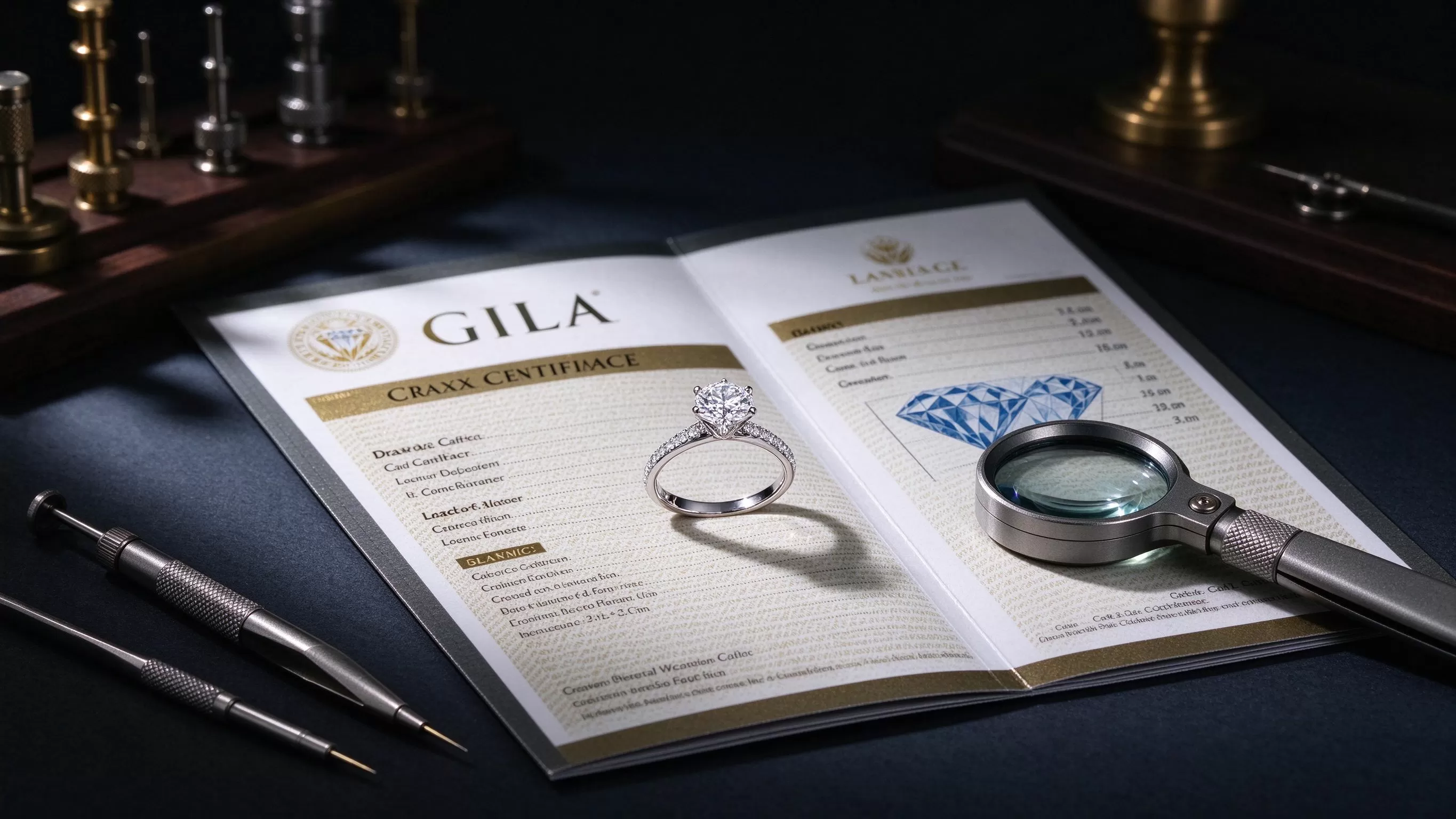
On a modern grading report, polish and symmetry are components of the overall cut grade, alongside the diamond's proportions. A diamond with ideal proportions but mediocre polish cannot achieve the highest overall cut grade, because the lab accounts for the surface and alignment quality. This is why the overall cut grade is the summary, while polish and symmetry are the details behind it. Understanding the components lets you judge a cut more accurately than reading the headline alone. Our GIA report guide shows where these two lines sit on the certificate. When you compare stones, read all three: overall cut, polish, and symmetry, together.
For buyers, this creates an opportunity. Because most customers only ask about the overall cut grade, a diamond that is excellent overall but merely very good on polish or symmetry may be priced slightly lower, even though the difference is barely visible. Conversely, paying a premium for the absolute top polish and symmetry on a small stone may be unnecessary, because the eye cannot resolve the difference below a certain size. Smart buyers match their investment to what they can actually see. On a larger, more visible diamond, the top grades are worth it; on a smaller accent stone, a very good polish and symmetry is perfectly fine. Our clarity guide explains the same principle of matching the grade to visibility.
Why These Grades Reward Informed Buyers
Because polish and symmetry are under-examined, they are a quiet value lever. A diamond graded very good on both, within an excellent overall cut, often costs less than a fully excellent one while looking nearly identical. The difference between very good and excellent polish is genuinely hard to see without magnification, so paying the full premium for excellent on both may be wasted. But there is a floor: avoid stones where polish or symmetry drops below very good, because that is where the light loss becomes visible. Between excellent and very good lies a value sweet spot. Our guide to certificate versus appraisal shows how these details translate into price. Use the grades to find the stone that looks best at the best price, not to chase a perfect report.
It also helps to know what not to over-worry about. Polish and symmetry are craftsmanship grades, not internal cleanliness, and they do not indicate damage or weakness. A very good polish is not a flaw; it is simply a slightly less perfect finish than excellent. Buyers who understand this stop panicking when they see "very good" and start comparing it to the price. The goal is a diamond that looks beautiful to you in the jewelry store, not a report with every line at its maximum. The most balanced buyers let the visible result guide them, and use polish and symmetry as tools to understand why one stone outshines another.
How the Lab Grades Polish and Symmetry
Labs grade polish and symmetry under magnification, using standardized grading scales applied by trained graders. For polish, the grader inspects each facet's surface for polish lines, scratches, burns, or dulling, and assigns a grade across the whole stone. For symmetry, the grader checks facet alignment, table centering, equalization of angles, and the positioning of the culet and girdle, again assigning a single overall grade. Because these are visual judgments by trained experts, they are consistent within a laboratory but can differ slightly between labs, which is one reason the same diamond can receive a marginally different grade from another institution. Our guide to GIA versus IGI versus NGTC explains how lab differences affect grades. The point is that polish and symmetry are real, expert-assessed measurements, not arbitrary labels.
Understanding the grading method helps you interpret what a grade means. A diamond graded very good on symmetry is not defective; it is simply one step below the most exacting alignment. The gap between adjacent grades is narrow, and many of the features that separate excellent from very good are visible only under loupe magnification, not to the naked eye. This is precisely why these grades are such useful value levers: the lab sees differences you will not, so you can buy one notch down and save. The grades exist to describe craftsmanship precisely, but you, the buyer, get to decide how much precision you can see and want to pay for. That is the practical relationship between the report and your decision.
Pairing Craftsmanship With the Rest of the 4Cs
Polish and symmetry never exist in isolation. They interact with color, clarity, and carat to determine the stone's total appearance. A diamond with excellent polish and symmetry but a dull cut will still underperform, while a well-proportioned stone with good craftsmanship will reward you with bright, lively light. This is why the overall cut grade, which combines everything, remains the headline, and why polish and symmetry are best read as supporting detail. Our clarity guide and color guide complete the picture. Treat polish and symmetry as the finishing touches that a good cutter adds on top of correct proportions, and judge them as part of the whole stone rather than as standalone scores.
When you are comparing diamonds, build a short spreadsheet: cut grade, polish, symmetry, color, clarity, and price. You will quickly see which stones offer the best combination. Often, a diamond that drops to very good on one craftsmanship grade but keeps excellent overall cut is the best value, because the eye rarely notices. On an engagement ring, where the center stone is large and viewed often, you might hold out for excellent on all three. On a side stone or a smaller piece, very good across the board is perfectly adequate. Matching the craftsmanship grades to the stone's role in the jewelry is the mark of a thoughtful buyer. The report is a tool; you decide how to use it.
In the end, the best diamond is the one that looks brightest to your eye in the light you actually live in. Polish and symmetry help you understand why it looks that way, and they help you compare two stones fairly. Let the craftsmanship grades inform your choice rather than dictate it, and you will buy a diamond that sparkles, at a price that makes sense.
Frequently Asked Questions
What is diamond polish? It is the grade of the surface finish on each facet, from poor to excellent. Good polish means smooth, scratch-free facets that reflect light cleanly; lower polish leaves tiny marks that scatter light and slightly dull the diamond.
What is diamond symmetry? It is how precisely the facets are aligned and proportioned, from the centered table to the balanced crown and pavilion angles. Better symmetry means the diamond reflects light in crisp, orderly flashes rather than a muddled glow.
Do polish and symmetry affect the cut grade? Yes. They are components of the overall cut grade, along with the proportions. A diamond with ideal proportions but weak polish or symmetry cannot reach the top overall grade, because the lab factors in craftsmanship.
Should I pay extra for excellent polish and symmetry? On larger, visible diamonds, the top grades are worth it. On smaller stones, very good is often visually identical and cheaper. The gap between very good and excellent is subtle, so match the premium to what you can actually see.
Is a "very good" polish a defect? No. It is a slightly less perfect finish than excellent, not damage. Many beautiful diamonds grade very good on polish and symmetry. The line to watch is below very good, where light loss starts to show.
Read the Detail Behind the Headline
Polish and symmetry are the quiet craftsmanship grades that explain why two diamonds with the same cut can look different. They measure the smoothness of the facets and the precision of their alignment, and they feed directly into how brightly the stone reflects light. Because most buyers overlook them, they are a smart place to find value: a very good polish and symmetry, within an excellent overall cut, often looks nearly identical for less money. Read all three lines on the report, compare stones in person, and match your investment to what your eye can actually see. We help clients read every detail on a grading report, including the craftsmanship grades, so they choose a stone that performs beautifully. If you want help interpreting the polish and symmetry on a specific diamond, write to service@holycome.com, and explore more in our Certification Explained library.