Choosing a diamond ring manufacturer is one of the highest-stakes sourcing decisions a jewelry brand makes. A ring is the centerpiece of most fine jewelry collections—engagement rings anchor bridal sales, wedding bands drive repeat business, and fashion rings generate year-round revenue. When a prong catches on fabric and a center stone falls out, when rhodium plating wears off in two weeks, or when ring sizes don't match sizing sticks, the customer returns the ring, loses trust in the brand, and rarely buys again. Quality defects on rings cost brands more than defects on any other category, because each failed ring damages a high-value customer relationship.
HOLYCOME has manufactured diamond and moissanite rings at our factory in Guangzhou (with casting support from our Panyu satellite workshop) since 2016, producing over 120,000 rings annually for brands across the US, UK, EU, Australia, and Middle East. This article walks through our diamond ring manufacturing process end-to-end—from CAD design and wax carving through casting, setting, polishing, QC, and OEM private label services—so wholesale buyers know exactly what to expect when they commission ring production.
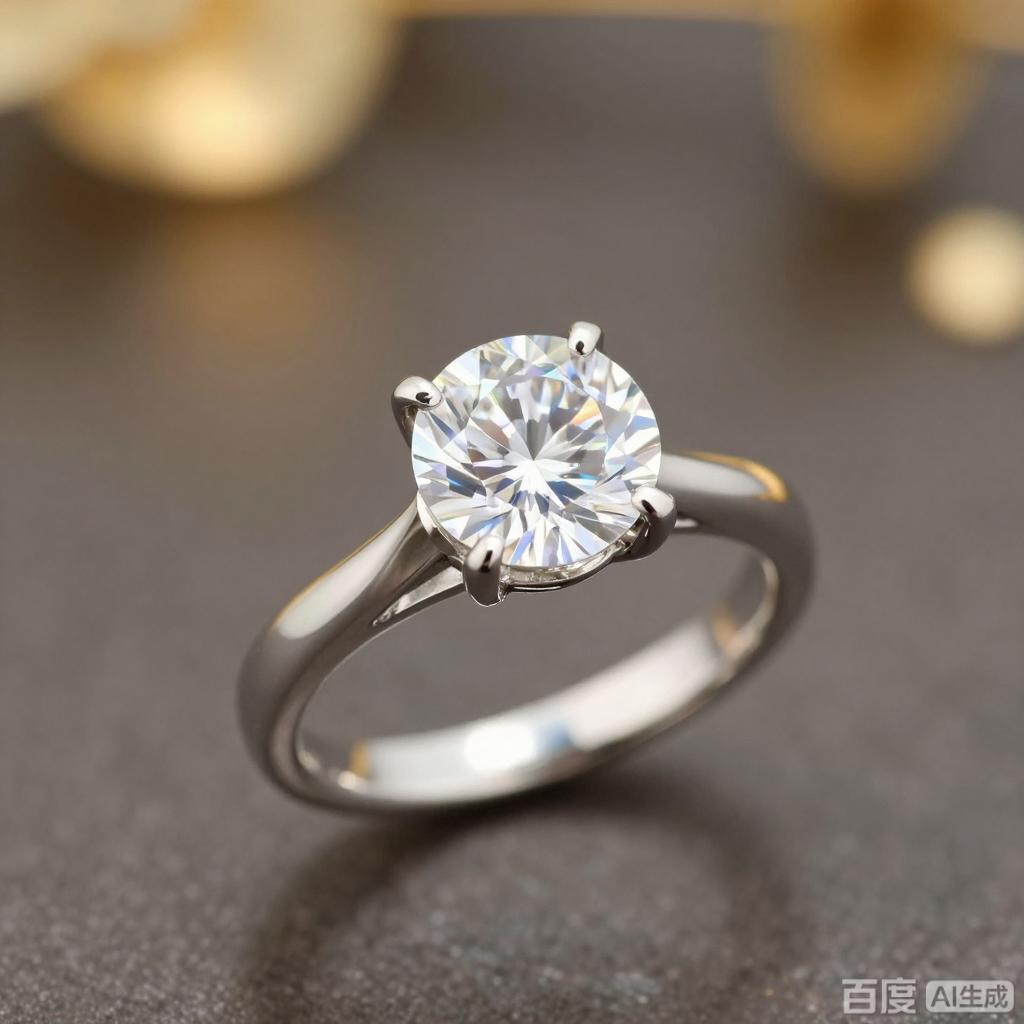
Our Ring Manufacturing Capabilities
Before walking through process details, a quick overview of what our ring division produces:
- Engagement rings: Solitaire, halo (single/double), three-stone, side-stone, pavé band, hidden halo, vintage/milgrain, toi-et-moi.
- Wedding bands: Plain bands (flat, half-round, comfort-fit), diamond bands (channel-set, pavé, shared-prong, bezel), eternity bands (full, half, three-quarter), men's bands (classic, brushed, hammered, two-tone).
- Fashion rings: Signet rings, cocktail rings, stackable bands, birthstone rings, bypass rings, cluster rings.
- Metals: Sterling silver 925; 10K, 14K, 18K yellow/white/rose gold; platinum 950; two-tone and three-tone combinations.
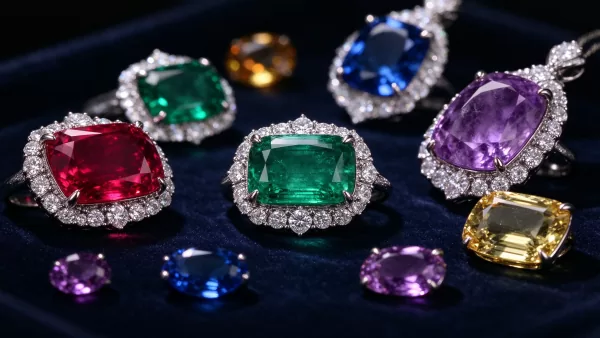
- Center stones: Lab-grown diamonds (HPHT/CVD, IGI-certified), moissanite (D-E-F VVS, GRA-certified), natural diamonds (on request), colored gemstones (sapphire, ruby, emerald, morganite, aquamarine, amethyst), cubic zirconia (for fashion price points).
- Sizes: US 3–13 (including quarter and half sizes) standard; EU/UK sizing available on request; custom band widths from 1.5mm to 10mm.
End-to-End Ring Manufacturing Process
1. CAD Design and Prototyping
Every ring starts as a CAD (Computer-Aided Design) file built in Rhino or MatrixGold. For stock designs, we maintain a library of 2,400+ production-proven ring CADs. For custom/OEM designs, our in-house designers build CADs from customer sketches, photos, or reference pieces:
- Turnaround for stock design modifications (changing shank width, stone size, head type): 1–2 business days.
- Turnaround for fully custom designs (from sketch): 3–5 business days.
- Each CAD includes: exact band width/thickness at every point, stone seat measurements, prong thickness at girdle vs tip, metal weight, and casting sprue location.
After CAD approval, we can 3D-print a resin wax prototype for customer confirmation ($15–$30 per prototype depending on size, shipped via DHL in 3–5 days) or go directly to mold production for repeat orders. First-time custom clients usually prototype before committing to full production.
2. Wax Injection and Tree Assembly
Once a design is approved, we create a rubber vulcanized mold from a master model (or from the CAD via 3D-printed wax for prototyping/low-volume orders). For production runs:
- Molten injection wax (typically a blue or green jewelry wax formulated for clean burnout) is injected into the rubber mold under pressure, producing individual wax patterns with exact detail of the final ring.
- Wax patterns are inspected for injection flaws (bubbles, incomplete fills, flow lines) and assembled onto a central wax "sprue" in a tree formation—typically 20–50 rings per tree depending on size and metal.
- The wax tree is weighed to calculate metal casting requirements (metal weight = wax weight × specific gravity of the alloy × 1.05 for button/sprues).
3. Lost-Wax Casting (Investment Casting)
The assembled wax tree is placed in a steel flask and surrounded by investment powder (a silica-bonded plaster material mixed with water under vacuum). After the investment sets (60–90 minutes), the flask is placed in a burnout kiln:
- Ramp from room temperature to 730°C over 8–12 hours to completely melt out and burn away the wax, leaving a hollow cavity in the exact shape of the wax tree.
- Hold at final temperature to ensure complete wax burnout and to bring the flask to casting temperature.
- Metal is melted (silver at ~960°C, gold at ~1,000–1,100°C depending on alloy, platinum at ~1,770°C) and cast into the hot flask using vacuum-assisted or centrifugal casting to fill every cavity detail.
- After 10–20 minutes of cooling, the investment is quenched in water (thermal shock breaks it apart), revealing the raw cast ring tree.
Casting quality is where many manufacturers cut corners. Common casting defects that show up later as customer returns include:
- Porosity (small gas bubbles trapped in metal, especially in 14K gold if not properly de-oxidized)—causes pits, weak prongs, and bad finishing.
- Incomplete fills (metal fails to reach fine details like milgrain edges or pavé hole edges).
- Investment inclusions (trapped powder in the metal causing hard spots that break tools during setting).
- Fire scale on sterling silver (copper oxides forming near surface, causing discoloration that shows up after polishing).
We control for these via vacuum mixing of investment, de-oxidizing alloys for gold casting, proper temperature calibration in both burnout and casting stages, and 100% cast piece inspection under 10× before pieces move to finishing.
3.5. Cast Defect Rates (Real Factory Data)
Across all metals, our overall cast defect rate (pieces that must be re-cast rather than proceeding to finishing) runs 2.3–3.5% depending on design complexity—slightly higher for platinum (4–5%) and complex filigree/vintage designs (4–6%), lower for simple bands (under 2%). This is within industry best-practice norms (typical jewelry factories run 5–10% casting scrap on average). All defective castings are separated, marked, and melted for recycling (we never patch or weld-fill porosity, as this creates long-term durability problems).
4. Sprue Removal, Pre-Finishing, and Assembly
After casting, individual rings are cut from the tree with a jeweler's saw, sprues are ground flat, and each ring goes through a pre-finishing sequence:
- Rough filing and sanding to remove casting skin and sprue nubs.
- Sizing to target finger size (for stock sizes; custom sizing at this stage for non-stock sizes).
- Assembly of multi-part rings: soldering heads (prong settings) onto shanks, attaching halo surrounds, fitting two-tone sections, joining bypass ring halves, etc.
- Head setting: for solitaire rings, the prong head (which holds the center stone) is soldered onto the shank at this stage. We use laser welding for white gold and platinum assemblies where traditional soldering risks discoloration or metal weakness.
5. Stone Setting
Setting is where diamond ring quality is won or lost. A well-cut stone poorly set looks dull, and a poorly secured stone eventually falls out. Our setting shop uses five primary setting styles for rings:
| Setting style | Description | Best for | Security rating |
|---|---|---|---|
| 4-prong | Four metal claws grip center stone girdle | Round solitaires, maximum light exposure | High (if prongs are properly notched and seated) |
| 6-prong | Six claws (like classic Tiffany) | Rounds 1ct+, maximum security | Very high |
| Bezel | Metal rim fully surrounds stone girdle | Active wearers, men's rings, fancy shapes | Highest (nearly impossible to lose stone) |
| Pavé / micro-pavé | Small beads/metal grains hold melee stones along band | Halo rings, pavé bands, fashion rings | Medium (requires precise bead work; repolish prongs annually) |
| Channel | Stones set between two metal walls | Wedding bands, baguette accents | High (if walls are properly rolled over stones) |
| Tension | Metal shank pressure alone holds the stone | Modern/contemporary designs | Medium (requires exact sizing; resizing compromises tension) |
For pavé and micro-pavé work, we use both traditional hand-graver bead setting (for premium quality) and CNC-assisted bead setting (for consistent production runs at lower labor cost). Center stones 0.5ct and above are always hand-set by master setters with a minimum of 10 years' experience.
After setting, every stone is tested for tightness with a stone pusher (a blunt-tip steel tool that applies lateral pressure to each stone to confirm it does not move)—loose stones are re-seated before the ring leaves the setting department.
6. Polishing, Plating, and Final Finishing
Once set, rings move to the polishing department for a multi-stage finish:
- Tripoli and rough polishing with abrasive compounds to remove file marks and solder lines.
- Sanding progression through 400, 600, 800, 1200, 2000 grit sandpaper and abrasive wheels.
- Pre-plate finish with tripoli and rouge compounds to bring up a high luster.
- Ultrasonic cleaning to remove all polishing compound from under stones and in crevices (critical—compound residue trapped under stones causes discoloration over time).
- Steam cleaning to remove residual cleaner.
- Plating: White gold and sterling silver rings are plated with rhodium (0.05–0.2 microns thickness, depending on buyer specification) for bright white finish; rose gold gets a light anti-tarnish e-coat on silver pieces; yellow gold is polished and left without plating.
- Final polish with rouge after plating to bring out mirror shine.
Special finishes (brushed, sandblasted, hammered, matte, oxidized/blackened, two-tone with masked finishes) are applied before final polish and plating.
7. Hallmarking, Stamping, and Quality Control
Before packaging, every ring receives:
- Metal quality stamp (925 for sterling silver, 10K/14K/18K for gold, PT950 for platinum) stamped on the inside of the shank.
- Maker's mark and/or buyer's private label trademark stamp (OEM clients can provide their own stamp at setup; we maintain a library of customer trademarks).
- Ring size confirmation on a US-standard ring mandrel.
- Final QC: stone tightness re-checked, prong symmetry checked under 10×, plating uniformity inspected under LED lighting, surface finish examined for polish lines or missed file marks, inside-shank stamps legibility confirmed.
OEM Private Label Ring Services
For brands building their own label, we offer full OEM/ODM support:
- Your designs: Produce rings from your CAD files, sketches, or sample pieces. We sign NDAs before receiving proprietary designs and never reproduce customer-exclusive designs for other buyers.
- Our designs (ODM): Choose from our 2,400+ production-ready ring designs, branded with your logo and metal stamp. ODM stock designs have lower MOQs because they share production tooling.
- Custom packaging: Branded velvet ring boxes, card inserts, polishing cloths, warranty cards, care instruction booklets—all supplied with your logo.
- Laser inscription: Girdle inscription on center stones (for branded diamond/moissanite programs) and internal shank engraving for personalization (customer names, dates, messages).
- Photography: In-studio product photography (white background and lifestyle) available for your e-commerce listings at $5–$15 per image.
MOQ, Pricing, and Lead Times
| Order type | MOQ | Lead time |
|---|---|---|
| Sample rings | 1 piece (sample fee applies, credited against first bulk order) | 7–14 days (stock designs); 14–21 days (custom) |
| Stock designs (sterling silver) | 2 pieces per SKU / $500 total | 10–18 days |
| Stock designs (10K/14K gold) | 10 pieces per SKU / $5,000 total | 18–28 days |
| Stock designs (18K gold / platinum) | 10 pieces per SKU / $8,000 total | 25–35 days |
| Custom OEM (silver) | 30 pieces per SKU | 25–35 days (includes tooling; rubber molds $50–$80 per design) |
| Custom OEM (gold) | 50 pieces per SKU | 30–45 days |
| Wedding band/eternity band bulk | 50 pieces per width/size/finish | 25–40 days |
Tolerance and QC Standards
- Ring size accuracy: ±0.25 US size (industry standard); quarter/half sizes held to same tolerance.
- Shank width: ±0.1mm for bands ≤3mm; ±0.15mm for bands 3–6mm.
- Stone seat depth: Stone girdle must sit 20–30% below the prong tip (not sitting too high, which loosens the stone, or too deep, which hides light).
- Prong thickness: Minimum 0.4mm at the tip for stones under 0.50ct; 0.5–0.7mm for 1–2ct stones; 0.8mm+ for stones over 3ct.
- Rhodium plating thickness: 0.05–0.1 microns standard; 0.2 microns premium (longer lasting but slightly darker).
- Hallmark depth: 0.05–0.1mm (legible but not weakening the shank).
- Metal weight consistency: Within ±5% of spec weight per piece.
Our outgoing QC rejection rate at final inspection runs 1.8% (fewer than 1 in 55 rings is sent back for rework before shipment). Common rework causes: slight asymmetry in prongs (0.6%), plating touch-up needed (0.4%), size off by more than 0.25 (0.3%), polish marks (0.3%), loose stone detected at final QC (0.2%).
FAQ
Can you set customer-supplied stones?
Yes. We accept customer-supplied diamonds, moissanite, and colored gemstones for setting. Stones are weighed, documented, and photographed on receipt, and we carry insurance covering stone loss or damage during setting at up to $5,000 per stone (higher coverage can be arranged for high-value center stones). Setting charges are the same as for our own stones.
How thin can you make an engagement ring band?
For structural durability, we recommend a minimum band thickness of 1.3mm at the bottom (shank base) for rings worn daily. Bands thinner than 1.2mm can bend or distort with regular wear, particularly in softer metals like sterling silver. We produce bands as thin as 1.0mm for fashion/cocktail rings not intended for daily wear, but we flag these at the quoting stage so buyers understand the durability trade-off.
Can you produce rings with engraved details (milgrain, hand-engraving, filigree)?
Yes. Milgrain beading (the tiny decorative bead edge used in vintage designs) is standard. Hand-engraving (scrollwork, floral patterns, monograms) is available at $15–$40 per ring depending on complexity. Filigree (open wirework) and pierced designs can be produced via casting for production runs.
What is the warranty on your rings?
1-year workmanship warranty covering prong defects, setting failures (stones coming loose due to faulty setting—not damage or wear), plating issues, and manufacturing defects. Center stone loss due to manufacturing defect is covered up to the invoice value of the stone. Normal wear, accidental damage, sizing performed by third-party jewelers, and center stone chipping/cracking from impact are not covered.
Do you offer ring sizing kits or sample rings for my customers?
Yes. We supply plastic ring sizers (US sizes, $0.50 each in bulk), metal ring sticks for in-store sizing ($15 each), and sample ring sets for customer size try-on (a set of sample band widths in standard sizes, $25–$50 per set depending on metal).
Can I order mixed sizes within a single SKU?
Yes. For stock designs, you can order mixed US sizes within a single style (e.g., 30 rings split across sizes 5–9). For custom/OEM production, mixed sizes are available once the MOQ per SKU is met.
Diamond and moissanite rings carry higher customer expectations than any other jewelry category—and they also carry higher consequences when quality fails. Prongs must be right, plating must hold, sizes must match, stones must sparkle. Working with a specialized ring manufacturer that controls casting, setting, and finishing in-house (rather than a trading company that outsources to multiple workshops) gives you consistent quality, predictable lead times, and the ability to fix problems quickly at the source. Contact our ring manufacturing team with your designs, CAD files, or reference photos for a detailed quote.
The distinction between mined and laboratory-grown diamond is covered in the Wikipedia article on synthetic diamonds.
Related reading: Lab Grown Diamond Engagement Ring Manufacturer Guide, Diamond Earring Manufacturer Studs Factory OEM, Diamond Ring Factory Chi Custom OEM Private Label.