Lab-grown diamonds have moved from a laboratory curiosity to a mass-market product in less than ten years. Global production capacity for gem-quality lab-grown diamonds has grown from under 2 million carats in 2018 to an estimated 20+ million carats in 2025, with China (principally Henan province, where HOLYCOME operates) accounting for an estimated 40–50% of global HPHT production and a rapidly growing share of CVD. For brands and retailers that previously sourced finished jewelry set with mined diamonds, working directly with a lab-grown diamond manufacturer (rather than a trading company or middleman) offers cost savings of 30–60% on loose stones plus full control over cut, shape, grade, and setting.
HOLYCOME has manufactured lab-grown diamonds and lab-grown diamond jewelry since 2016 from our 20,000 sqm factory in Henan, China, with 320 production staff, 85 HPHT presses, and 12 CVD reactors producing loose lab-grown diamonds from 0.30ct to 10ct in all shapes and grades, plus a jewelry division setting lab-grown diamonds into sterling silver and solid gold rings, earrings, necklaces, and bracelets. This article explains how lab-grown diamonds are manufactured at our factory, what OEM buyers should understand about CVD vs HPHT production, grading and certification, cutting and polishing, jewelry setting, quality control, MOQ, lead times, and how to begin ordering.
HOLYCOME Lab-Grown Diamond Manufacturing: End-to-End Process
Unlike a trading company that purchases finished stones from multiple sources and resells them, HOLYCOME controls the full production chain from rough crystal growth through polishing and jewelry setting in-house. This gives OEM buyers consistent supply, known provenance, and price stability (critical when diamond prices fluctuate with market capacity additions).
Step 1: HPHT Crystal Growth
HPHT (High Pressure High Temperature) is our primary production method for white diamonds under 1.5ct and for fancy-color stones (yellow, blue, pink). The process runs in a cubic press (our facility uses domestic Chinese 650mm and 850mm cubic presses, each capable of running multiple growth cells simultaneously):
- A small natural or lab-grown diamond seed crystal (0.3–0.5mm) is placed at the center of a growth cell.
- The cell is filled with high-purity graphite (carbon source) and an iron-nickel-cobalt alloy catalyst that lowers the temperature/pressure needed for diamond growth.
- The press applies approximately 5.5 GPa of pressure and heats the cell to 1,350–1,500°C using electrical current passed through the cell.
- Over a growth cycle of 4–10 days (depending on target size), carbon dissolves in the catalyst and crystallizes onto the seed, growing a single diamond crystal of 1–5 carats rough.
- The cell is cooled, depressurized, and the crystal is recovered by acid dissolving the metal catalyst.
Each press runs 24/7/365 with operators on three shifts. Our current HPHT capacity is approximately 8,000 carats of rough per month (yielding ~2,500–3,000 carats of cut-and-polished gem-quality stones after cutting yield losses of 50–65%, typical for diamond manufacturing).
Step 2: CVD Crystal Growth
CVD (Chemical Vapor Deposition) is our method for larger white stones (1.5ct+) and for certain fancy shapes. CVD runs in vacuum microwave-plasma chambers:
- Flat, rectangular diamond seed plates (cut from HPHT or CVD rough) are placed on a substrate holder inside the chamber.
- The chamber is evacuated to low pressure (100–300 Torr) and filled with a hydrogen-methane gas mixture (typically 95% H₂, 5% CH₄, sometimes with small additions of nitrogen or oxygen for color control).
- Microwave energy (2.45 GHz, 6–10 kW) heats the gas to plasma state at 900–1,200°C, breaking methane apart and liberating carbon atoms.
- Carbon atoms deposit on the seed plates, growing diamond crystal one atomic layer at a time over 3–4 weeks to produce flat slab crystals 3–8mm thick.
- After growth, the slab is laser-sawed into individual rough pieces for cutting.
As-grown CVD material typically shows a brownish tint from nitrogen-vacancy centers. Almost all commercial white CVD is post-growth treated with HPHT annealing (a brief high-pressure/high-temperature cycle that removes brown color by reorganizing nitrogen atoms); this treatment is permanent, universally accepted in the industry, and is disclosed on IGI/GIA certificates.
Step 3: Planning, Sawing, and Bruting
Every rough crystal is 3D-scanned (using Sarin/Helium planning software) to determine the optimal shape and orientation for maximum yield and best color/clarity performance before any cutting begins. The planning stage alone determines 20–30% of the final polished value, because a poor orientation decision can waste weight or cut through an inclusion that should have been retained in the girdle.
- Laser sawing: Rough is laser-sawn into pre-forms along the planned cleavage plane. HPHT cuboctahedral crystals typically yield two round brilliants or one larger fancy shape per crystal; CVD slabs are cut like a loaf of bread into multiple pieces.
- Bruting: Pre-forms are rounded into the circular outline for round brilliants on a bruting machine (two diamonds rotated against each other to abrade each other into round shape). Fancy shapes skip bruting and go directly to blocking.
Step 4: Blocking, Brillianteering, and Polishing
Diamond cutting is a two-stage process:
- Blocking (cross-working): The first cutter places the 8 pavilion mains, 8 crown mains, table, and culet, establishing the diamond's basic symmetry and light performance. If blocking is off, no amount of brillianteering can fix the stone.
- Brillianteering (star/facet cutting): The second cutter adds the remaining 40 facets on a round brilliant (star facets on the crown plus upper and lower girdle halves), bringing the total to 57 facets (58 with a culet).
Cut tolerances for our commercial-grade production are within ±0.5° on crown/pavilion angles and ±1% on table/depth percentages; ideal-cut production (for hearts-and-arrows and premium stones) holds ±0.2° tolerances and requires hand-cutting by master cutters. After faceting, stones go through a final polishing sequence on a cast-iron scaife charged with diamond powder, producing a mirror finish with no visible polish lines under 10×.
Step 5: Grading and Certification
After polishing, every stone is graded in-house on the 4C scale before being sent for certification:
- Carat: Weighed to 0.001ct on an electronic scale.
- Color: Graded by master color set (D-to-Z scale) under standardized D65 daylight-equivalent lighting.
- Clarity: Graded by GIA-trained gemologists under 10× darkfield magnification.
- Cut: Measured with Sarin/Ogi proportion analyzers for symmetry and proportions.
All stones 0.30ct and above are sent to IGI for independent certification as standard; GIA is available on request at a 10–15% premium. Every certified stone is laser-inscribed on the girdle with its report number.
CVD vs HPHT: What OEM Buyers Need to Know
| Factor | HPHT | CVD |
|---|---|---|
| Best for sizes | 0.30ct–2ct (white); fancy color | 1.0ct–10ct+ (white) |
| Typical growth cycle | 4–10 days | 21–28 days |
| Rough crystal shape | Cuboctahedral (like natural) | Flat slab/plate |
| Cut yield from rough | 40–50% (rounds) | 30–45% (rounds) |
| Common inclusions | Metallic flux specks | Graphite pinpoints, grain lines |
| Color treatment required | Usually none (as-grown DEF available) | HPHT annealing for white colors (standard) |
| Wholesale price (1ct DEF VVS round) | $400–$500 | $450–$550 |
| Production capacity (China) | Large and growing (Henan province) | Growing rapidly (Zhengzhou, Guangzhou, India) |
For an OEM buyer building a commercial jewelry line, the practical decision is simple: HPHT for smaller stones and melee, both HPHT and CVD for center stones 1–2ct (price-near-identical), and CVD for larger center stones above 2ct where production economics favor CVD's larger crystal plates. We sell both methods and advise buyers on a per-stone basis.
Loose Lab-Grown Diamond Inventory: Sizes, Shapes, Grades
Standard stock availability from our factory (other grades/shapes available on custom growth orders):
Round brilliants (IGI-certified)
- Sizes: 0.30ct, 0.40ct, 0.50ct, 0.70ct, 1.0ct, 1.25ct, 1.5ct, 2.0ct, 3.0ct, 4.0ct, 5.0ct
- Colors: D, E, F, G, H, I, J (fancy yellow/blue/pink by quote)
- Clarities: IF, VVS1, VVS2, VS1, VS2, SI1, SI2
- Cuts: Excellent/Ideal cut; Very Good available on request; Hearts-and-Arrows ideal cut at 15–20% premium
Fancy shapes
- Oval, cushion (modified brilliant), cushion (crushed-ice), emerald, Asscher, radiant, princess, pear, marquise, heart
- Sizes from 0.50ct to 5ct; custom cuts available for orders over 50 stones per shape/size
Melee
- Sizes: 0.8mm–2.9mm (0.005ct–0.10ct), calibrated and uncalibrated
- Color/clarity parcels: DEF VVS, DEF VS, GH SI
- 100% lab-grown diamond (not moissanite, not CZ), confirmed by diamond tester
Finished Jewelry Setting: Our Jewelry Division
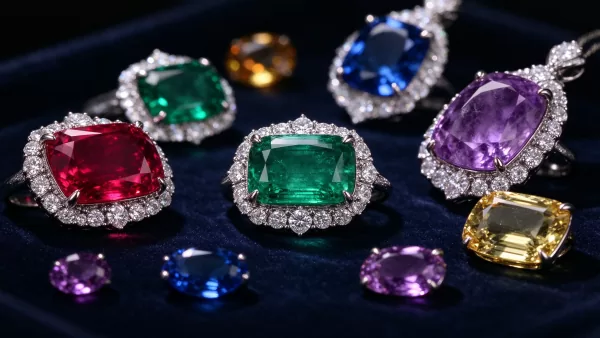
One advantage of working with a full-line manufacturer like HOLYCOME (rather than a loose diamond dealer) is access to in-house jewelry setting, so your loose stones can be set into finished rings, earrings, necklaces, and bracelets in the same facility. Capabilities include:
- Castings: Lost-wax casting in sterling silver 925, 10K, 14K, 18K yellow/white/rose gold, and platinum 950.
- Settings: Prong (4-prong, 6-prong, 8-prong), bezel, pavé, channel, tension, halo, three-stone, vintage/milgrain.
- Finishing: Polishing, rhodium plating (white gold/silver), e-coating (anti-tarnish for silver), sandblasting, brushed finishes, engraving.
- Assembly: Ring shank assembly, earring post and clutch fitting, chain soldering for pendants, bracelet clasp installation and safety testing.
Setting charges (per stone, in addition to stone and metal cost): $1–$3 for melee (pavé/channel), $3–$8 for accent stones 0.10–0.50ct, $8–$25 for center stones 0.50–3ct (4/6-prong), $25–$60 for center stones 3ct+ or complex settings (bezel, tension, halo hand-setting).
Quality Control and Testing
Every lot passes through four QC checkpoints before shipment:
- Rough QC: After growth, rough crystals are inspected for metallic inclusions (HPHT) or graphite inclusions (CVD) to plan cutting.
- Cut QC: After polishing, proportions and symmetry are measured on Sarin/Ogi instruments; stones outside cut specifications are returned for re-cutting.
- Certification verification: All certified stones are matched to their IGI/GIA report by weight, measurements, and laser inscription verification.
- Finished jewelry QC: After setting, every piece is checked for: stone tightness (no loose stones under prong test), finish quality (no polish lines, uniform plating), solder quality (no visible seams), hallmark stamp (925 / gold karat mark), and a final visual inspection under LED lighting.
Our outgoing defect rate for loose lab-grown diamonds is under 0.3% (1 in 300+ stones fails final grading and is re-cut or downgraded). For finished jewelry, our defect rate is under 0.8% (fewer than 1 in 125 pieces is returned for rework before shipment).
MOQ, Pricing, and Lead Times
| Order type | MOQ | Lead time |
|---|---|---|
| Sample stones (certified loose) | 1 stone (0.30ct+) | 3–7 days (in-stock), 3–6 weeks (custom growth) |
| Melee parcels | 1 carat per size/grade | 5–10 days |
| Wholesale loose stones | $2,000 total | 7–14 days |
| Finished silver jewelry (stock designs) | $500 / 2 per SKU | 10–18 days |
| Finished gold jewelry (stock designs) | $5,000 / 10 per SKU | 18–28 days |
| Custom OEM jewelry (your CAD designs) | $10,000 / 30 per SKU (silver), 50 per SKU (gold) | 25–40 days |
| Bulk/distributor (loose stones, 1000ct+) | $50,000+ | Staged shipments over 4–8 weeks |
Shipping, Warranty, and Returns
- Shipping: DHL Express (3–5 business days, fully insured) for all orders. Loose stone parcels above $20,000 ship via Brinks armored courier at buyer's option. All shipments are insured to full invoice value.
- Packaging: Loose stones are individually paper-wrapped in gem papers with IGI certificates, boxed in secure gem jars; finished jewelry is packed in anti-tarnish poly bags with optional branded packaging (velvet pouches, wooden boxes, branded card) for OEM orders at additional cost.
- Payment: Bank wire, credit card (3%), PayPal (4.5%), Letter of Credit for orders over $50,000. 30% deposit begins production; 70% balance before shipment. Net-30 terms for repeat buyers after 3 orders (subject to credit approval).
- Returns: Certified stones can be returned within 7 days if they do not match their IGI/GIA certificate. Finished jewelry defects are replaced or repaired at our cost under a 1-year workmanship warranty.
FAQ
Can you supply both HPHT and CVD lab-grown diamonds?
Yes. Our factory produces both HPHT and CVD material, and we can supply either method (or a mix) depending on size, color, and clarity targets. For most commercial orders, we select the most cost-effective method for the specific size/grade and notify buyers if there is any difference in delivery.
Do IGI certificates distinguish HPHT from CVD?
IGI reports for lab-grown diamonds identify the stone as "laboratory-grown" and may note "HPHT-grown" or "CVD-grown" in the report comments along with any post-growth treatment (such as HPHT annealing for CVD). GIA reports explicitly state "laboratory grown" and the growth method (CVD or HPHT).
Can you cut custom shapes on order?
Yes. Custom shapes (including patented or proprietary cuts) can be produced for orders of 50+ stones of the same size/shape/grade, with a 4–8 week lead time from rough growth through polished stone. We can cut to your CAD diagram or to our standard custom shapes.
What is the minimum order for finished lab-grown diamond engagement rings?
Stock designs in silver: 2 pieces per size/style (mixed sizes OK within a style). Stock designs in 14K gold: 10 pieces per SKU. Custom OEM designs: 30 pieces per SKU in silver, 50 per SKU in gold.
Can I visit your factory?
Yes. We welcome buyer visits to our Henan facility. We arrange airport pickup from Zhengzhou (CGO) and provide full tours of the HPHT press hall, CVD reactor room, cutting and polishing floor, jewelry setting workshop, and QC lab. Please schedule visits at least 2 weeks in advance through our sales team.
Do you sell melee that is 100% lab-grown (no natural diamond mixing)?
Yes. Every melee parcel we sell is 100% lab-grown (HPHT or CVD). As a vertically integrated lab-grown manufacturer producing our own rough, we never mix natural and lab-grown melee; buyers can verify with diamond testers and with spectroscopic testing if desired.
Working directly with a lab-grown diamond manufacturer rather than a trading company delivers three concrete advantages for jewelry brands: lower per-carat pricing (typically 15–30% below trading companies because there are no intermediate markups), full traceability (you know exactly which presses and reactors your stones came from, which matters for ESG and marketing claims), and production flexibility (we can cut custom shapes, grow custom grades, and set stones into finished jewelry in the same facility). Contact our manufacturing sales team for a current price list, melee availability, or to request sample stones for evaluation.
For background on how lab-grown diamonds are produced, the Wikipedia article on synthetic diamonds explains the HPHT and CVD growth methods.
Related reading: Lab Grown Diamond Manufacturer CVD vs HPHT Production, Lab Grown Diamond Manufacturing: HPHT & CVD Guide, Lab Grown Diamond CVD vs HPHT.