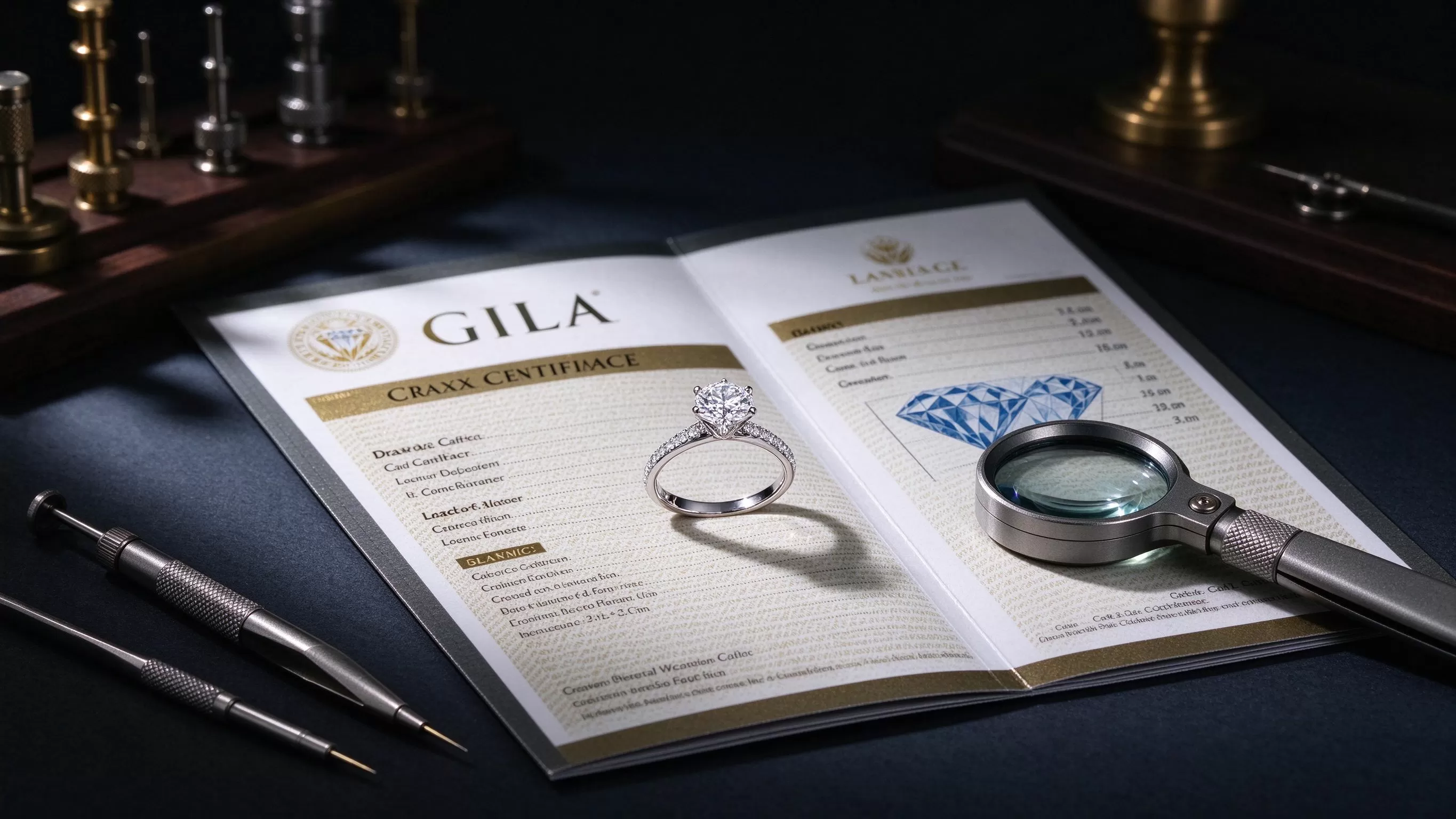
Not every diamond certificate is a GIA certificate. If you have shopped for affordable diamonds, you have likely seen an EGL report. EGL (European Gemological Laboratory) is one of several independent grading labs, and its reputation is more complicated than GIA's. This guide explains what an EGL certificate is, how it compares, and what buyers should watch for.
What Is EGL?
EGL is a network of gemological laboratories that grade diamonds and colored stones, with branches in several countries. Like GIA, it issues diamond grading reports describing the 4Cs, proportions, clarity characteristics and treatments. EGL is often found on mid-market and wholesale diamonds where cost matters.

How EGL Compares to GIA and IGI
The key issue is grading consistency. Across the industry, EGL is widely considered to grade more generously than GIA — meaning an EGL "VS2" may correspond to a GIA SI1 in practice, and an EGL "F color" may look like a GIA G or H under GIA standards. This is why serious buyers compare GIA vs IGI vs NGTC and treat lab reputation as part of the stone's value.
What this means for you
- An EGL-graded diamond can be excellent value if priced for EGL grading, not GIA grading.
- Never pay GIA-level prices for an EGL stone.
- Always compare the actual stone, not just the grade on paper.
- For investment-grade or high-carat stones, GIA or AGS reports are safer.
What to Check on an EGL Report
Just like any report, verify it: check the report number online, match the girdle laser inscription to the certificate, and confirm the plot diagram matches the stone's inclusions. Our guide to certificate number verification applies to EGL as much as to GIA. Be especially alert to color and clarity grades that seem too good for the price.
When EGL Is Fine — and When It Isn't
EGL is reasonable for smaller, everyday diamonds and fashion jewelry where you are buying for appearance and price, not investment. It is less appropriate for a high-value engagement stone where precise grading matters for resale. If you are choosing, also compare GIA vs IGI vs HRD to understand the full lab landscape.
The Bottom Line
EGL certificates are real but grade more generously than GIA. They are fine for affordable, appearance-driven diamonds — as long as you price them accordingly and verify the report. For high-value stones, prefer the most consistent labs.