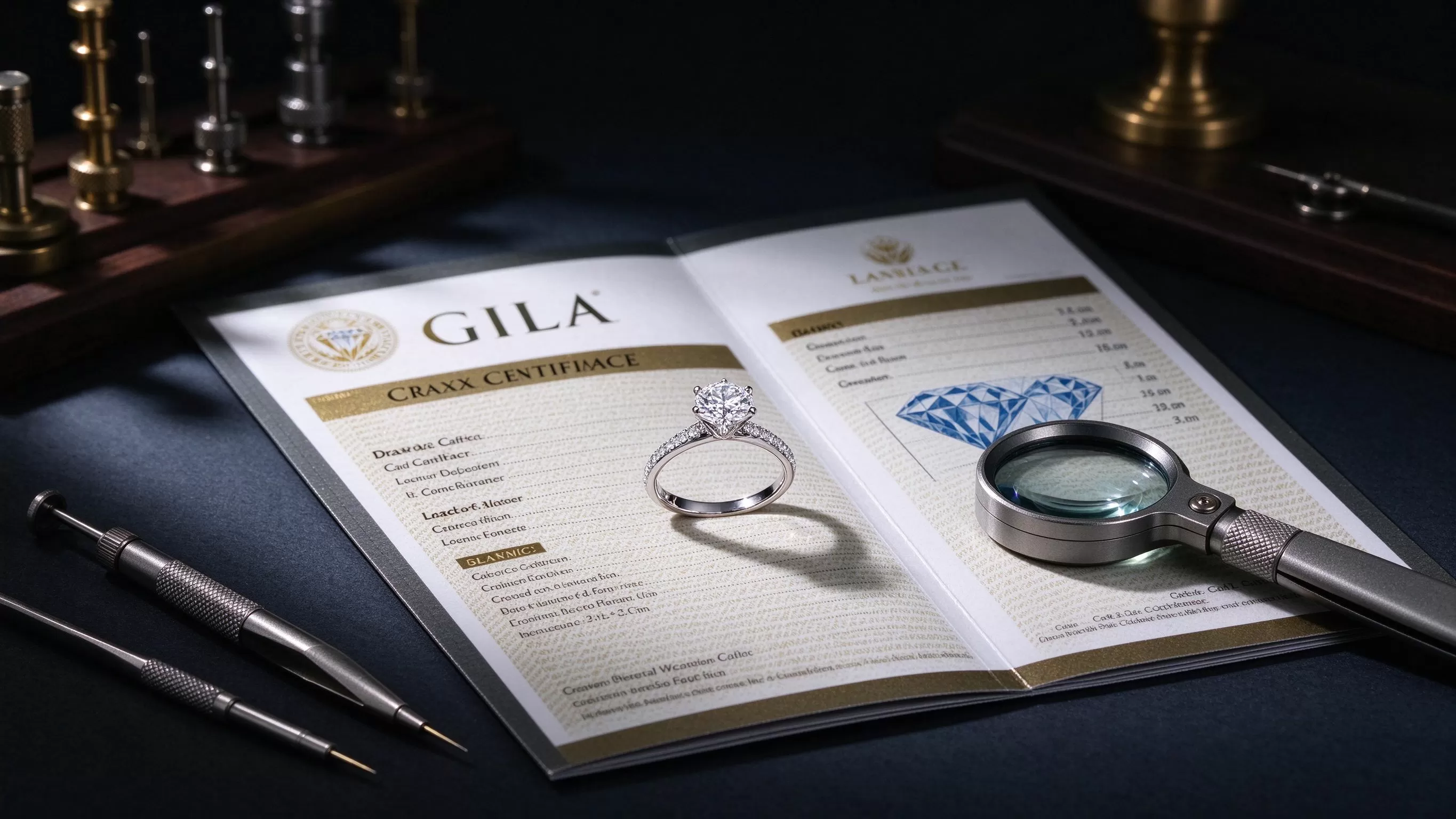
Send the same diamond to two labs and you may get two different color grades, or slightly different clarity calls. It is not fraud — it is the reality of diamond grading tolerance. Understanding why reports disagree helps buyers interpret certificates realistically instead of obsessing over a single letter.
Grading Is Partly Human Judgment
Diamond grading is not a purely mechanical measurement. Color is judged against master stones under controlled light; clarity is decided by a grader locating and mapping inclusions; cut proportions are measured but polished and symmetry are judged. At the boundaries between grades, reasonable experts can land on either side. That boundary region is the "tolerance."
Where Disagreement Happens Most
Color grade boundaries
A stone sitting exactly between G and H can be called G by one lab and H by another. This is the most common disagreement. Learn the scale in our color grade guide.
Clarity boundaries
VS1 vs VS2, or SI1 vs SI2, depends on how visible an inclusion appears to the grader. Clarity grading is the most subjective of the 4Cs.
Cut, polish and symmetry
Finish grades (Excellent/Very Good/Good) involve visual judgment, and polish and symmetry can vary between labs.
Why Different Labs Grade Differently
Beyond human judgment, labs have different strictness. As our EGL guide explains, some labs grade more generously than others. That is why comparing GIA vs IGI vs HRD matters — the same stone can score differently depending on which lab's standards it faced.
What This Means for Buyers
- Do not chase a single grade letter at a boundary — a one-grade difference is often cosmetic.
- Prefer the most consistent labs for high-value stones (GIA, AGS, and IGI for lab-grown).
- Look at the actual stone and the plot, not just the grade on paper. Our inclusion plot guide shows how.
- If two reports disagree, trust the stricter lab's grade for valuation.
The Bottom Line
Diamond reports can disagree because grading sits partly at subjective boundaries, and labs have different strictness. This is normal. Buy the stone, use a consistent, respected lab, and read the plot and proportions — not just the headline grade.