The Jewelry Sample Approval Process: How Sign-Off Prevents Bulk Disasters
The single most expensive mistake in wholesale jewelry is approving bulk production without a proper sample sign-off. A buyer sees a CAD render, likes the quote, and greenlights five hundred units, only to receive pieces where the shank is too thin, the plating is the wrong tone, the stones sit crooked, and the bail faces the wrong way. Every one of those problems was visible on a sample, and every one could have been fixed for almost nothing before the molds went into production. Once five hundred units are made, the cost of fixing them is five hundred times the sample fix, and often the whole run is written off. The sample stage is where quality is actually decided, not where it is checked afterward.
This guide explains how a professional jewelry sample approval process actually works, what to inspect on a pre-production sample, how to document approvals so there are no "I thought you meant" disputes, and how the sign-off protects both you and the factory. If you have ever received bulk order that did not match what you expected, or you are about to place your first production order, this is the process that prevents it.
Why the Sample Stage Matters More Than the CAD
A computer render is not the same as a physical piece. A CAD drawing can show proportions and an approximate finish, but it cannot show how the plating tone actually looks, how heavy the ring feels on the finger, whether the stones sit level, or how the chain drapes in hand. Those real-world qualities only reveal themselves on a physical sample, which is why factories produce a pre-production sample before bulk casting. Relying on the CAD alone is like approving a house from a floor plan: you will be surprised by the finish and the feel, and by then it is expensive to change. Our sample order strategy covers when to order which kind of sample.
The sample also reveals engineering problems the design did not anticipate. A wax that looks elegant in CAD may cast too thin in a spot that snaps, or the ring may sit high on the finger when expected to sit flush. These are found only when a physical piece exists and is tried on. A competent factory flags these during sampling and suggests tweaks, which is exactly what the sample stage is for. Skipping the sample to save a week or a sample fee almost always costs far more later, because a production run inherits every flaw of the un-sampled design.
Factories expect sampling changes, and a buyer who requests several revisions is normal, not difficult. The good factories want the sample right, because a rejected bulk run costs them too. Treat the sample stage as collaborative engineering, not as a formality. Every revision you make on the sample prevents a problem repeated hundreds of times in production. The sample is the cheapest version of your product you will ever hold, so use it ruthlessly.
What to Actually Inspect on the Pre-Production Sample
When the physical sample arrives, work through a fixed checklist rather than eyeballing it once. Check dimensions first: measure the ring diameter, band width, pendant length, and chain length against your spec, because these are objective and easy to dispute. Then check the finish: is the plating the tone you approved, bright or soft where expected, and even? Inspect the stones: are they all secure, level, and matched in color, with no stones sitting crooked? Run a fingernail along prongs to catch any sharp point that will scratch. Then wear it: does the ring sit right, does the necklace drape naturally, does the clasp work smoothly under real use? Our guide to quotations shows the specs you should have locked before this step.
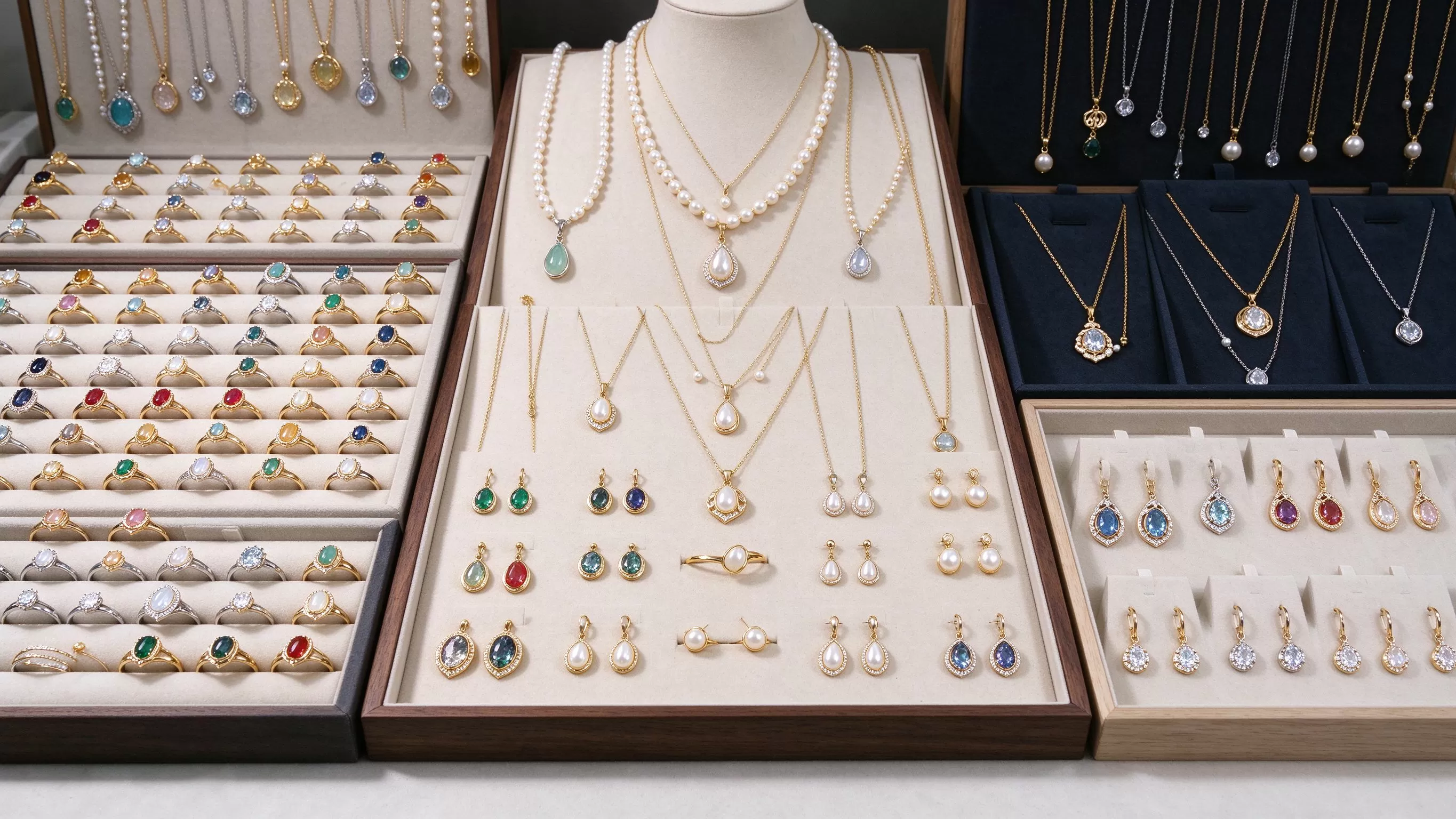
Pay special attention to details that photographs lie about. The plating tone is the most common dispute, because gold photographed under different light reads differently. Hold the sample next to a known piece in the metal tone you want, in daylight, and compare. Stone color is another: a moissanite or colored gem that looks one way in the factory light may look different under retail lighting. Check the sample under both warm and cool light if you can, and decide then. The sign-off should be based on the physical sample in your hands, not on a photo the factory sent you. Once the sample matches what you expect in real lighting, bulk will match it.
Also inspect the structural details that affect durability. Is the shank thick enough to resize? Are the solders clean and smooth? Does the clasp close with a reassuring click, and is the chain properly joined? These are not cosmetic; they determine whether returns happen a month after delivery. A sample that looks beautiful but flexes where it should not will fail in customers' hands. Catch it now, and ask the factory to thicken or reinforce the relevant part before production. Our care and cleaning guidance hints at the stresses a piece must survive in real wear.
Documenting the Sign-Off So There Is No Dispute
The most important part of approval is not the inspection; it is the written record. Before production starts, send the factory an explicit sign-off message that lists, in words, exactly what you approved: "Approved as the physical sample received on [date], with the following notes: shank width confirmed at X mm, plating tone as sample, stones as sample." Ask the factory to confirm in writing that bulk will match that approved sample. This short message prevents the classic dispute where, after delivery, you say the pieces do not match the sample and the factory says you never told them which sample was approved. Our supplier audit checklist emphasizes getting critical specs in writing.
Keep the approved physical sample. This sounds basic, but many buyers send the sample back to the factory and then have no reference when bulk arrives. Retain the approved sample with your records, and when the bulk shipment arrives, compare it directly against it. If a batch is subtly off, the approved sample is your evidence. Many factories themselves keep a gold sample in the work order as the production reference, which is good practice and something you can request. The combination of a written sign-off and a retained physical reference eliminates almost every post-production disagreement.
If there are changes, document each revision the same way. When you ask the factory to thicken the shank, note that revision in the approval trail, and approve the revised sample before production. A chain of approvals, each tied to a dated sample, makes it unambiguous what was finally agreed. This paperwork feels bureaucratic until a problem happens, and then it is the only thing that protects you. The factory should welcome it, because it also protects them from a buyer who changes their mind after production.
When to Approve and When to Hold
Buyers face pressure to approve quickly: the factory is waiting, the season is approaching, the MOQ is looming. But the sample stage is the wrong place to rush. If anything is uncertain, especially plating tone or stone match, do not approve. Request one more revision, even if it adds a week. It is always cheaper to extend sampling than to produce five hundred units in the wrong tone. A good factory would rather wait a few days than remake a whole run. Build your timeline so sampling revisions are possible: order samples well before you need stock, and do not let the production clock start until you are genuinely satisfied.
Equally, avoid endless over-engineering. Once the sample is close, accept minor variations that are within normal manufacturing tolerance. Every hand-made piece will differ slightly; chasing perfection on a mass-produced item delays launch and raises cost. The line is between "matches the approved sample within tolerance" and "meaningfully off." If the sample is what you want to sell, approve it. The goal is a consistent product at scale, not a museum piece. Our lead times guide helps you build a timeline that allows proper sampling without rushing.
What to Do When the Bulk Arrives
Even with a strong sign-off, the arrival of the bulk shipment is your last checkpoint. Do not accept the delivery sight unseen. Open a representative sample from the carton, not just the top layer, and compare those pieces against your approved sample. Check a random selection for plating tone, stone level, and clasp function, and run a few for size and finish. This incoming inspection catches production drift early, while the factory will still accept a replacement or credit. If you only discover a problem after the goods are on your shelves and sold to customers, your leverage is gone and the returns are yours. Our import and logistics guide covers the side of receiving that customs and freight do not show.
If a batch is within tolerance, accept it and start selling. If it is meaningfully off, photograph the issue against the approved sample, reference your written sign-off, and raise it promptly with the factory before the goods move. Most reputable suppliers will make it right on the first serious issue, because they want the reorder. The sign-off and retained sample you invested in at the front is what makes that resolution quick and fair rather than a months-long dispute. Treat incoming inspection as the closing loop on the whole sampling process, and the quality of your whole program stays consistent order after order.
Done consistently, this discipline turns sampling from a one-time headache into a reliable habit that protects every reorder and keeps your customers receiving the quality they expected the first time.
Frequently Asked Questions
Do I really need a physical sample before bulk order? Yes. A CAD render cannot show plating tone, the feel of a piece, or how stones sit. The pre-production sample reveals engineering and finish problems that, once repeated across hundreds of units, are far more expensive to fix. Sample before every new design.
What should I check on the sample? Measure dimensions against your spec, inspect the plating tone under real light, check that stones are level and secure, run a fingernail along prongs for sharp points, and wear the piece to test how it sits and feels. Confirm durability details like shank thickness and clasp strength.
How do I prevent "it doesn't match the sample" disputes? Send a written sign-off listing exactly what you approved and ask the factory to confirm in writing that bulk will match. Keep the approved physical sample to compare against delivery, and document every revision in the approval trail.
Should I approve even if I'm unsure about the tone? No. If plating tone or stone match is uncertain, request another revision rather than approve under pressure. A few extra days of sampling is far cheaper than producing hundreds of units in the wrong tone.
How many sample revisions are normal? One to three revisions is typical for a new design. Work with a factory that treats revisions as expected engineering, and avoid endless over-engineering that delays launch. Approve once the sample is what you actually want to sell.
Approve on Paper and in Hand
The sample approval process is the least exciting and most protective step in wholesale jewelry. It converts a risky leap of faith into a controlled transfer: you approve a physical piece, in writing, and production faithfully reproduces it. Buyers who skip this step trade a week of sampling for the risk of writing off an entire inventory. Buyers who do it well inspect dimensions, finish, stones, and feel, document the sign-off, and keep the approved sample as their reference. That discipline is the difference between a smooth reorder program and a warehouse full of returns. We build pre-production samples for every custom piece, document each approval, and hold a production reference so bulk matches what you signed off. If you are preparing a first production order and want a clear sample checklist, write to service@holycome.com, and see more in our Wholesale Sourcing library.