Lab grown diamond manufacturing has transformed the global gemstone supply chain, giving jewelers and brands a consistent, ethical, and cost-competitive alternative to mined stones. As a vertically integrated manufacturer with over a decade of production experience, we combine crystal growth, cutting and polishing, grading, certification, and jewelry fabrication under one roof. Our facility runs both HPHT and CVD reactors side by side, giving clients flexibility across size, color, clarity, and price points. Whether you are a wholesale buyer sourcing calibrated rounds for engagement rings, a custom designer seeking fancy shapes, or a bridal brand building a full LGD program, our lab grown diamond manufacturing operation delivers the volume, consistency, and documentation your business demands.
The shift toward lab created diamonds is no longer a niche trend. Major retailers across North America, Europe, and the Middle East now stock LGD as a core category, and consumer awareness grows each year. What separates a capable manufacturer is not just crystal growth, but the engineering discipline, quality control, and supply chain transparency needed to deliver polished stones that match or exceed mined specifications at scale. Our lab grown diamond manufacturing process is built around precision at every stage, from seed selection to final polish and grading. We also maintain parallel production for moissanite, so partners can source both diamond alternatives from a single supplier.
What This Guide Covers
- HPHT and CVD crystal growth technologies
- Cutting, polishing, and yield management
- 4C grading and third-party certification
- Integrated jewelry production
- Capacity, lead times, and sustainability
HPHT Crystal Growth
The HPHT (High Pressure High Temperature) method is the older of the two primary technologies used in professional lab grown diamond manufacturing, and it remains essential for producing certain colors and sizes efficiently by replicating deep-earth conditions.
Reactor Conditions
Our HPHT cubic presses operate at 5–6 gigapascals (GPa) and 1300–1600°C. Each growth cell contains a tiny diamond seed, high-purity graphite as the carbon source, and a metal catalyst (iron, nickel, or cobalt). Over weeks of sustained pressure and heat, carbon atoms migrate through the molten catalyst and deposit onto the seed, building a rough diamond in the same cubic crystal structure as mined stones.
Cycle and Output
A standard HPHT cycle runs 6–10 weeks depending on target carat weight and color. Rough crystals are typically cubo-octahedral, with color zones our sorters separate for processing. HPHT remains especially effective for fancy yellow, blue, and colorless stones in the 0.5–3 carat polished range, contributing roughly 40 percent of total rough output.
CVD Crystal Growth
The CVD (Chemical Vapor Deposition) method is the fastest-growing segment of modern lab grown diamond manufacturing due to its scalability and ability to produce large, high-clarity colorless plates from a carbon-rich gas inside a vacuum chamber.
Plasma Chamber Process
CVD reactors inject hydrogen and methane into a low-pressure chamber heated to 800–1000°C. Microwave energy ionizes the gas into plasma, releasing carbon atoms that deposit onto a flat diamond seed on a heated stage. Carbon atoms attach in layered sheets, growing the crystal upward. Our CVD fleet uses 2.45 GHz microwave plasma reactors engineered for extended, uninterrupted runs.
Cycle Times and Quality
A typical CVD cycle completes in 3 to 4 weeks, producing tabular rough well-suited for large round brilliants and fancy shapes such as emerald, oval, and cushion. CVD material frequently reaches F color and VS1 clarity as-grown, and we apply post-growth HPHT treatment when needed to remove residual brown tints. Roughly 60 percent of our output now comes from CVD, reflecting market demand for stones above one carat.
Cutting, Polishing, and Yield
Crystal growth alone does not make a salable diamond. The transformation from rough to polished is where much of the value in professional lab grown diamond manufacturing is created.
Planning, Faceting, and Polish
Every rough crystal undergoes 3D laser scanning and Sarin-style mapping before cutting. Our planners mark the optimal strategy to maximize carat retention while preserving cut quality, identifying inclusions and strain patterns that dictate facet placement. Rough is bruted into preforms, then handed to master cutters who block and polish each of the 57 or 58 facets on cast-iron scaifes charged with diamond powder. Our teams achieve Excellent cut grades on over 85 percent of round brilliants.
Cutting Yield
The cutting yield from rough to polished in our lab grown diamond manufacturing facility averages 30 to 35 percent, comparable to mined diamond cutting but more predictable because reactor-grown crystals have consistent geometry. This predictability allows tighter pricing and reduced waste across production runs.
Grading and Certification
No lab grown diamond manufacturing program is complete without rigorous grading aligned with the 4C framework used for mined diamonds: cut, color, clarity, and carat weight.
In-House and Third-Party Grading
Every polished stone passes through our in-house lab where gemologists evaluate color against master stones under D65 lighting, assess clarity under 10x loupe, verify cut proportions optically, and record carat weight on calibrated balances. Stones above 0.3 carat go to IGI or GIA for certified reports at the buyer's option. GIA provides dedicated LGD reports disclosing growth method (see GIA lab grown diamond). We align our disclosure practices with the FTC Jewelry Guides; a technical overview is on Wikipedia. Our quality system holds ISO 9001 certification and complies with EU REACH regulations.
Integrated Jewelry Production
What sets our lab grown diamond manufacturing operation apart from standalone crystal growers is fully integrated jewelry production. Rough never leaves our facility to become a finished piece.
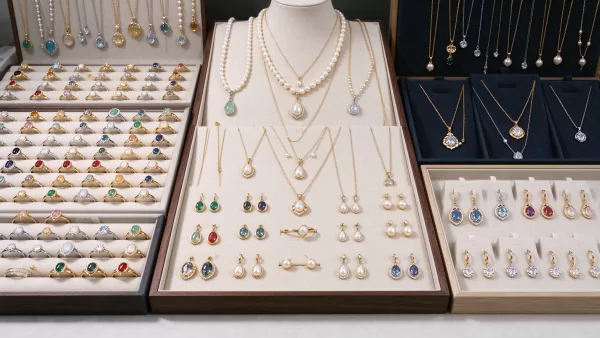
We maintain in-house casting, setting, polishing, and finishing departments. This vertical integration produces rings, pendants, earrings, and bracelets using the stones we grow, with full traceability from reactor to retail packaging. Mounting options span all common metals: 10K, 14K, and 18K gold (white, yellow, rose), platinum 950, and sterling silver. We also produce moissanite jewelry for partners offering both stones.
Wholesale clients access loose stones via our wholesale portal, while brands leverage OEM/ODM manufacturing, private labeling, custom packaging, and drop-shipping. Educational materials live in our buying guide, market commentary in our industry news section, certified stones in the certificates database, and colored gemstones support designers beyond colorless diamonds.
Capacity, Lead Times, and Customer Case
Our combined HPHT and CVD fleet produces over 30,000 carats of lab grown diamond rough per year, translating to roughly 9,000–10,500 carats of polished after cutting yield. Sizes range from melee (0.8–2.9mm) up to 5 carat rounds, with specialty runs reaching 8 carats. Fancy shapes including princess, cushion, oval, emerald, pear, marquise, radiant, Asscher, and heart are cut in-house.
Standard melee and commercial rounds in D-J color, SI-VS clarity ship within 5–10 business days from inventory. Made-to-order larger stones (1–3 carat, F color, VS1 average) deliver in 3–6 weeks plus certification time. Finished jewelry adds 2–4 weeks.
A mid-sized US bridal brand approached us in 2022 after a decade sourcing exclusively mined diamonds. They were losing younger customers to competitors selling lab grown options at 40 to 50 percent lower retail prices and wanted a stronger sustainability story. We provided calibrated F/VS1 rounds across 0.5 to 2 carat, IGI certification on every center stone, 14K white gold semi-mounts, and marketing copy. Within 18 months their LGD line exceeded 45 percent of engagement ring sales, with margin per unit steady because our factory-direct pricing eliminated middlemen. They have since added fancy-shaped sidestones and a moissanite fashion line.
Sustainability: LGD vs. Mined
The environmental and ethical case for lab grown diamond manufacturing strengthens each year as independent life-cycle assessments accumulate. Third-party studies show LGD production generates 60 to 80 percent less carbon emissions per carat than mined diamond extraction, which moves roughly 250 tons of ore for every carat recovered. Our facility runs on a grid mix including purchased renewable energy certificates, and water is recirculated in closed-loop cooling systems.
Every stone we produce is 100 percent conflict-free by design—no mining, no community displacement, no risk of financing armed conflict, no child labor. Each stone traces to a specific reactor run, growth date, and batch number, a level of traceability impossible with mined diamonds.
Growth Method Comparison
| Growth Method | Process | Quality | Cycle Time | Cost |
|---|---|---|---|---|
| HPHT | 5–6 GPa, 1300–1600°C, graphite feedstock with metal catalyst in cubic press | Colorless to fancy colors; VS–SI typical; strong for yellows and blues | 6–10 weeks per cycle | Lower cost for smaller carats and fancy colors |
| CVD | Microwave plasma, 800–1000°C, methane/hydrogen in vacuum chamber | F color, VS1 clarity average; excellent at larger sizes | 3–4 weeks per cycle | Competitive at 1ct+; highly scalable |
| Mined | Geological formation 150–200 km underground over 1–3 billion years | Wide variance; all colors and clarities; selective sorting required | Months to years mine to market | Highest cost due to extraction and supply chain markup |
Frequently Asked Questions
Are lab grown diamonds real diamonds?
Yes. Lab grown diamonds are real diamonds composed of crystallized carbon in the same cubic lattice as mined stones, with identical optical, thermal, chemical, and physical properties. The only difference is origin. Thermal testers cannot distinguish them; advanced spectroscopy identifies growth origin, which is why IGI and GIA issue dedicated LGD reports.
What is the average production lead time?
In-stock polished stones ship within 5 to 10 business days. Made-to-order runs from rough take 3 to 6 weeks depending on size and specification, plus certification time. Finished jewelry adds 2 to 4 weeks.
Which growth method produces better stones?
Neither method is universally better. HPHT excels at fancy colors and smaller colorless stones. CVD produces exceptional high-color, high-clarity larger stones with shorter cycles and superior scalability. Because our lab grown diamond manufacturing operation runs both technologies, we match the right method to each order rather than forcing a one-size-fits-all solution.
Do you certify every stone?
Stones above 0.3 carat are available with IGI or GIA certification at the buyer's option. Smaller stones ship with our in-house grading report documenting color, clarity, cut, and carat weight. All certificates are verifiable online.
Can you produce finished jewelry from our designs?
Yes. We offer full OEM/ODM jewelry manufacturing alongside loose stone production. Send CAD files, sketches, or samples, and our team will produce wax models, castings, stone setting, finishing, polishing, and packaging to your specs in gold, platinum, or silver.
Source From a Trusted Manufacturer
Sourcing lab grown diamonds at scale requires a partner who controls the entire value chain, not a reseller buying rough on the open market. Our integrated HPHT and CVD production, in-house cutting and polishing, IGI/GIA coordination, and full jewelry manufacturing under one roof deliver the quality, consistency, and pricing you need. With 30,000+ carats of annual rough capacity, 30–35 percent optimized cutting yield, F/VS1 average CVD quality, ISO 9001 and EU REACH compliance, and a track record supporting brands from bridal to fashion, our lab grown diamond manufacturing platform is built for serious buyers.
Whether you are placing a first trial order for melee, planning a bridal line launch, or exploring moissanite alongside LGD, our sales team is ready with quotes, sample stones, CAD support, and tailored lead times. Visit our wholesale inquiry page to start the conversation, browse certified listings, or review our buying guides. We respond to all wholesale inquiries within one business day and welcome factory visits by appointment.