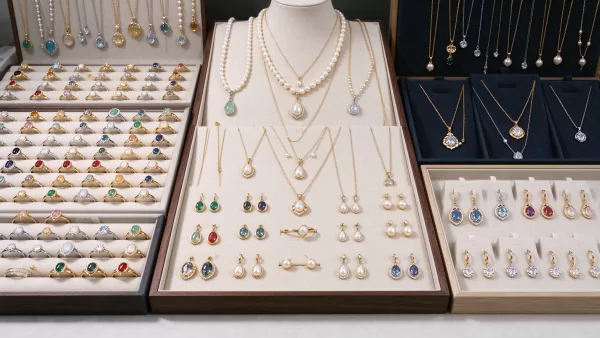
The global bridal jewelry market has shifted decisively toward lab grown diamond rings manufacturing as retailers, designers, and DTC brands demand ethically sourced, consistently graded center stones paired with industrial-grade metalwork at scalable volumes. At our facility, lab grown diamond rings manufacturing integrates vacuum casting, computer-aided design, thermal stone verification, and IGI-certified grading into a single production flow built for wholesale partners who cannot afford returns, sizing errors, or loose stones after delivery. Every ring leaving our floor passes through a 14-point quality control protocol that starts with raw alloy inspection and ends with a pull test on every prong before packaging.
For B2B buyers evaluating overseas production partners, understanding how lab grown diamond rings manufacturing actually works—from wax model to final polish—is the difference between a repeat bridal program and a chargeback disaster. This guide walks wholesale clients, private-label brands, and bridal DTC founders through casting, setting, certification, and matching, with concrete specs on prong thickness, cut angles, lead times, and MOQs you can put directly into a purchase order.
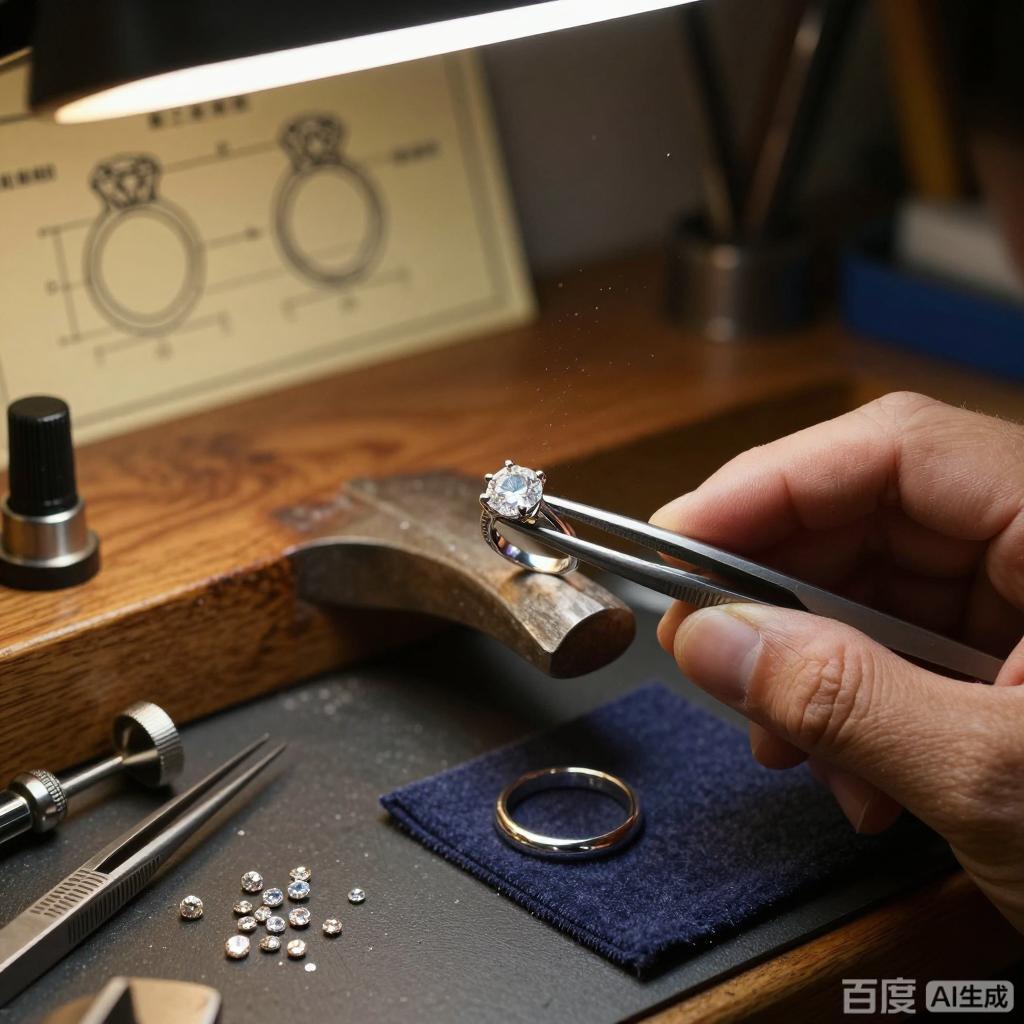
Inside This Guide
- Vacuum Casting for Gold and Platinum Mountings
- Stone Setting: Prong, Halo, and Bezel Methods
- IGI Certification and Laser Inscription
- Precision Cut Matching for Side Stones
- Bridal Production Workflow and Lead Times
- 14-Point QC and Durability Standards
- Partnering With a B2B Manufacturer
Vacuum Casting for Gold and Platinum Mountings
Lab grown diamond rings manufacturing begins long before a stone touches a mounting. The casting stage determines porosity, shrinkage accuracy, and structural integrity of every prong and channel. Our facility runs a vacuum-assisted investment casting process for solid 14K gold, 18K gold, and platinum 950—the alloys behind most North American bridal orders. Under vacuum, molten alloy fills the flask at reduced atmospheric pressure, eliminating gas bubbles that cause pitting, weak prongs, and rework at the setting bench.
Wax to Flask: Controlled Burnout
Every ring starts as a CAD file exported to a resin printer or hand-carved for custom programs. Wax models are assembled onto a sprue tree, invested in a silica flask, and burned out over 10–12 hours to remove every trace of wax and moisture. Gold pours at roughly 550–600°C; platinum requires higher heat and a ceramic crucible to avoid carbon contamination. Rushing burnout is the leading cause of porosity in low-cost casting, which is why our lab grown diamond rings manufacturing protocol locks in a computer-controlled burnout curve for every batch.
Alloy Compliance
All gold is sourced from refiners operating under ISO 9001 quality management standards, and our plating processes conform to EU REACH regulations on restricted substances. Platinum 950 is alloyed with ruthenium rather than cobalt for a harder, scratch-resistant finish.
Stone Setting: Prong, Halo, and Bezel Methods
Once mountings pass casting inspection, stones move to the setting floor—the most labor-intensive stage of lab grown diamond rings manufacturing. Setting style directly affects cost, labor time, stone security, and light performance. We produce three primary architectures for bridal: prong, halo, and bezel, along with channel and pavé side-stone treatments.
Construction Standards
Prong settings remain the top-selling construction for solitares because they expose maximum center-stone surface area to light. For centers of 0.5 carat and above, our standard requires prong thickness of 1.2mm or greater at the girdle contact, with polished, snag-free tips. Six-prong heads are standard for rounds above 1.5 carats for better impact distribution. Halo settings surround the center with a ring of 1.0–2.0mm accents; even a 0.1mm diameter variance between side stones creates a visible gap under 10x loupe. Bezel settings encircle the diamond with a continuous metal rim, offering the highest security and a snag-free profile favored by active wearers.
| Setting Style | Best For Stone Size | Durability | Labor Time per Unit |
|---|---|---|---|
| 4-Prong Solitaire | 0.3–2.0 ct center | Good; annual prong check recommended | 45–60 minutes |
| 6-Prong Solitaire | 1.0–3.0+ ct center | Excellent; 6-point impact distribution | 60–75 minutes |
| Halo with Pavé Band | 0.3–1.5 ct + 1.0–2.0mm sides | Moderate; side stones can loosen on impact | 2.5–4 hours |
| Bezel | 0.3–2.5 ct center | Excellent; full girdle enclosure | 1.5–2.5 hours |
| Channel-Set Band | 2.0–3.5mm side stones | Very good; walls protect stones | 1.5–2 hours |
| Three-Stone Prong | 0.5–2.0 ct + 0.2–0.8 ct sides | Good; three heads require individual QC | 1.5–2 hours |
IGI Certification and Laser Inscription
No responsible lab grown diamond rings manufacturing program ships a center stone of 0.3 carat or above without third-party grading. We work exclusively with International Gemological Institute (IGI) reports, the most widely recognized grading document in the category among North American consumers. Every center stone receives a laser inscription on the girdle matching its unique IGI report number—a microscopic mark readable at 10x magnification.
Before a stone reaches the setter, our QC team verifies three independent identity signals: a thermal conductivity tester (distinguishes diamond from cubic zirconia and simulants), an electrical conductivity diamond confirmation tester (separates diamond from moissanite), and a visual cross-check of the IGI inscription against the digital certificate. This three-step confirmation is non-negotiable. For reference, buyers may also consult the Gemological Institute of America (GIA) and the synthetic diamond overview on Wikipedia.
Bridal-Grade Minimums
For wholesale bridal programs we enforce a minimum of F color and VS1 clarity on center stones, with Very Good or Excellent cut and None or Faint fluorescence. These thresholds reflect what American DTC brands consistently sell through. Buyers may specify D/VVS1+ or commercial G/VS2 grades by price point, but F/VS1 is our starting spec for brands marketing eye-clean, colorless centers in the $2,000–$6,000 band.
Precision Cut Matching for Side Stones
Precision cut matching is where many lab grown diamond rings manufacturing programs silently lose margin. A halo can contain 20–40 small side stones, and if unmatched for diameter, table percentage, crown angle, and color, the halo looks patchy in natural light—problems invisible on a studio photo but obvious on a customer's hand.
Ideal Cut Geometry
Our matching standard for round brilliants targets ideal cut angles of approximately 34.5° crown and 40.7° pavilion, the geometry that maximizes light return. Side stones are sorted within ±0.02mm diameter and ±1° crown angle; color is matched within a single grade across the ring. We purchase melee in calibrated parcels and re-sort in-house before every halo or pavé job. Browse inventory on our gemstones catalog and grading docs on our certificates page.
Bridal Production Workflow and Lead Times
Understanding the timeline for lab grown diamond rings manufacturing helps buyers plan inventory drops, bridal launches, and custom orders. Our standard cycle from CAD approval to finished goods is 18–25 business days for gold and platinum. Silver production—for samples and photography—runs 12–18 business days.
Sizes, MOQs, and a Client Case
We produce rings across US sizes 3 through 13, including half and quarter sizes. MOQ is 15 pieces per SKU for solid 14K/18K gold and platinum, and 30 pieces per SKU for silver. Pricing is on our wholesale page. In Q1 2025, a Dallas-based bridal DTC brand came to us with a 12-SKU engagement line of 1.0–2.0 ct round brilliants in 14K gold. A prior domestic contractor delivered 14-week lead times and a 9% return rate from loose halos and poor prong finishing. We produced 180 units across 12 SKUs in 22 business days; their return rate dropped to 2.1% in the first 90 days, and they have since expanded to 28 SKUs with matching wedding bands.
14-Point QC and Durability Standards
Quality control in lab grown diamond rings manufacturing is a layered gate system that rejects defects at each stage before value is added downstream. Our 14-point QC covers: raw alloy purity, wax dimensional check, casting porosity at 10x, mounting weight and dimension, diamond identity via dual testers, IGI inscription cross-check, stone seating visual, prong thickness (1.2mm minimum at girdle contact), gap inspection on halos and channels, polish and finish, rhodium thickness (white gold), ring size against US mandrel, prong pull test, and final ultrasonic cleaning with packaging inspection.
Pull Testing and Consumer Resources
During pull test, a QC technician applies controlled lateral pressure to each prong to confirm zero movement. Failing units return to the setter for re-tipping. Brands can direct customers to our care guide, size guide, and buying guide for after-purchase support. All claims and materials are consistent with the U.S. Federal Trade Commission Jewelry Guides, which require accurate disclosure of treatments, alloy, and origin.
Partnering With a B2B Manufacturer
Selecting a production partner for lab grown diamond rings manufacturing is ultimately a decision about consistency. Factories that skip vacuum casting specs, accept unsorted melee, or skip dual-tester confirmation deliver units that photograph well but fail on the consumer's finger, generating chargebacks that erode margins faster than any per-unit savings. Our program is built for brands selling at $1,500–$10,000 retail who cannot afford a single bad stone in an engagement moment. Q4 bridal production slots fill 6–8 weeks in advance.
Frequently Asked Questions
What metals do you offer for bridal rings?
We produce bridal pieces in solid 14K white, yellow, and rose gold; solid 18K gold in the same colors; and platinum 950. We do not offer plated or filled mountings for bridal. Silver is available for samples and promotional lines.
Are all center stones IGI certified?
Yes. Every center stone at or above 0.30 carat ships with an individual IGI lab grown diamond report, with the report number laser-inscribed on the girdle. Melee under 0.30 carat comes from IGI-graded parcels and is sorted in-house.
What is your MOQ for a new bridal SKU?
Standard MOQ is 15 pieces per SKU for gold and platinum, and 30 pieces for silver. Mixed-size runs within a SKU are accepted. First-collection brands can request a reduced trial MOQ through our wholesale team.
How do you verify stones are lab grown diamonds, not simulants?
Before setting, every center stone passes thermal conductivity testing, electrical conductivity confirmation (which differentiates diamond from moissanite), and an IGI laser inscription cross-check. Melee parcels are batch-tested before sorting.
What lead times apply to a wholesale bridal order?
Gold and platinum production runs 18–25 business days from CAD approval and stone confirmation, plus transit. Silver runs 12–18 business days. For Q3/Q4 bridal season, book at least 8 weeks ahead for shipping and customs.
Ready to Build Your Bridal Program?
Lab grown diamond rings manufacturing is a precision discipline—not a commodity. Whether you are a boutique founder placing your first 15-piece gold order or an established DTC brand scaling a 500-unit replenishment, our factory delivers mountings that pass a 14-point QC protocol, IGI-verified center stones, and matched halos that look clean under natural light, not just on a product page. Browse our wholesale program or reach out with CAD specs and a target delivery date, and our team will return a quotation within two business days.