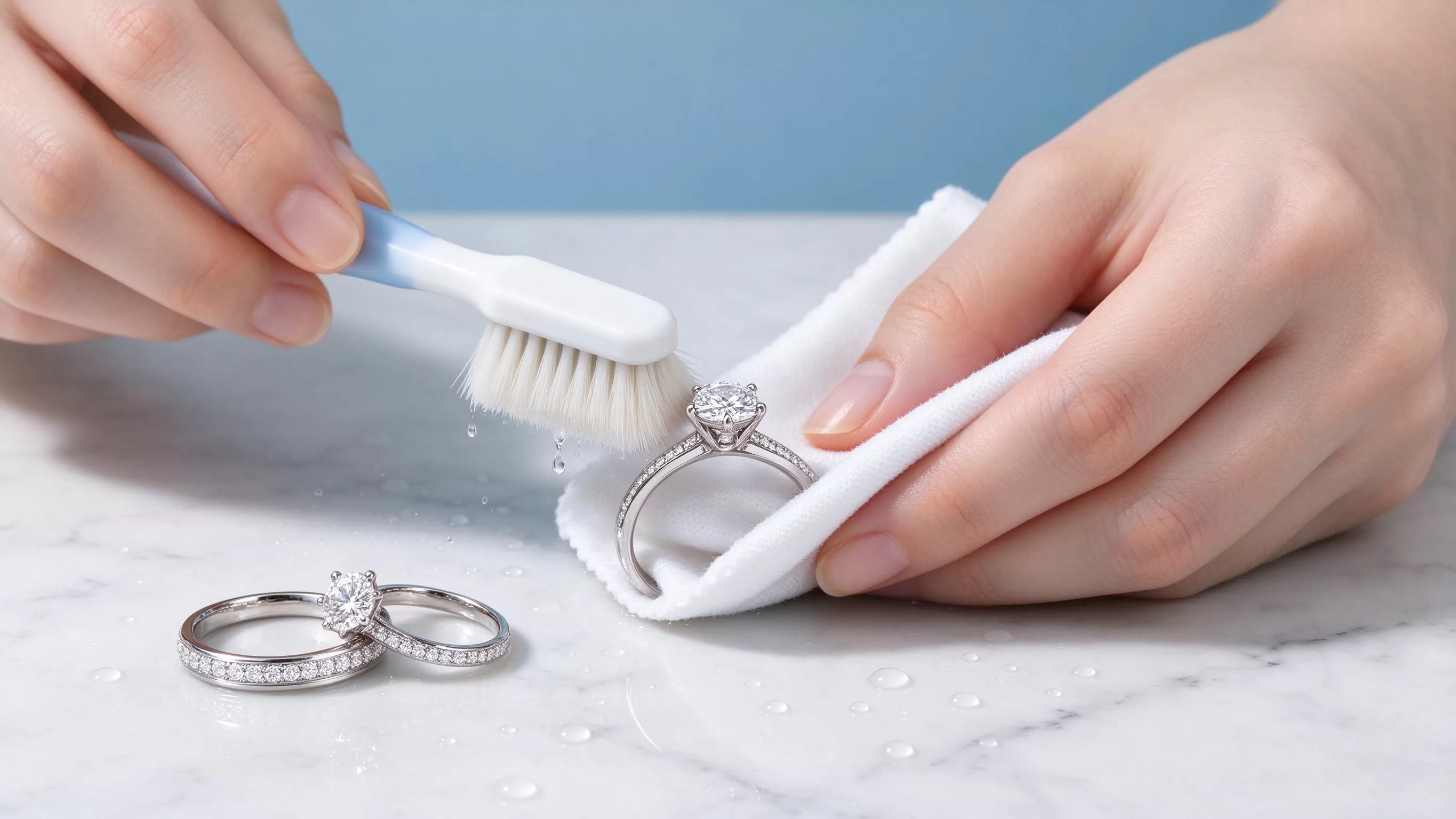
Textured jewelry — hammered, brushed, matte, sandblasted, antiqued — is hugely popular for its organic, handcrafted feel. But those same ridges, grains and dimples that make it interesting also trap soap, oil and dead skin. Cleaned wrong, a textured finish can lose its character. This guide explains how to care for textured metal finishes without ruining them.
Why Texture Traps Dirt
A polished surface has nowhere for grime to hide; a hammered or brushed surface has hundreds of micro-grooves. Over weeks, body oils and soap settle into them, making bright silver look dull and making gold feel "off." The good news: texture is durable — it just needs the right cleaning tool.
Cleaning by Finish Type
Hammered and dimpled surfaces
Soak briefly in warm soapy water, then use a soft brush (a baby toothbrush or a soft jewelry brush) to sweep across the grooves. Rinse and dry thoroughly so no water sits in dimples.
Brushed and matte finishes
Avoid abrasive polishing cloths that create shiny streaks across the brushed grain. Use warm soapy water and a soft cloth, rubbing in the direction of the grain, not against it.
Oxidized/antiqued texture
Textured pieces are often also oxidized silver. Keep chemicals and silver dips away, which strip the dark patina. A dry soft brush is safest.
What to Avoid
- Avoid aggressive polishing cloths on brushed or matte surfaces — they create shiny patches.
- Avoid tumbling textured pieces with harder stones or beads, which smooth out the texture.
- Avoid toothpaste baking-soda hacks — they are abrasive and scratch soft finishes.
- Dry completely — trapped water in grooves causes tarnish spots on silver.
For the base metal basics, see our silver care guide and gold care guide.
Preventing Buildup Between Cleanings
The easiest way to keep textured jewelry clean is to prevent buildup: take it off before applying lotion or perfume, and wipe it with a soft cloth after wearing. A quick weekly wipe prevents the deep grime that needs soaking. Store textured pieces separately so they do not rub against polished pieces and create accidental shiny marks.
When Texture Needs Professional Care
If a textured piece has lost its finish — for example, a hammered silver piece that has been over-polished into smoothness — only a jeweler can restore the texture by re-hammering or re-brittling. Regular gentle home cleaning prevents reaching that point. For routine upkeep, the soft-brush method above is enough.
The Bottom Line
Textured jewelry rewards a little patience: soft brush, warm soapy water, no abrasives, and thorough drying. Treat the finish gently and the handcrafted character stays intact for years.
When Textured Finishes Need Professional Help
Most textured jewelry can be maintained at home, but some situations need a jeweler. If a hammered piece has been polished until its dimples are gone, only a goldsmith can re-hammer the texture back. If a brushed surface has been covered in shiny patches by the wrong cloth, it may need re-brushing. If oxidized recesses have worn completely away, a re-oxidation dip by a professional restores the contrast. Catching these early is cheaper than replacing the piece, so inspect textured jewelry a few times a year and stop home cleaning the moment a finish starts to look wrong.
Home vs professional care
- Home: weekly soft-brush cleaning, dry storage, mild soap.
- Professional: re-hammering, re-brushing, re-oxidation.
- Avoid at home: tumbling, abrasive cloths, silver dips on textured pieces.
Buying Textured Jewelry the Right Way
When buying textured pieces, ask how the texture was created and whether it is durable. A well-made hammered or brushed finish should feel intentional and even, not rough to the point of catching on clothing. Check that raised edges are smooth enough not to scratch skin. Because textured pieces hide fingerprints well, they are excellent for everyday wear and for people who dislike high-maintenance polish. Pair them with simple, smooth bands for contrast, and follow our care guides to keep the character intact.