Ring Size in Summer vs Winter: How Temperature Changes Fit
If your ring spins around your finger in January and feels snug in July, you are not imagining it. Fingers change size with temperature, swelling in heat and shrinking in cold. A ring that fit perfectly in spring can feel tight by August and loose by December. This seasonal change is normal, but it raises a question: which temperature should you size for? This guide explains why fingers shift with weather, how much the fit changes, and how to choose a ring size that works across the year without resizing every season.
We will cover the physiology of finger swelling, the typical size change between seasons, the best time of day to measure, and what to do if your ring feels tight in summer or loose in winter. We will also cover travel, medication, and pregnancy, which amplify the seasonal effect. If you also have fluctuating swelling from other causes, our swollen fingers guide helps, and our measurement guide covers method.
The good news is that you do not need two ring sizes for two seasons. A ring sized correctly at room temperature will tolerate the seasonal swing, and the slight tightness in summer and looseness in winter are signs the size is right, not wrong. The mistake to avoid is ordering a ring in a temperature extreme, because that size will feel off by the next season.
If you have ever bought a ring in a hot vacation shop and found it loose at home, you have seen this effect. The shop was hot, your finger was swollen, and the size you chose was too large for your normal finger. The reverse happens in cold winter shopping. The fix is simple: measure at home, at room temperature, at midday, and use that number.
Why Fingers Swell in Heat
In hot weather, the body sends blood to the skin to cool itself, and fingers swell with fluid. This is the same mechanism that makes hands puffy on a hot day or after a warm shower. Fingers hold less muscle than the arm, so the swelling is visible as a wider circumference. In cold weather, blood retreats from the skin to keep the core warm, and fingers shrink. The change is usually modest, half a ring size or so, but for someone on the edge of a size, it is the difference between comfortable and tight.
Day-to-day, the same effect happens in miniature. Fingers are smaller in the morning, after a night of rest, and larger in the afternoon, after a day of activity. They are smaller when fasting and larger after a salty meal. Temperature is the largest seasonal factor, but the daily rhythm is similar. This is why jewelers measure at midday, at room temperature, not first thing in the morning or after a hot walk.
How Much the Size Changes
Between a cold winter day and a hot summer day, finger size typically shifts by about half a ring size. Some people shift more, especially if they retain fluid in heat. A ring that is a perfect fit at 20 degrees Celsius may feel tight at 30 degrees and loose at 5 degrees. Most people adapt without resizing, because the change is gradual and the ring moves with the finger.
The problem comes when a ring is sized for one extreme. A ring sized in the heat of summer may be too loose in winter, and a ring sized in a cold shop may be too tight by summer. This is why jewelers advise measuring in mild conditions, at room temperature. A ring that fits at 20 degrees will feel slightly tight in heat and slightly loose in cold, which is the sweet spot. It is easier to live with a slightly loose winter ring than a tight summer one.
The Best Time to Measure
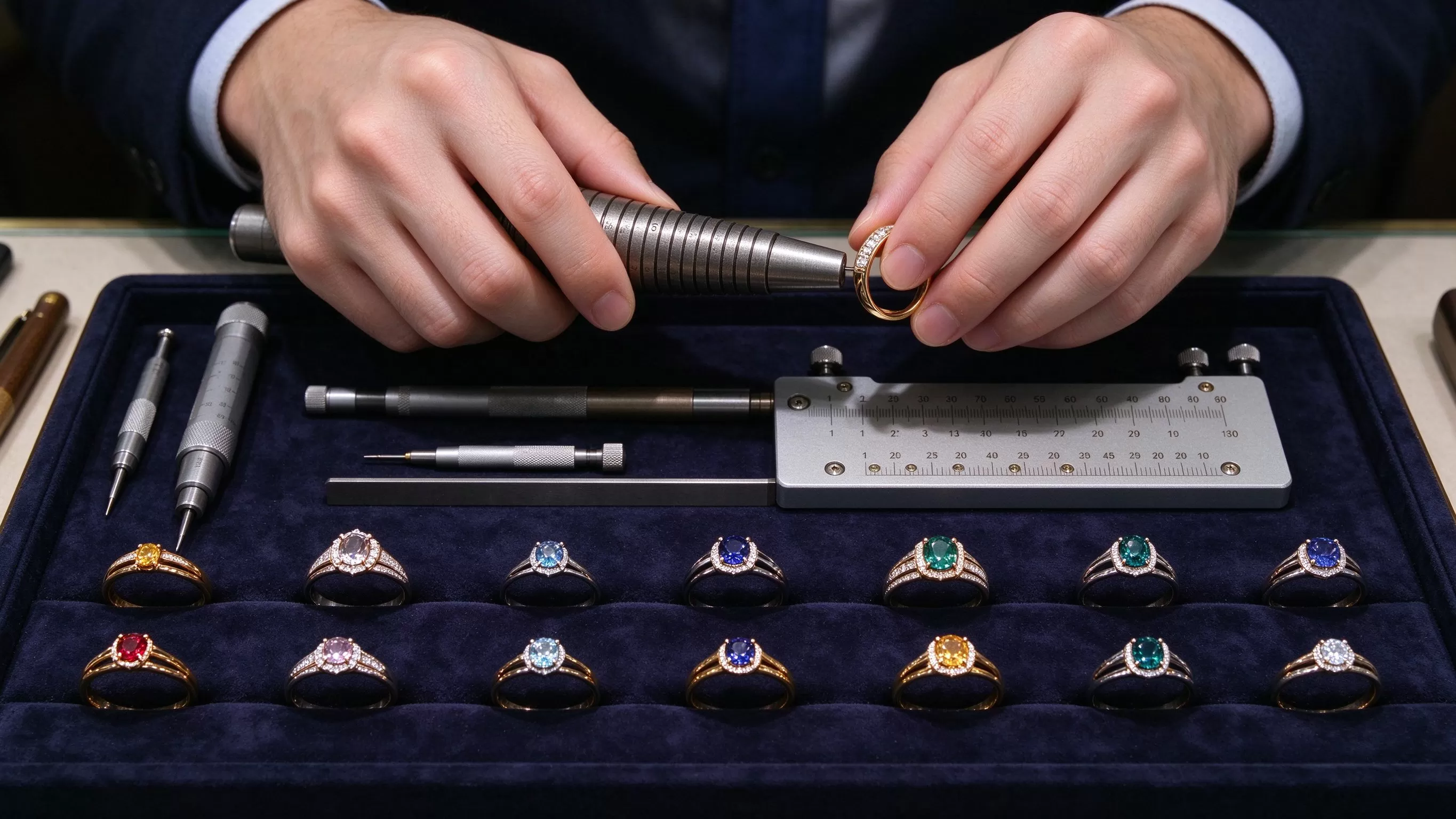
For a measurement that works year-round, measure in the middle of the day, at room temperature, when your hand is neither hot nor cold. Do not measure after exercise, after a hot shower, after a salty meal, or first thing in the morning. If your fingers are swollen from heat, wait until they cool. If they are cold from winter, warm your hands first. The midday, room-temperature measurement is the one that reflects your average size.
If you are buying a ring in winter and it feels snug in the cold shop, remember it will feel looser in summer, not tighter. If it feels tight in a hot summer fitting room, it will feel looser in winter. The common mistake is measuring in a temperature extreme and ordering a size that works only in that weather. Our home measurement guide lists the conditions.
If Your Ring Feels Tight in Summer
If your ring gets tight in summer, do not rush to resize. The tightness is likely heat swelling, and the ring will loosen in cooler weather. In the meantime, remove the ring on very hot days, especially after exercise or a hot shower, and avoid soaping it on. If it is only slightly tight, it is fine. If it leaves a mark or is hard to remove, it is too small, and you should size up or use a ring adjuster.
For people who live in hot climates, the summer size is the one to design for, because most of the year is warm. If you are in a tropical climate, size for the heat, and accept that the ring will be slightly loose in air-conditioned rooms. Our summer care guide covers heat and jewelry.
If Your Ring Feels Loose in Winter
If your ring spins in winter, it is likely cold shrinkage, not a wrong size. In most cases, the ring is fine, and the swelling of summer will hold it. If the looseness is uncomfortable, a ring adjuster or sizing beads add a little grip without resizing. Do not size down for winter, because the ring will be too tight in summer. The adjuster is the temporary fix.
If the ring is loose year-round, not just in winter, then it is genuinely too large, and you should resize it down. The seasonal question is only whether the looseness is cold-specific. Our ring fit guide helps you tell the difference.
Resizing for Seasonal Change
Most people never need to resize for seasonal change, because the half-size shift is tolerable. If the seasonal change is extreme, with the ring getting stuck in summer and spinning in winter, you may be a candidate for a comfort-fit band, which is easier to slide on and off across the size range. Our comfort fit guide explains the difference. In rare cases, people with large seasonal swelling choose a slightly larger size and use adjusters in winter.
If you are buying a wedding band that you will wear every day for decades, size it at the room-temperature midday measurement, and accept the seasonal swing. Trying to size for both extremes is impossible, and the ring that works in mild weather is the one you will keep.
Altitude and Travel
Travel changes finger size in ways that surprise people. Flying, especially to a hot climate, combines dry cabin air with heat at the destination. Some people find their rings loose after a flight, because the dry air dehydrates fingers, then tight once they are walking in the heat at the beach. If you travel often, do not judge your ring size on the day you arrive. Wait a few days for your fingers to settle into the climate.
Similarly, moving from a cold to a hot climate, like relocating from a northern winter to a tropical summer, changes ring size over weeks. If you have moved, re-measure after a month, and adjust if needed. Our travel care guide covers jewelry on the road.
Medication and Fluid
Beyond temperature, medications can change finger size. Some blood pressure drugs, anti-inflammatories, and hormones cause fluid retention in the hands, making rings tighter year-round. If your ring suddenly gets tight and the weather is not the cause, consider whether a medication changed. In those cases, the tightness is not seasonal, and you may need a permanent larger size. Do not assume every tightness is heat.
Similarly, diet changes, especially salt, cause daily swelling. A salty dinner makes fingers larger the next morning. This is temporary, but it means measuring after a low-salt day gives the most accurate size. Our weight and sizing guide covers body changes.
Pregnancy and Seasonal Swelling
Pregnancy amplifies seasonal swelling, because the body already holds extra fluid. In summer, pregnant people often find rings tight, which is why many switch to a necklace on a chain. The combination of pregnancy and heat is more than temperature alone. If you are pregnant, size for the swelling, not for your pre-pregnancy finger, and plan to re-measure after giving birth. Our swollen fingers guide covers pregnancy fit.
When the Seasonal Change Is Too Much
For most people, the half-size seasonal swing is tolerable. For a few, the change is larger, with rings getting stuck in summer and falling off in winter. If this is you, a comfort-fit band, which has rounded internal edges, slides on and off more easily across the size range. A slightly larger size with a winter adjuster is another option. In extreme cases, some people wear a lighter band in summer and a slightly heavier band in winter, but that is unusual.
The key is not to chase a ring that is perfect in every condition, which is impossible. Choose a size that works most of the time, and accept the seasonal swing as normal. Our comfort fit guide explains the band styles that tolerate swelling.
Frequently Asked Questions
Do rings fit tighter in summer? Yes, heat makes fingers swell. Rings feel tighter in summer and looser in winter.
Do rings fit looser in winter? Yes. Cold shrinks fingers, and a snug summer ring may spin in winter.
Should I size for summer or winter? Size for room temperature at midday. A ring that fits in mild weather works across seasons.
How much does temperature change ring size? Typically half a size between hot and cold extremes.
Why does my ring feel tight after a hot shower? Heat swells fingers. Wait until the hand cools before judging fit.
Size for the Middle
Temperature changes finger size by about half a ring size between summer and winter, and that shift is normal. Measure at room temperature, at midday, and choose a size that fits in mild weather. In summer, expect slight tightness; in winter, slight looseness. If the seasonal swing is extreme, a comfort-fit band or an adjuster helps, rather than resizing twice a year. Accept the small seasonal change as normal.
Most people adapt to the seasonal change without thinking about it, removing the ring on very hot days and using an adjuster in winter. The mistake is measuring in a temperature extreme and ordering a size that works only in that weather. A ring sized in an air-conditioned shop in July may be too loose in January, and a ring sized in a cold shop in December may pinch by August. The room-temperature midday measurement is the one that serves you across the year, and it is the number to write down for every future purchase.
If you keep a note of your average size and the seasonal range, you can buy rings online with confidence. A ring that fits at 20 degrees will feel slightly snug in heat and slightly loose in cold, which is the correct compromise. Over the years, you will learn how your own finger moves with the weather, and the seasonal change will stop being a surprise. The goal is a ring you never think about, in any season. We manufacture comfort-fit bands in our Shenzhen workshop in Henggang, Longgang, sized to your average measurement. Email service@holycome.com for a band that fits year-round. More sizing guides live in our Sizing Guide library.