Summer Jewelry Care: Humidity, Sweat, and Tarnish
Summer is hardest on jewelry. Hot days make you sweat, sunscreen and lotion coat every piece, humidity tarnishes silver overnight, and salt air from the beach attacks metal. A ring that stayed bright all winter can look dull and dark by July. The damage is not permanent, but it accelerates, and a few summer habits keep jewelry looking new through the hottest months. This guide explains what heat, humidity, and sweat actually do to your pieces, and how to protect silver, gold, and gemstones through summer without giving up the jewelry you love.
We will cover why tarnish speeds up in humidity, how sunscreen and sweat film gems, what to do after a beach day, and the summer storage habits that prevent darkness. If you also travel in summer, our travel care guide overlaps, and our silver tarnish guide covers the chemistry in depth.
Why Summer Is Hard on Jewelry
The biggest factor is sweat. Sweat contains water, salts, oils, and mildly acidic compounds, and it sits on jewelry all day in hot weather. Solid gold and platinum resist sweat, but silver tarnishes faster when damp, and plated jewelry wears through where sweat accumulates, especially on rings and bracelets. The salt in sweat also reacts with copper alloys in gold, darkening the metal slightly.
Humidity is the second factor. Silver tarnishes from sulfur in the air, and moisture makes that reaction happen faster. A silver necklace stored in a humid bathroom drawer can turn dark in weeks, while the same necklace in a dry bedroom stays bright. In tropical climates, summer humidity is relentless, and silver jewelry needs more frequent cleaning and drier storage.
The third factor is sunscreen and body lotion. Summer routines involve more sunscreen, and that lotion films every piece of jewelry it touches. A gemstone coated in sunscreen looks dull and greasy, and the film builds up fast. Even solid gold looks better after a summer wipe.
Many people also wear thinner, lighter jewelry in summer, which means delicate chains and small rings that are more prone to tangling and bending. A thin chain worn through sweat can kink, and a narrow ring worn daily can loosen prongs. Check your favorite summer pieces more often, and store them carefully so they do not snag on other items. Our necklace storage guide helps with thin chains.
Tarnish in Humid Weather
Silver tarnish is a natural reaction to sulfur, and you cannot stop it completely, but you can slow it. The key is dry storage. Keep silver in a closed jewelry box, not out on a vanity, and add anti-tarnish strips or silica gel packets to absorb moisture. Store each piece separately, because tarnish transfers between pieces in a closed box. Avoid storing silver in the bathroom, where steam and humidity are constant.
Wipe silver with a soft cloth after wearing, because skin oil and sweat speed the reaction. If your silver does tarnish, a polishing cloth removes it easily, as our silver tarnish guide explains. The goal is not to prevent tarnish forever, which is impossible, but to prevent the heavy black tarnish that requires a professional cleaning.
Gold and platinum do not tarnish, but they can dull from sweat and lotion. A weekly wipe with a soft cloth keeps them bright in summer. White gold can lose its rhodium plating faster in sweat, revealing the yellow metal underneath, which is covered in our rhodium guide.
Sunscreen, Lotion, and Gemstones
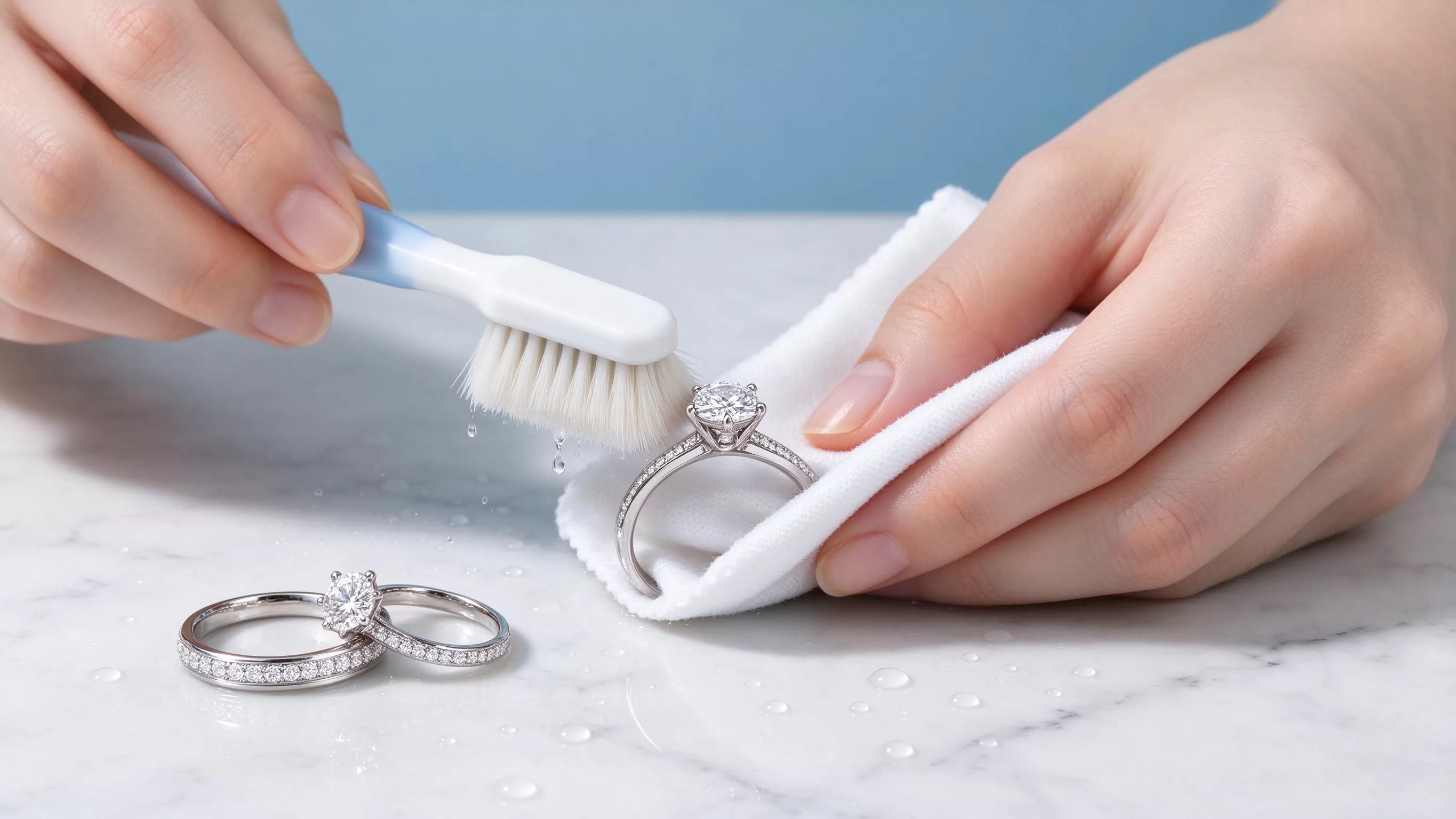
Gemstones look most dull in summer because they are coated in sunscreen and tanning oil. A diamond or sapphire that sparkled in May looks greasy and gray by August, not because it damaged but because a thin film covers the facets. The fix is simple: clean your stones more often in summer. A quick soak in warm soapy water every two weeks removes the film and restores the sparkle.
The best habit is to apply sunscreen and lotion before putting on jewelry, so the products never touch the stones. Wait for sunscreen to absorb for a few minutes before putting on rings and necklaces. If you reapply sunscreen during the day, wipe your ring and necklace afterward. This one habit prevents most summer dullness.
For softer stones like emerald, opal, and pearl, sunscreen and lotion are more than dulling; they can damage the surface. Remove those pieces before applying sunscreen, and clean them gently with a damp cloth after wearing. Our chemical damage guide covers which products to avoid.
Beach, Saltwater, and Sand
Saltwater is less harsh than chlorine, but it still dulls metal and films gems. After a day at the beach, rinse all jewelry in fresh water to remove salt and sand, then dry it thoroughly. Sand is abrasive, and rubbing a sandy ring against clothing scratches the metal. Remove rings before swimming in the ocean, because waves can pull them off, and saltwater plus sand is a bad combination for prongs.
Sand scratches soft gems. A ring or pendant dragged through sand can pick up fine scratches, especially on gold and silver. If you wear jewelry to the beach, keep it on rather than taking it off in the sand, where grains get into settings and scratch the surface. Rinse afterward, and store the piece in a dry pouch.
Shell collecting, walking barefoot, and water sports all involve sand and water. For active beach days, leave fine jewelry in the hotel safe, and wear a cheap band or nothing at all. Our guide to chlorine damage covers pool and hot tub rules, which are stricter than ocean water.
After-Summer Cleaning Routine
At the end of summer, give all your jewelry a proper clean. Soak gold and gem pieces in warm soapy water, brush gently, rinse, and dry. Polish silver with a silver cloth to remove summer tarnish. Check prongs and settings, because saltwater and sand can loosen stones. Inspect plated and vermeil pieces for wear, and plan re-plating before the next summer.
Summer weddings, parties, and outdoor events also mean perfume, hairspray, and sweat on jewelry. For a special event, put fine jewelry on last, after your hair and makeup are done, and take it off as soon as you get home. Wipe it with a soft cloth before storing. This prevents a single busy event from dulling a favorite piece. If a piece gets sprayed with hairspray or covered in sunscreen during an event, clean it that night, because letting the film sit overnight makes it harder to remove. Our polishing cloth guide is the right tool for this quick after-event wipe. A little attention each evening saves a professional cleaning later in the season.
This end-of-season clean is also a good time to rearrange storage. Put summer jewelry away in dry boxes with anti-tarnish strips, and bring out heavier autumn pieces. If a silver piece turned black over the summer, a polishing cloth restores it, but heavy tarnish may need a professional dip. Our repair guide lists when to seek help.
Sweat and Metal Allergies in Summer
Summer is when metal allergies show up. Sweat dissolves nickel in lower-grade alloys faster, and many people who wear cheap rings without issue in winter develop green fingers or red rashes in hot weather. The salt and acid in sweat react with copper and nickel, causing the familiar green mark on the skin. If this happens, cleaning the ring removes the stain, but the reaction returns unless you switch to a non-reactive metal. Our guide to rings that turn finger green explains the chemistry.
The fix is to wear solid gold, sterling silver, titanium, or niobium in summer, and save fashion jewelry for cooler months. If you love a plated fashion ring, wear it for evenings rather than all day in the heat. The same applies to earrings: cheap posts can irritate pierced ears when sweaty, so stick to gold or surgical steel studs in summer. Our nickel allergy guide lists the safe metals.
Sunscreen, Tanning Oil, and Everyday Habits
Summer jewelry dulls fastest because of sunscreen. Tanning oil is even worse, because it is thick and greasy, and it films gemstones until they look cloudy. The habit that saves jewelry is to apply all beauty products first, wait a few minutes, and then put on jewelry. This means sunscreen, lotion, tanning oil, perfume, and hairspray all go on before rings, necklaces, and earrings. If you reapply sunscreen during the day, wipe your ring afterward with a soft cloth.
Shaving is another summer issue. Many people shave their arms and legs more in warm weather, and shaving cream and razors catch on rings and bracelets. Remove rings and bracelets before shaving, because the razor can nick a stone or bend a band. After shaving, wait for the skin to dry before putting jewelry back on, because shaving cream films the metal.
Hot Workouts and Outdoor Exercise
Outdoor gym sessions, running, cycling, and hiking in summer bring sweat and sunscreen together. For these workouts, remove rings and dangling earrings, and store them in a pouch. Sweat in volume wears plating fast, and sunscreen films gems. If you must wear something on your finger, a silicone band is the practical choice. After the workout, wipe any jewelry you did wear with a damp cloth, and wash rings with warm soapy water at the end of the day. Our gym care guide covers the full routine.
For outdoor swimming, open-water swimmers should remove all jewelry, because moving water and waves can pull rings off, and saltwater dulls metal. A waterproof watch or a simple silicone band is enough for a swim. Rinse any jewelry afterward in fresh water, and dry it thoroughly.
Indoor Humidity and Air Conditioning
Summer humidity affects indoor jewelry too. Even in air-conditioned homes, bathrooms steam up after showers, and a jewelry box near the bathroom can hold moisture. Store jewelry away from the bathroom, and use silica gel packets in the box to absorb damp. Anti-tarnish strips for silver are cheap and make a noticeable difference in humid rooms.
If you live in a tropical climate, consider a small dehumidifier in the room where you store jewelry, or keep silver in an airtight box. This prevents the heavy tarnish that appears within weeks. Gold and platinum do not need this, but silver and plated pieces do. Our storage guide has the full setup.
Frequently Asked Questions
Does humidity make jewelry tarnish? Yes. Moisture and sulfur speed silver tarnish. Dry storage and anti-tarnish strips slow it down.
Does sweat damage gold jewelry? Solid gold resists sweat, but sweat films the surface and wears plating. Wipe gold after a hot day.
Why does my silver jewelry turn black in summer? Sweat and humidity speed the sulfur reaction. Regular wiping and dry storage prevent it.
Should I wear jewelry to the beach? Saltwater and sand scratch metal. Rinse after the beach, and remove rings before swimming.
How do I stop summer tarnish? Wipe after wearing, store dry with anti-tarnish strips, and remove pieces before showering or swimming.
Keep Jewelry Bright Through Summer
Summer jewelry care is mostly about wiping and storing. Wipe pieces after wearing, apply sunscreen before jewelry, rinse after the beach, and store silver dry. Those habits take minutes a day and prevent the dullness and tarnish that make jewelry look neglected by August. If a piece does darken, a gentle polish restores it, and an end-of-season clean keeps everything ready for autumn. Over a few summers, you will learn which pieces hold up to heat and which are better saved for cooler days, and that knowledge makes your collection easier to manage. The goal is not to avoid wearing jewelry in summer, which would defeat the point; it is to wear it without watching it fade. We set and clean fine jewelry in our Shenzhen workshop in Henggang, Longgang, and we can advise on summer-safe storage or plated pieces that hold up to heat. Email service@holycome.com for a cleaning check or a quote. More care guides live in our Care & Cleaning library.