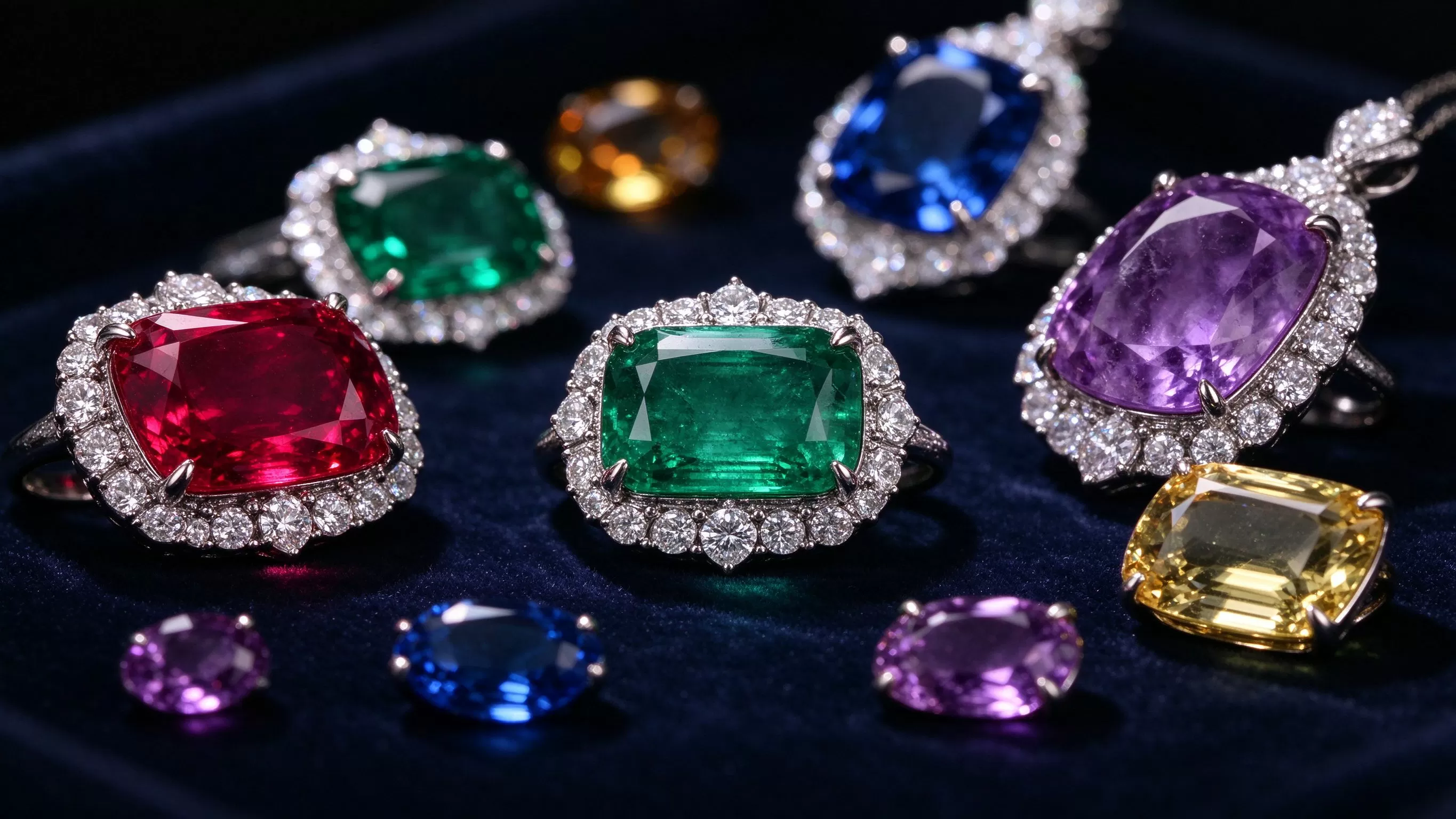
A customer picks up a 1ct blue sapphire pendant in a store. The tag reads $890. The buyer who sourced it knows the rough stone left the origin mine for under $40, and the finished mounted pendant cost the store roughly $220 wholesale. The arithmetic looks like a wide margin, but it hides four or five intermediate hands between the mine and the shop window, each taking a cut and each adding a layer of cost. Understanding that chain is what separates buyers who negotiate from buyers who accept the price on the quote sheet.
This guide is for boutique owners, sourcing managers and online retailers who want to understand what actually happens to a gemstone between the mine and their inventory. We walk through rough sorting, cutting and treatment, grading and certification, import and distribution, and retail markup, with the percentage at each step that you can negotiate.
Rough sorting at origin
Rough stones leave the mine in mixed parcels and are sorted by experienced buyers into grades by color, clarity, size and expected yield. This sorting happens locally: in Colombo for sapphires, in Jaipur for amethyst and other colored stones, in Surat for diamonds. The rough is then sold in small lots to cutters. At this stage, the stone is worth a fraction of its finished price, because yield is uncertain: a 10ct rough might produce only a 3ct finished stone. The sorter's margin is small but real, usually 10 to 15% over what the miner was paid.
Cutting and treatment
Cutting is where the most value is added, and where the most cost is hidden. A cutter in a low-labor country may charge $20 to $60 per carat for a standard faceted colored stone; a master cutter working on fine material charges several hundred dollars per carat. Cutting also determines yield, which is why a poorly cut stone can be half the price of a well-cut one even if the rough was the same. Most commercial colored stones are heat-treated at this stage to improve color or clarity; treatment costs a few dollars per stone but is accepted as standard. The GIA 4Cs framework explains how cut, color, clarity and carat interact to set the finished price.
Grading and certification
Finished stones that carry a retail price above a few hundred dollars usually go through a grading lab. A GIA, IGI or AGS report costs the supplier $50 to $150 per stone, and that cost is passed through. Certification also adds a margin: a certified stone sells for more than an identical uncertified stone, because the certificate is what justifies the price on the tag. For colored stones, reports are less universal than for diamonds, which is why some buyers negotiate uncertified parcels and grade them in-house. Our notes on reading a GIA report and what a report actually measures cover what you are paying for.
Import, distribution and retail markup
Certified stones move from the cutting center to an importer or distributor, who adds 15 to 30% for inventory, finance and small-lot fulfillment. From there the stone may go to a wholesaler who adds another 15 to 25%, and finally to the retailer who marks the piece to roughly 2.5 to 3.5 times wholesale cost. The 1ct sapphire that cost the store $220 and sells for $890 is not a 400% margin; it is the sum of miner, sorter, cutter, treater, lab, importer, wholesaler and retailer margins stacked together. Our earlier notes on mine-to-retail markup and handmade versus cast production show where that margin is negotiable. The biggest lever for a small store is cutting out one middleman: buying direct from a cutter or factory, as we cover in direct-sourcing price trends. Each hand you remove is a margin point you can either keep or pass to the customer to win repeat business.
Frequently asked questions
Why does cutting a stone roughly double its price?
Cutting determines yield (how much finished stone survives), cut quality (how light performs), and labor cost. A well-cut 3ct stone from 10ct rough is worth far more than the rough was.
Are treated stones cheaper at retail?
Yes, heat-treated stones sell for less than unheated material of the same color. The treatment itself costs little, but the market prices unheated material as rarer.
How many hands touch a gemstone before the store?
Miner, sorter, cutter, treater, lab, importer, wholesaler, retailer: typically seven hands. Each adds a margin, which is why direct sourcing cuts cost.
Does a GIA report add cost?
Yes, the lab fee ($50 to $150) is passed through, and certified stones also carry a retail premium. Uncertified parcels can be a buying opportunity if you grade in-house.
Want to buy closer to the cutter? HOLYCOME supplies finished gemstone parcels direct from cutting centers with treatment and grading per lot. Send us your target size and price band for a factory quote.
Frequently Asked Questions
Which chain lengths should I stock first?
16 to 18 inch covers most necklines and gifts; add 20 inch for layering and 24 inch for pendants.
Are your chains nickel-free?
Sterling is 92.5% silver and stainless lines use 316L, both nickel-safe when plated correctly.
Can necklaces be personalised?
Laser engraving from 50 pieces with a 3 to 5 day turnaround on the engraving step.
What is the bulk lead time?
15 to 20 days under 500 pieces; 25 to 30 days for custom pendants.