A supplier list says moissanite "9.25 on the Mohs scale" and a buyer wonders why the half-step. Diamond is 10, sapphire and ruby are 9, and most jewelry stones sit between 7 and 8. The 9.25 is not a rounded guess; it reflects how moissanite's crystal structure resists scratching relative to those benchmarks. This article explains where the number comes from and what it means for the pieces you stock.
How the Mohs scale actually works
The Mohs scale is a scratch-resistance ranking, not a linear hardness measurement. It ranks minerals by which one scratches which: a mineral scratches any mineral below it and is scratched by any mineral above it. Talc is 1, diamond is 10. The gaps are not equal: diamond at 10 is roughly four times harder than corundum at 9 in absolute terms. That is why a fractional value like 9.25 is meaningful between corundum (9) and diamond (10) even though the scale only defines integer reference minerals. Moissanite sits just above corundum and well below diamond. Moissanite's composition and properties are documented on its Wikipedia entry.
Why 9.25 and not a round number
Moissanite is silicon carbide. In scratch tests, natural and synthetic silicon carbide consistently scratches corundum (9) and is scratched by diamond (10), but it does not reach diamond's resistance. Bench testers place it fractionally above 9, hence the trade convention of 9.25. The number is a practical shorthand; laboratory Vickers or Knoop tests give absolute hardness values that are more precise but less familiar to retail buyers. For stocking decisions, the takeaway is simple: moissanite resists scratching about as well as sapphire, slightly better, and only diamond will reliably scratch it.
What 9.25 means in daily wear
On the finger, 9.25 means moissanite shrugs off the materials people actually encounter. Dust is mostly quartz at 7, below moissanite, so normal contact with tables, phones and bags does not matte the facets. A moissanite center survives stacking against gold bands and knocks that would cloud a quartz or topaz stone. The one thing it does not survive is diamond: store and wear moissanite apart from diamond jewelry, because diamond will scratch it. This is also why moissanite is ultrasonic-safe and steams without damage, unlike softer, included gems. See moissanite cleaning safety and moissanite versus white sapphire for how the numbers compare head to head.
Where 9.25 still has limits
Hardness is not toughness. Moissanite resists scratches well, but it is brittle and can chip along its crystal directions if struck hard against a hard surface. The rating also does not cover facet edges: the sharp girdle of a moissanite can chip under direct impact even though its flat faces are scratch-proof. For a daily-wear stone, that means bezel or halo settings for high-impact lifestyles, and avoiding prong settings on a construction-worker client. The rating also does nothing about moissanite's double refraction, which some buyers notice as a slightly softer look; for that, see moissanite buying basics.
Where moissanite sits against the rest of the jewelry box
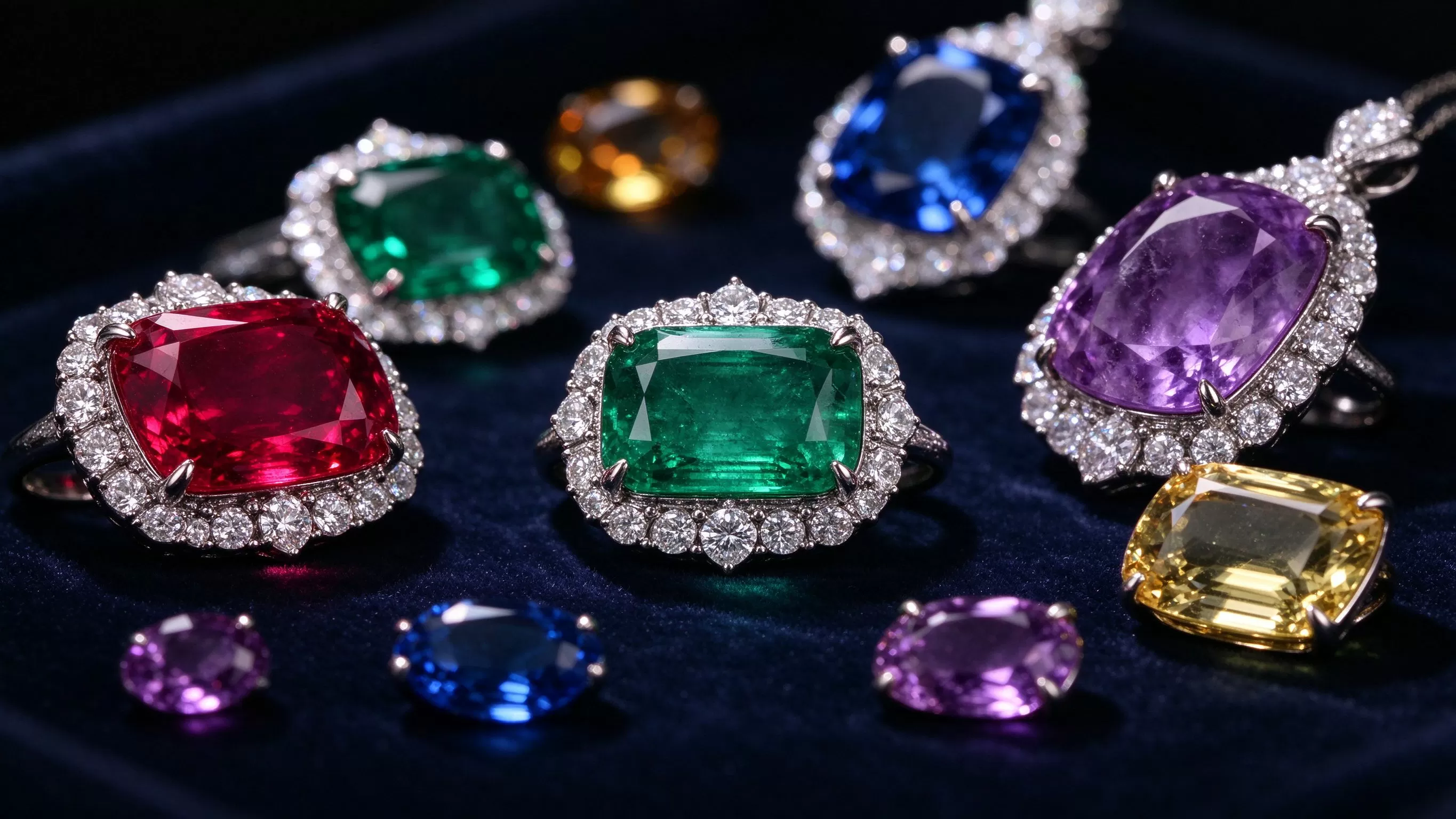
It helps to set 9.25 against the other stones you stock. Diamond is 10, corundum (ruby and sapphire) is 9, moissanite is 9.25, topaz and quartz sit at 7 to 8, and gold and silver alloy at about 2.5 to 4. What that means for display: a moissanite stacking ring worn next to a topaz band will slowly scratch the topaz, so photograph and display them as separate tiers rather than stacked loose. It also explains why moissanite survives children's gifts and active-lifestyle clients where an emerald (7.5 to 8) or opal (5.5 to 6.5) would not. Compare the durability side by side in emerald versus moissanite and moissanite versus white sapphire when advising daily-wear customers.
Marketing the number without overclaiming
"Nearly as hard as diamond" is fair; "scratch-proof" is not, because diamond will still mark it. Write the claim as "9.25 on the Mohs scale, daily-wear durable, store away from diamond" so customers do not return a stone scratched by another ring. That phrasing matches FTC expectations for factual, non-exaggerated product claims in the jewelry guides.
FAQ
Is moissanite harder than sapphire?
On Mohs, moissanite at 9.25 sits just above sapphire and ruby at 9, so it resists scratching marginally better.
Can anything scratch moissanite?
Diamond (10) will scratch moissanite; ordinary dust and most metals will not. Store moissanite away from diamond jewelry.
Is the Mohs scale measured evenly?
No. It is a scratch ranking, and the gaps are unequal; diamond at 10 is far harder relative to 9 than 9 is to 8.
Does 9.25 mean moissanite never chips?
No. It resists scratching, not impact. Moissanite can chip along its girdle under a hard blow, so set high-impact pieces in protective settings.
Wholesale note: gemmanufacturer.com grades and ships moissanite with hardness and double-refraction notes on every parcel sheet, so buyers can set expectations accurately with their own customers.
Related reading: Mohs Hardness Scale: Complete Jewelry Buying Guide, Mohs Hardness Scale: Which Gemstones Wear Best, Mohs Scale Gemstone Cleaning Precautions.