A bridal buyer is placing a 60-unit colored-stone engagement capsule and has two price bands that overlap: 1.0 to 1.5ct emeralds at $210 wholesale per stone, and 1.0 to 1.5ct heat-treated rubies at $190. The margins look nearly identical on paper. Twelve months later, the emeralds have reordered once and the rubies have reordered three times. The gap is not about which stone looks more expensive in a glass case. It is about hardness, color expectation, treatment disclosure and the kind of shopper who actually keeps a colored-stone engagement ring.
This guide is for sourcing managers, boutique owners and online retailers who need to decide how to split their colored-stone bridal inventory. We compare the two stones on durability, color grading, price per carat, treatment status and the return patterns we see from retail buyers, so the next capsule lands on the right SKU.
Hardness and everyday wear
Ruby is corundum at 9 on the Mohs scale, second only to diamond, and is the standard colored stone for engagement rings that are worn 12 hours a day. Emerald is beryl at 7.5 to 8, with a high degree of natural surface-reaching fractures that are oiled or resin-filled at the mine to improve clarity. The GIA emerald treatment reference explains that nearly all commercial emeralds are oiled, and that filler can dry out over years of wear, leaving a more visible fissure. We see emerald engagement rings returned roughly 5 to 7 percentage points more often than ruby rings in the same price band, usually because a chip appears on a step facet or the oiled fissure becomes visible after 18 months. Ruby does not chip easily and needs no filler, which is why it is the safer everyday-bridal SKU. If your customer base types, gardens and cooks in their jewelry, weight the capsule toward ruby. If it leans toward occasional-wear statement rings, emerald still moves.
Color and customer expectation
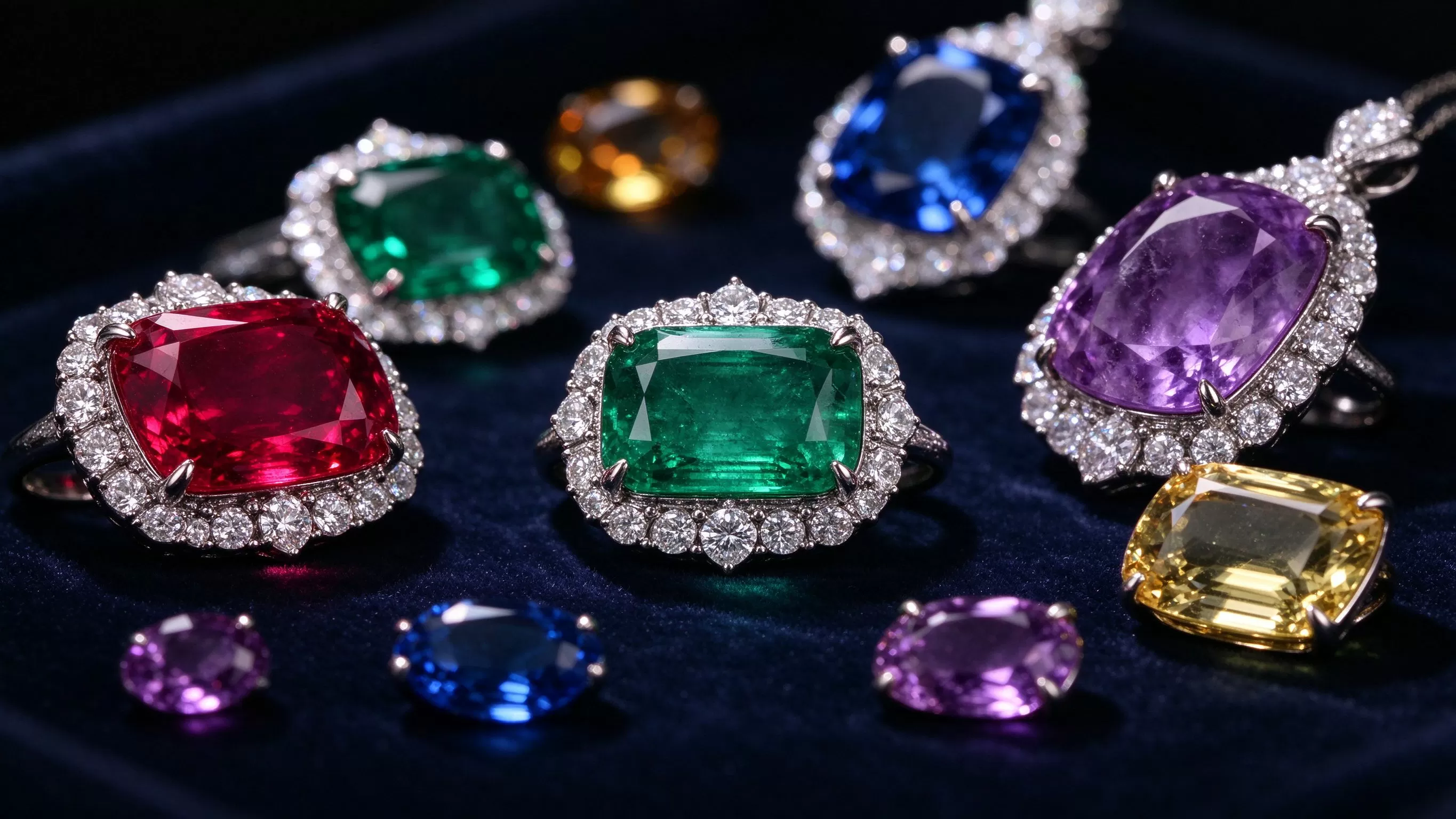
Ruby runs from a pinkish purplish red to a deep blood red, with the most valuable material sitting in the vivid, slightly purplish pigeon's blood range. The shopper who buys a ruby expects a saturated, even red that reads the same under restaurant lighting and daylight. Emerald runs from a pale yellowish green to a deep bluish green, with the most valuable material in the medium, slightly bluish colombian tone. The shopper who buys an emerald expects a stone that looks alive, with internal inclusions that read as character rather than flaw. A corundum-family comparison shows how red-stone expectation narrows as price rises; the same logic applies when customers compare ruby against cheaper red alternatives. For green-stone shoppers who cross-shop, our notes on emerald versus green glass explain why clear, inclusion-free emeralds underperform at retail: they read as synthetic.
Price per carat and wholesale bands
Commercial heat-treated ruby in the 1.0 to 1.5ct range currently sits in the $120 to $260 per stone band, with Mozambican material at the lower end and finer Burmese-toned material at the top. Commercial oiled emerald in the same carat range runs $150 to $320 per stone, with Zambian material at the lower end and Colombian material at the top. The trap for new buyers is comparing a low-inclusion, heavily oiled emerald against a fine ruby and concluding they are the same color story. They are not, and customers notice the difference within a week of wearing the ring. For context on how colored-stone pricing moves across families, see our notes on ruby versus garnet and sapphire versus tanzanite; the same reorder logic applies.
Treatment disclosure and listing compliance
Nearly all commercial ruby is heat-treated to improve color and clarity, and nearly all commercial emerald is oiled or resin-filled to stabilize fractures. Both treatments are accepted in the trade, but both must be disclosed on the retail listing under the FTC Jewelry Guides. We see stores that list emerald as natural without mentioning oil receive the most chargebacks, because customers expect a one-of-a-kind stone and receive a stabilized one. Label both stones by treatment status, and your return rate drops. For more on how disclosure affects inventory, see online return policy checklist.
Frequently asked questions
Is emerald or ruby more expensive?
Per carat, fine Colombian emerald can outprice fine ruby, but commercial parcels in the 1.0 to 1.5ct band usually sit within 10 to 15 percent of each other, with ruby slightly cheaper at the commercial end.
Can emerald be worn as an everyday engagement ring?
We advise caution. At 7.5 to 8 on Mohs with surface-reaching fractures, emerald chips and dries out faster than ruby. We recommend it for customers who will remove the ring for manual work.
Does oiling on emerald need to be disclosed?
Yes. Oil or resin filling to improve clarity is universal in commercial emerald and must be disclosed, just as heat treatment on ruby must be disclosed.
Which stone has a better resale market?
Fine ruby has a deeper resale market because it is harder and needs no filler. Emerald resale is thinner and depends heavily on whether the oil has dried.
Want a colored-stone bridal capsule that matches your customer profile? HOLYCOME supplies heat-disclosed ruby and oil-disclosed emerald parcels with size, color and clarity per lot. Send us your target price band and quantity for a factory quote and parcel photos.
Frequently Asked Questions
How do I verify a factory before a bulk order?
Request a production video, business licence, export records and a paid sample run.
What payment terms do you offer?
30% T/T deposit with the balance against the bill of lading.
What is your normal reject rate?
3 to 5% under 10x loupe inspection; defective units are replaced free in the next shipment.
Where is the factory?
Wuzhou, Guangxi, China, with shipments via Guangzhou or Shenzhen.