Jewelry Care at the Gym and During Workouts
Most people do not think of the gym as a place that damages jewelry, but it is one of the harshest environments a ring encounters. Sweat is mildly acidic, chalk and gym dust scratch soft metal, barbells and pull-up bars can bend a thin band, and a ring that catches on equipment is one hard pull away from a lost stone. The gym is also where many people take off their wedding ring and leave it in a locker, a pocket, or a water bottle cup, which is how rings get lost or stolen. This guide explains what to wear, what to remove, and how to keep your pieces in good shape around workouts.
The goal is not to make you paranoid about a treadmill session. A simple wedding band on a cardio day is fine. The problems arise with weightlifting, grip work, contact exercise, and yoga, where hands and jewelry meet equipment. We will walk through which pieces are safe, which should come off, and the quick post-workout routine that keeps metal bright. If you also want tips for travel, our travel care guide overlaps, and our wedding ring daily care guide covers everyday wear.
Many people wear their wedding ring through years of gym sessions without incident, which is why the risk feels abstract. But the damage is cumulative: a thin band bends a little more each year, prongs loosen, and the polished surface turns matte. The good news is that almost all of that damage is preventable with a thirty-second removal routine. The choice is not between wearing your ring and never seeing it again; it is between taking it off for an hour of lifting and replacing it a few years later.
What Sweat Actually Does
Sweat is mostly water, but it contains salts, oils, and mildly acidic compounds. Over repeated exposure, that film dulls polished metal, especially silver, which can tarnish faster in hot sweaty conditions. Gold is more resistant, but plated or vermeil pieces wear faster when constantly wet with sweat. Gemstones themselves are not damaged by sweat, but the oil in sweat films the facets, dulling the sparkle until you clean the piece.
The bigger issue is what mixes with sweat. Gym chalk, magnesium carbonate, and dust from equipment get into rings and earrings, forming an abrasive paste that scratches the metal. Sunscreen applied before an outdoor workout also films jewelry. None of this causes immediate damage, but over months, a ring worn through every workout looks dull and scratched, while a ring removed before exercise stays bright.
For people with metal allergies, sweat also dissolves nickel in lower-grade alloys faster, causing the green mark or rash that appears during or after exercise. Removing the ring before a heavy sweat session prevents the reaction, and our nickel allergy guide covers the metals that do not react.
Which Jewelry to Remove
For weightlifting, pull-ups, rowing, and grip-heavy exercise, remove rings entirely. A thin gold or silver band can bend under a heavy squat or deadlift, and a ring with a raised setting can catch on a barbell. Many gym-goers use a silicone band for lifting, which is cheap and safe, and keep their real ring in a locker. For our comparison of durable metals, read titanium versus tungsten bands.
For earrings, remove hoops, dangles, and long drops, because they can catch on hair, headphones, helmets, or gym towels. Small studs are usually safe, but cartilage earrings can be knocked by headbands or weightlifting belts. For necklaces, remove pendants that swing, because they can catch on equipment or bounce during running. A thin chain without a pendant is usually fine for cardio.
For yoga and Pilates, remove rings and any jewelry on the hands and wrists, because your hands are pressed into mats and equipment. Bracelets and watches should come off, because they get in the way and trap sweat. For contact sports, remove all jewelry, because a ring or earring can cut skin or tear an earlobe.
Where to Store Jewelry at the Gym
The safest place for a ring removed at the gym is on your person, in a zipped pocket of your gym bag or in a small pouch in your wallet. Leaving a ring on a locker shelf, in a water bottle cup, or on the edge of a shower is how it gets lost, and leaving it in an unlocked locker is how it gets stolen. Many people keep a small jewelry pouch in their gym bag specifically for this, and they put the ring in it immediately.
If you wear a silicone band for lifting, keep your real ring in the pouch, not on the bench. For earrings, a small pill case in your bag works well. The rule is simple: once a piece comes off, it goes into the pouch, not onto a nearby surface. Our guide to small-space storage has pouch ideas.
Post-Workout Cleaning Routine
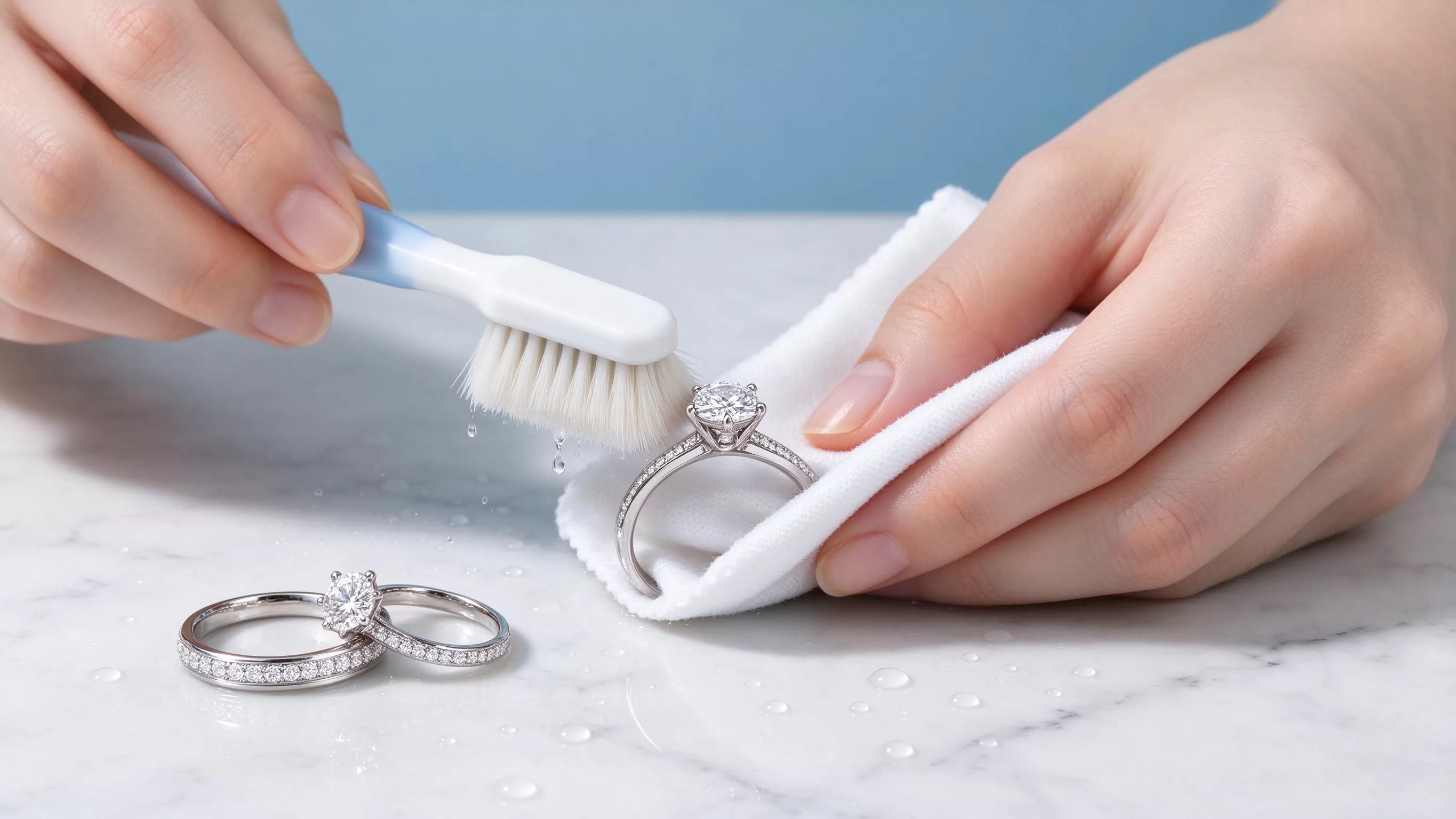
If you wear simple jewelry through a workout, give it a quick clean afterward. Wipe the ring with a soft cloth to remove sweat and chalk, and wash it with warm soapy water if the sweat was heavy. For earrings, wipe the post and back with a cloth. Never use a rough gym towel to polish jewelry, because chalk and dust on the towel scratch the metal.
If you forgot and wore a ring through a heavy lifting session, check it afterward. Look for scratches, a bent band, or a loose stone. A ring that has caught on equipment should be inspected, because a small bend can hide a cracked prong. If the stone rocks or the band is misshapen, take it to a jeweler before wearing it again. Our repair guide covers what to look for.
For silver jewelry, sweat can speed tarnish, so a quick silver cloth after a sweaty workout keeps it bright. Gold and platinum need only a wipe. Plated or vermeil pieces should be removed for heavy sweat sessions, because sweat wears the plating faster. Our plated jewelry care guide explains why.
Special Cases: Engagement Rings and Contact Sports
An engagement ring with a raised center stone should almost always be removed for the gym. The prongs catch on barbells, the stone can chip against equipment, and a heavy lift can bend the setting. Many couples choose a plain wedding band for workouts and keep the engagement ring for daily wear outside the gym. A silicone band or a plain titanium band is the standard gym alternative.
For contact sports, martial arts, and CrossFit, remove all jewelry. A ring can cause a finger injury if it catches, and an earring can tear an earlobe. Coaches often require jewelry removal for a reason, and it is not just about the jewelry; it is about the safety of your hands and body.
Yoga, Pilates, and Stretching
Yoga and Pilates are gentler than weightlifting, but they are hard on jewelry in a different way. Hands are pressed into mats, blocks, and straps, and rings on the fingers catch on fabric. A ring with a raised setting can scratch a yoga mat, and more importantly, the ring itself can be scratched or bent as the hand is pressed hard into position. Remove rings before yoga, and push them well up the finger if you must keep them on, which defeats the purpose. The safest move is to leave rings and bracelets in your bag.
Pilates equipment, reformers, and Cadillac machines have springs, straps, and metal bars that jewelry can catch on. Earrings, necklaces, and bracelets should all come off, because the straps pull across the body and can snag a pendant. Even small stud earrings are usually fine, but long hair and head straps can catch on hoops. The rule of thumb for mat work is: if it is on your hands, wrists, or neck, take it off.
Outdoor Workouts, Sun, and Sweat
Running, cycling, and hiking outdoors add another layer: sunscreen and heat. Most outdoor exercisers apply sunscreen before a run, and that lotion films rings, necklaces, and earrings fast. In hot weather, sweat mixes with the sunscreen to create a sticky coating that dulls metal and gems. Wipe jewelry down immediately after an outdoor workout, and wash rings with warm soapy water if the sweat was heavy.
Sun itself does not damage most fine jewelry, but it can fade dyed or treated stones over long exposure, and it heats metal to the point where a ring can feel uncomfortably hot. If you run for hours in direct sun, take the ring off rather than letting it bake. For necklaces, sun and sweat can turn the chain dark, especially silver, so a quick wipe prevents tarnish. Our guide to summer jewelry care covers the full warm-weather routine.
Swimming and the Pool at the Gym
Many gyms have a pool or hot tub, and the same chlorine rules apply. Remove all fine jewelry before swimming, because chlorine weakens prongs and dulls gems. A silicone band is fine for the pool, but a real ring should come off. The hot tub is even worse, because heat plus chlorine pits karat gold fast. Our guide to pool and chlorine damage has the full breakdown.
If you swim laps regularly, consider a dedicated waterproof watch band or a simple silicone ring for pool days, and keep your wedding ring in the locker. After swimming, rinse any jewelry you did wear in fresh water, and dry it thoroughly. Never leave a wet ring in a bag, because moisture against metal speeds tarnish and corrosion.
Building a Gym Jewelry Routine
The easiest way to protect jewelry at the gym is to make removal automatic. Keep a small pouch in your gym bag, and when you change into workout clothes, put rings, bracelets, and dangly earrings into the pouch. This takes thirty seconds and prevents both loss and damage. Many people also keep a cheap silicone band for lifting, so they feel like they are still wearing something on their finger without risking the real ring.
After the workout, a quick wipe with a soft cloth removes sweat before it dries. Once a week, wash rings with warm soapy water, and inspect the prongs. If a ring has been through a tough lifting session, check that the stone is still tight. Building this routine means your fine jewelry stays bright for years instead of dulling within months. For more on daily habits, read our wedding ring care guide.
Frequently Asked Questions
Should I take off my ring at the gym? For lifting, pull-ups, and contact exercise, yes. For cardio and cycling, a simple band is usually fine.
Does sweat damage jewelry? Sweat is mildly acidic and dulls metal over time, especially silver and plated pieces. Wiping after a workout prevents buildup.
Can I wear earrings at the gym? Small studs are usually fine. Remove hoops, dangles, and long earrings that can catch on equipment or hair.
What happens if my ring bends at the gym? A bent gold or silver ring can often be tapped back into shape, but repeated bending weakens the metal. Remove rings for heavy lifting.
How do I clean jewelry after a workout? Wipe with a soft cloth, then wash with warm soapy water if needed. Never use a chalky gym towel to polish jewelry.
Protect the Ring That Protects You
The gym is not a reason to stop wearing the jewelry you love, but it is a reason to be deliberate. Remove rings for lifting, take off dangly earrings, store pieces in a pouch rather than on a bench, and wipe off sweat afterward. A few seconds of preparation keeps your ring bright, straight, and on your finger for decades. Most people who establish this routine never go back to leaving their ring on a bench or in a water bottle cup, because once a ring gets lost or bent, the habit changes fast. If you want a dedicated gym band, titanium or silicone is the practical choice, and we make durable bands in our Shenzhen workshop in Henggang, Longgang. Email service@holycome.com if you want a quote on a workout-safe band or a custom plain wedding ring. More daily care tips live in our Care & Cleaning library.