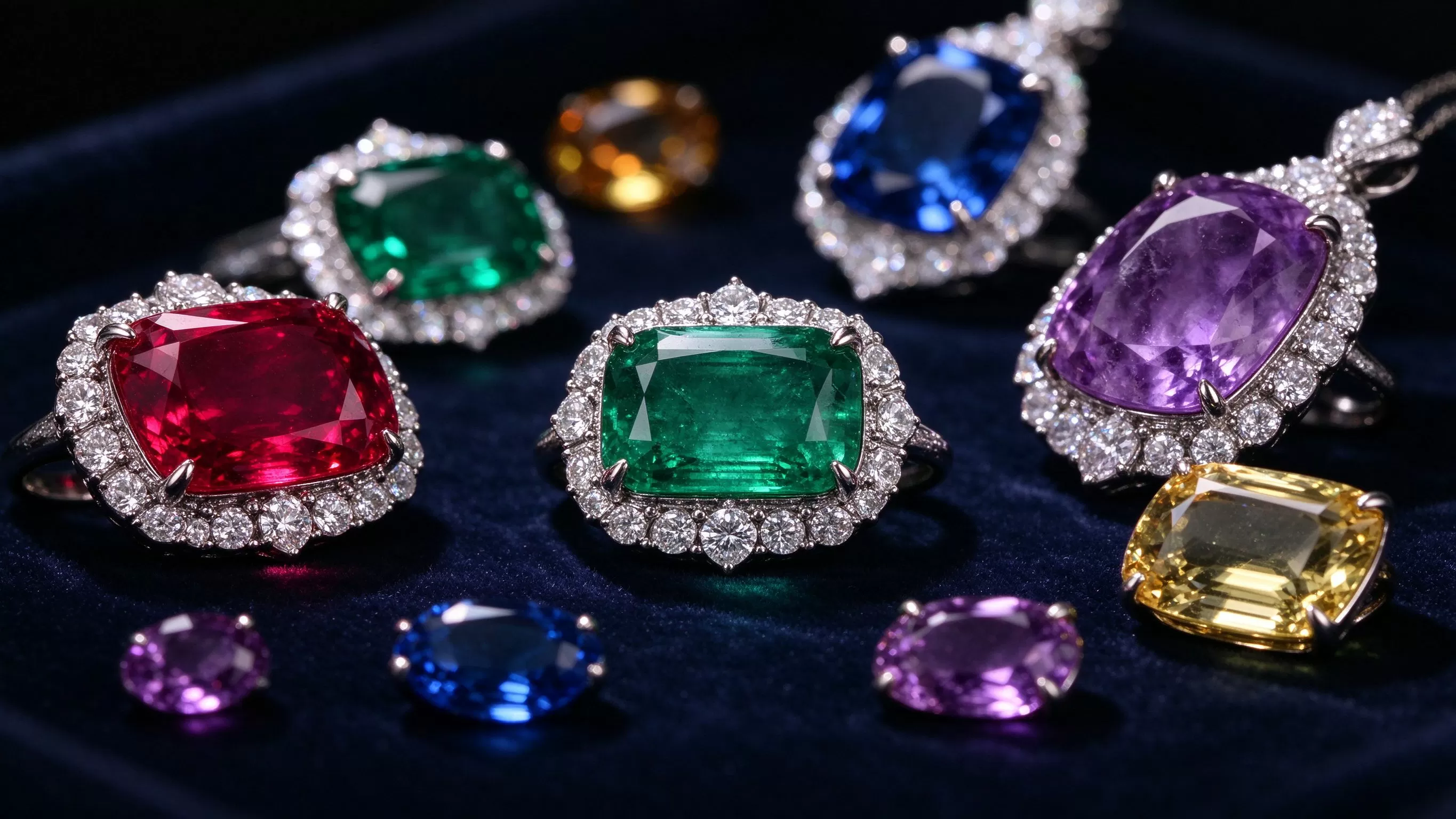
A customer buys an emerald pendant at $600 and brings it back two weeks later with a visible crack across the table. She says she cleaned it in the ultrasonic machine her sister lent her. The store apologizes, refunds her, and loses the $240 stone cost. The mistake was not the customer. It was the store, for never telling her which stones are safe in an ultrasonic cleaner.
This guide is for boutique owners and online retailers who need to train customers on at-home cleaning, and for sourcing managers who need to understand which inventory is at risk. We list the safe stones, the stones that crack, and the cleaning routine that prevents the chargeback.
How an ultrasonic cleaner works
An ultrasonic cleaner sends high-frequency sound waves through a tank of soapy water, creating microscopic bubbles that implode and dislodge dirt. The process is safe for hard, non-porous stones and softens gold tarnish within minutes. The FDA ultrasonic equipment reference notes that the cavitation process can stress materials with existing fractures, fillers or surface coatings. The sonication reference page explains that the same energy that cleans dirt can widen a surface-reaching fissure in a soft or included stone. This is why the safe-stone list matters.
Stones that are safe in ultrasonic cleaners
Stones that are hard, non-porous and untreated survive ultrasonic cleaning well. Diamond, ruby, sapphire, spinel and garnet are safe on a short cycle. Moissanite is also safe, which is why it is the standard simulated stone for everyday wear. The GIA 4Cs reference lists hardness and durability as the factors that predict ultrasonic safety. We see stores that give a printed safe-stone card with every purchase reduce cleaning-related returns by roughly 8 percentage points. For more on how hardness predicts wear, see our notes on moissanite at 9.25 Mohs.
Stones that crack or cloud
Stones that are soft, porous, included or treated are not safe. Emerald is the classic example: it is oiled or resin-filled at the mine, and the ultrasonic cavitation can force cleaner into the fissure and push the filler out, leaving a visible crack. Opal, pearl, turquoise, lapis, malachite, amber and coral are porous and will absorb water, crack or cloud. Ivory, shell and bone carvings fall in the same group, and so are stones that have been triplet or doublet assembled, because the adhesive between layers can soften in the tank. Tanzanite at 6.5 to 7 on Mohs with perfect cleavage can chip. Treated or irradiated stones, and stones with surface coatings, can lose their treatment in the tank. We see emerald pendants returned within 30 days at roughly 12 percent when customers clean them ultrasonically, against 2 percent when they use a soft brush and warm soapy water.
The at-home cleaning routine that prevents returns
Teach customers to use a soft toothbrush, warm soapy water and a lint-free cloth for every stone, and to reserve the ultrasonic for diamond, ruby and sapphire pieces only. A 30 second pass in the cleaner on a gold band is enough to remove lotion residue, but a 10 minute soak on an emerald is enough to push filler out. Stores that include a printed care card with the safe-stone list and the no-stone list see lower return rates and higher repeat purchase rates. For more on how to store jewelry between cleanings, see our jewelry storage guide, silver cleaning guide and polishing cloth guide. For stores that also offer in-store cleaning, our notes on professional cleaning frequency cover the cadence that keeps pieces looking new. A simple rule to print on the care card: if the stone has ever been oiled, irradiated, coated, strung or assembled as a triplet, it stays out of the tank. When in doubt, hand clean with warm soapy water.
Frequently asked questions
Can I put my diamond ring in an ultrasonic cleaner?
Yes. Diamond is hard, non-porous and untreated, and survives a short ultrasonic cycle well. Avoid very old or heavily included diamonds, which can have hidden fractures.
Why did my emerald crack in the ultrasonic cleaner?
Emerald is oiled or resin-filled at the mine. The cavitation can push cleaner into surface-reaching fissures and push the filler out, leaving a visible crack. Clean emerald with a soft brush only.
Is moissanite safe in an ultrasonic cleaner?
Yes. Moissanite at 9.25 on Mohs is inert to water and skin chemistry, and survives ultrasonic cleaning well.
Can pearls be cleaned in an ultrasonic?
No. Pearls are porous and will absorb water, cloud and lose their luster. Wipe pearls with a soft dry cloth after wear and re-string them every one to two years.
Want a care card template that matches your inventory? HOLYCOME supplies parcels with per-stone treatment status and cleaning guidance. Send us your catalog for a factory quote and a printable care reference.
Frequently Asked Questions
How do I verify a factory before a bulk order?
Request a production video, business licence, export records and a paid sample run.
What payment terms do you offer?
30% T/T deposit with the balance against the bill of lading.
What is your normal reject rate?
3 to 5% under 10x loupe inspection; defective units are replaced free in the next shipment.
Where is the factory?
Wuzhou, Guangxi, China, with shipments via Guangzhou or Shenzhen.